Clear The Air News Blog Rotating Header Image

August, 2012:

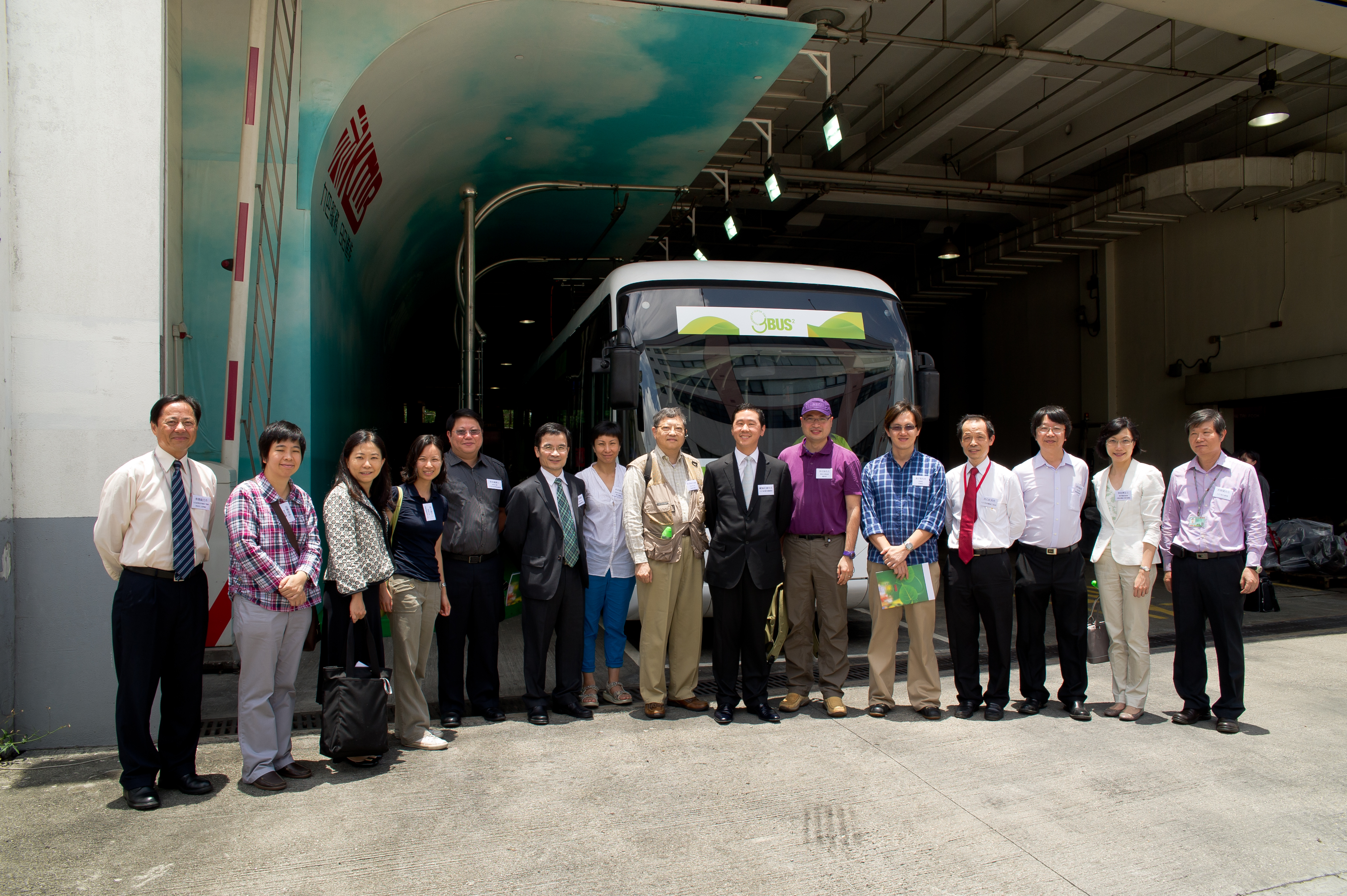
On-board Experience of gBus2

From: Adelaide Wong EAS <adelaide.wong@kmb.hk>
Date: 11 August, 2012 9:47:36 GMT+08:00
To: “vicechair@cleartheair.org.hk” <vicechair@cleartheair.org.hk>
Subject: On-board Experience of gBus2

Dear Mr Town

We would like to thank you for taking part in the gBus2 visit on 16 July 2012, and are pleased to enclose a thank you letter and some photographs taken on the day for your records.

If you have any queries, please call me on  2786 8906.

Thanks and best regards

Ms Adelaide Wong

External Affairs Section

KMB

download PDF : hppscan31

Airport Authority Hong Kong Welcomes Issuance of Study Brief for Expanding the Airport into a Three-runway System

From: K H Siu [mailto:kh.siu@hkairport.com]
Sent: 11 August, 2012 13:01
To:
Subject: Airport Authority Hong Kong Welcomes Issuance of Study Brief for Expanding the Airport into a Three-runway System

Dear All,

The Director of Environmental Protection issued the Study Brief for the Environmental Impact Assessment (EIA) of expanding Hong Kong International Airport (HKIA) into a three-runway system. Please find attached our media statement released about an hour ago in response to the issuance for your information.

With the Study Brief, we will now embark on the EIA process which is expected to take about two years to complete. We are dedicated to carry out this work in a highly prudent, transparent and professional manner as always.

In our last Green NGO roundtable meeting held on 25 May, we extended invitation to all participating NGOs to join our four technical briefing groups (TBGs), namely air quality, noise, marine ecology and fisheries, and Chinese White Dolphins.  We would like to emphasise again that TBG is intended to be a platform to share information and exchange views.  Attending the meetings will and shall not in any way be construed as condoning or supporting our proposed three-runway system project. We value your opinions and sincerely hope you and your colleagues will consider joining.

In addition, we have recently started another round of individual meetings with green groups. More are being arranged as of now as part of ongoing communication with you. Some green groups suggest holding another roundtable briefing after the issuance of the Study Brief. Hence, we would like to invite you and your colleagues to attend our next Green NGO roundtable meeting in end-August in order that we can exchange views before we start the EIA and to update you on our views about Carbon Audit and Social Return on Investment Study. We propose the meeting to be held on 28 August morning in Central. Details are as follows:

Date:    28 August (Tue)
Time:   11:00 am

Venue: Cliftons, 33/F, 9 Queen’s Road, Central, Hong Kong

Kindly please advise if you and/or your colleague(s) will join the meeting. Should you have any questions, please feel free to contact me at 2188 7257 or Cathy Cheung at  2188 7239.

Best regards,

K H Siu

Senior Manager, Public Affairs

Corporate Communications

Airport Authority Hong Kong


The 2012/ 13 Skytrax World’s Best Airport Awards election now receives votes until the end of March 2013. ACT NOW and vote for your favourite airport at
http://www.worldairportsurvey.com/svyAPP/airport2012.htm

2012/ 13年度的Skytrax全球最佳機場選舉現正接受投票,請在2013年3月底前登入 http://www.worldairportsurvey.com/svyAPP/airport2012.htm ,選出您最喜愛的機場。

Download PDF : pr1074c

pr1074e

Hong Kong battles to improve air quality

http://www.bbc.co.uk/news/business-19204836

Advertisement

10 August 2012 Last updated at 02:00 GMT Help

As Hong Kong releases its latest economic growth figures, worries are increasing that its success has been bought at the price of heavy pollution which is holding back its appeal as a place to do business.

For many Hong Kong residents, the biggest day-to-day problem is the air pollution – which ranks among the worst ever recorded.

Most of the blame is placed on the economic success of both Hong Kong and it’s neighbour China.

The BBC’s Juliana Liu has more.

Incinerating waste is a waste

http://www.freemalaysiatoday.com/category/nation/2012/08/10/incinerating-waste-is-a-waste/

August 10, 2012

CAP feels that burning waste will do more damage than good because of the toxic fumes.

GEORGE TOWN: The Consumers Association of Penang (CAP) objects the government’s intention of constructing incinerators to dispose of waste.

CAP president SM Mohamed Idris said that incinerators were toxic to public health, harmful to the economy, environment and climate, and undermines recycling programmes.

He said that a variety of adverse health effects including cancer, respiratory disease, and disruption of the endocrine system were caused by pollutants from incinerators.

In the end, he said the public would have to bear the financial burden of incineration as costs of installation, operation and maintenance were high.

“Communities would also be burdened by increasing health costs as they suffer illnesses associated with incinerator emissions,” he said.

It is reported that the government would open an international tender for the construction of an “eco-friendly” incinerator from December 2012 to April 2013.

Idris said that the notion that there were eco-friendly incinerators was wrong, a deception invented by incinerator companies to hoodwink people due to protest by communities against incinerators.

He said studies have indicated that distant populations can be exposed to pollution from incinerators by ingesting contaminated plant or animal products.

The Housing and Local Government Minister Chor Chee Heung has said that the Department of Environment (DOE) would monitor hazardous gases, fumes and other gases emitted by the incinerator round-the-clock.

But Idris said it would not be possible to monitor all emissions as installing continuous monitoring systems and conducting stack tests were expensive and would subsequently push up the cost of operating incinerators.

Furthermore, he said even modern incinerators with costly state-of-the-art pollution control devices do not eliminate or adequately control toxic emissions from today’s chemically complex municipal waste.

A report by the Global Alliance for Incinerator Alternatives states that cities such as Buenos Aires (Argentina), Canberra (Australia), Oakland (US), Nova Scotia (Canada) have made great progress towards achieving zero waste.

Idris said these cities were building recycling and composting parks, implementing innovative collection systems, requiring products to be safe and recyclable, and creating locally-based jobs.

“The Malaysian government should scrap existing incinerators and impose a ban on waste incineration,” he said.

_____________________

http://www.consumer.org.my/index.php/development/environment/590-why-waste-resources-by-incinerating-them

Why waste resources by incinerating them?

CAP objects the government’s intention of constructing incinerators to dispose waste.  It is reported that the government will open an international tender for the construction of an ‘eco-friendly’ incinerator from December 2012 to April 2013.

First of all the notion that there are ‘eco-friendly’ incinerators is wrong.  It is a deception invented by incinerator companies as communities protest the construction of incinerators. The core impacts of all types of incinerators remain the same: they are toxic to public health, harmful to the economy, environment and climate, and undermine recycling and waste minimization programs.

The public would have to bear the financial burden of incineration as costs of installation, operation and maintenance are high. Communities would also be burdened by increasing health costs as they suffer illnesses associated with incinerator emissions.

A wide variety of adverse health effects including cancer, respiratory disease, and disruption of the endocrine system are caused by pollutants from incinerators of which some are known to be persistent, bioaccumulative and toxic. Studies also indicate that distant populations can be exposed to pollution from incinerators by ingesting contaminated plant or animal products.

The Housing and Local Government Minister Datuk Seri Chor Chee Heung was also quoted stating that the Department of Environment (DOE) will be monitoring hazardous gases, fumes and other gases emitted by the incinerator round-the-clock. It may not be possible to monitor all emissions as installing continuous monitoring systems and conducting stack tests are very expensive and would subsequently escalate the cost of operating incinerators.

Furthermore even modern incinerators with expensive “state-of-the-art” pollution control devices do not eliminate or adequately control toxic emissions from today’s chemically complex municipal waste.

A report by the Global Alliance for Incinerator Alternatives states that cities such as Buenos Aires (Argentina), Canberra (Australia), Oakland (U.S.), Nova Scotia (Canada) have made great progress towards achieving Zero Waste. These cities are building recycling and composting parks, implementing innovative collection systems, requiring products to be safe and recyclable, and creating locally-based jobs.

A variety of policies, such as Extended Producer Responsibility, Clean Production, packaging taxes, and material-specific bans (such as plastic bags, styrofoam, etc.) have proven effective at reducing and eliminating problematic materials in different locales.

Thus, CAP urges the Malaysian government to scrap existing incinerators and impose a ban on waste incineration. Malaysia should lead the way towards Zero Waste and not emulate countries that incinerate valuable resources.

Press Release – 9 August 2012
Posted by

Mageswari Sangaralingam
Research Officer
Consumers’ Association of Penang
10, Jalan Masjid Negeri
11600 PENANG, Malaysia
Tel:  + 604-8299511
Fax: + 604-8298109
email: magesling@gmail.com
Website: www.consumer.org.my

EPD on a path to desecrate ecologically sensitive area

EPD on a path to desecrate ecologically sensitive area
LAI SEE
Howard Winn
Aug 10, 2012

We have been following the efforts of the Environmental Protection Department (EPD) to desecrate one of the most pristine ecological sites in Hong Kong.

The project in question is the effort by the Sha Lo Tung Development Corporation (SLTDC) to build a columbarium at Sha Lo Tung, near the Pat Sin Leung country park, just North of Taipo.

The SLTDC bought the land development rights from the villagers in 1979 and has been trying to develop the area ever since.

In 2004, the government came up with something called the Public-Private Partnership (PPP) Conservation Scheme. This, according to the EPD, ensures the conservation of “high-priority sites such as Sha Lo Tung by packaging long-term conservation action with sustainable, compatible commercial activities within the conservation area and suitable development on adjoining land”.

This scheme has the unfortunate distinction of being the first such PPP project, so the EPD is keen to push it through to “prove” that its policy works.

However, the PPP criteria appear to have been breached on at least three counts.

First, the development is supposed to take place within the boundary of the designated conservation area. But the development is actually taking place outside the site boundary, though within the Sha Lo Tung catchment area. Secondly, the development is supposed to be built on private land; but in this case the development will be on government land.

The third issue is that development is to be built on the least ecologically sensitive part of the site. But the location of the columbarium is on its most ecologically sensitive areas.

On this point the green groups also point out that the environmental impact assessment is misleading in its description of the area in that it does not mention that in the wet season the site of the columbarium is a wetland with a 4.5 metre waterfall.

Since these main three criteria have been breached and the site should not have been selected for the PPP process, green groups argue that the project is being pushed by the EPD to “prove” that the policy works.

The groups have identified an alternative site for the columbarium on the edge of the Shuen Wan landfill and suggested a land swap arrangement, which the SLTDC has indicated it does not oppose. At present the Advisory Committee on the Environment (ACE), has asked the development company for more information ahead of making a decision.

After the ACE recommendation, the project goes to Ms Anissa Wong Sean-yee, who is both the permanent secretary of the Environment Bureau, and the director of the Environmental Protection Department. Wearing her Environment Bureau hat, her job is to advance government policy. But as director of the EPD, she also oversees the environmental impact assessment process to ensure it is carried out properly.

As such she is conflicted.

The developer stands to make around HK$6 billion from the project, which it has to share with the government. But it seems odd that the EPD is using a conservation policy to raise revenue while trashing an ecologically sensitive area. The development calls for the building of a new road, and about a quarter of a million visitors are expected every Ching Ming and Chun Yeung festival. It’s another example of the madness emanating from the Environment Bureau.

Cathay plunges into a thick red cloud

So why do we need a third runway ?

Carrier’s HK$935m loss in first half the biggest since Sars decimated air travel, with bosses blaming a sluggish cargo business and falling ticket prices
Charlotte So
Aug 09, 2012 SCMP

Dragged down by the sluggish cargo business and falling ticket prices, Cathay Pacific Airways (SEHK: 0293) plunged into the red in the first half, reporting a HK$935 million loss, compared with a HK$2.8 billion profit a year earlier.

It was the biggest first-half loss since January-June 2003, when it lost HK$1.2 billion amid the Sars crisis.

Sales rose 4.4 per cent year-on-year to HK$48.9 billion and losses per share were 23.8 HK cents. No dividend was declared.

Chairman Chris Pratt said passenger yield, which measures revenue per passenger per mile, was under pressure in all cabin classes.

Business travellers were reducing or deferring trips, while economy passengers were becoming more price-sensitive.

But Cathay continued to play down the looming impact of budget carriers on fares in the region.

“Passengers are always price-sensitive and we have a very competitive price to attract them,” chief executive John Slosarsaid.

Financial headwinds have buffeted the entire aviation industry amid waning demand for passenger and cargo traffic to and from Europe and the United States.

Softening demand combined with stubbornly high jet fuel prices have seen many airlines struggling in the first half, including Lufthansa, British Airways and Korean Air.

The abrupt rise in maintenance costs and the marked decline in earnings from its associate Air China (SEHK: 0753,announcements, news) , in which Cathay holds 20 per cent, also dented Cathay’s earnings. The losses in the cargo joint venture with Air China also added to the woes of the carrier.

Cathay, which is the largest air cargo carrier in the world excluding the express giants, is relying heavily on a rebound in international trade and a pick-up in the global economy.

“We are still pinning high hopes on an uptick in cargo demand in the fourth quarter, which is the traditional peak season for cargo,” chief operating officer Ivan Chu said.

Cathay’s cargo unit in Hong Kong carried 9.8 per cent less cargo in the first half.

Air China Cargo, a joint venture in which Cathay has a 49 per cent stake, saw its losses rise to HK$600 million in the first half, due to withering export volume from the world’s factory to Europe and the US.

To rein in oil costs, Cathay has grasped the opportunity to increase its fuel hedging position to 37 per cent from below 30 per cent. Jet fuel costs, which account for 41 per cent of total operating costs, rose 10 per cent to HK$20.4 billion in the first half.

Maintenance costs climbed 23 per cent to HK$4.6 billion as more engine work was done.

Cathay says maintenance costs will fall in the second half because it has sped up the retirement programme of its Boeing 747-400 aircraft and reduced the frequency of long-haul routes.

Depreciation costs increased to HK$4.4 billion from HK$4.1 billion due to the acceleration in depreciation relating to the nine older B747-400s earmarked for sale.

Cathay said it would continue to add destinations to North Asia, while its subsidiary Dragonair would recruit cabin crews and front-line staff as its capacity would rise 7.8 per cent on last year.

charlotte.so@scmp.com

Incinerator’s highly toxic pollutants exceed permitted level by four times

http://www.royalgazette.com/article/20120808/NEWS/708089990

By Jonathan Bell

Published Aug 8, 2012 at 8:13 am (Updated Aug 8, 2012 at 8:13 am)

Pollutants are being released from the Tynes Bay Incinerator at levels far beyond the facility’s own set limits, according to Public Works.

Emissions data for the incinerator show dioxin emerging at four times the permitted amount — a Ministry spokesman said it’s routine for the facility.

The details emerged after Government called for waste-to-energy proposals for Tynes Bay.

The Ministry said it has since received “numerous unsolicited proposals” since the incinerator’s extensive renovations in 2010 and needed to set baseline criteria for evaluating them.

A request for proposal (RFP) sent out in April included details such as 2009 emissions data that showed the incinerator releasing the chemical dioxin well over compliance.

Asked by The Royal Gazette if the figures were unusual, a spokesman for Public Works said the release of dioxin is a normal occurrence, and monitored by the Department of Environmental Protection

Dioxin is classified as highly toxic; Tynes Bay relies on its high smokestack to dissipate the chemical before it reaches ground level.

“At the time of construction, technology did not exist whereby we could easily capture dioxins,” the spokesman said.

Bermuda Environmental Sustainability Taskforce chairman Stuart Hayward called the news “discouraging”.

He described dioxins as a class of chemicals with “a very bad reputation”.

Mr Hayward said the Island had a history of lax standards toward emissions in general, partly because Bermuda’s isolated location makes them easy to disperse.

“We tend to set the limits a little bit looser here. There’s a feeling that with all this unoccupied space around us, a lot of dilution can occur, but we’re still not particularly stringent,” he said.

“We set standards for materials because they’re harmful, and to avert the worst but if dioxin levels are being exceeded, that should concern authorities and individuals alike.”

Catching, storing and disposing of the dioxin would have strained the Island’s resources, the Public Works spokesman said.

A mixture of carbon, lime and water in “significant quantities” would be required to capture the substance, all of which would then have to be stored and shipped away.

“Environmental Protection therefore allows us to operate above this limit, with the understanding that if newer technology can provide a solution for Bermuda that we will install it,” the spokesman continued.

“As of this year, we may have found a new technology that could be used, but this would have to be implemented with a third stream.”

Tynes Bay currently operates with two streams, and blazes through roughly 70,000 tons of waste every year.

The RFP sets Government’s requirements for a potential new energy-generating facility at the incinerator including the caveat that any party making a pitch has to be capable of financing its own technology.

Erskine Simons’ eco-conscious company Green Ventures (Bermuda) Limited submitted a dioxin-safe proposal on June 27.

An organic chemist and former director of marketing with the pharmaceutical and chemical conglomerate Merck, Mr Simons said he had developed a keen interest in solar energy.

“I saw a huge opportunity for the deployment of these technologies in Bermuda,” he said. “It is a virgin market that has adopted these technologies far less than other countries with similar climatic conditions. The whole objective of solar energy is to lower the cost of electricity and reduce the carbon footprint.”

The company’s waste-to-energy consultant, Mike Miller, described the proposal as “low-temperature gasification” explaining that technically, Tyne’s Bay “is not an incinerator”.

Temperatures are lower, and waste is processed over 16 to 24 hours under a model developed by the Australian corporation Entech Renewable Energy Solutions, and backed by the company Renewable Energy Management (REM) Incorporated.

The system’s technical brochure, provided to The Royal Gazette by Green Ventures, shows how waste is converted to gas fuel. It claims to virtually eliminate the production of toxic fly ash.

“The solution we are proposing will significantly contribute to the electricity generated on the Island, and virtually eliminate the waste problem as well,” said Mr Miller, estimating that the advanced conversion technology would cost about $150 million and take roughly 30 months to construct.

Dioxin emissions are “20 to 30 percent of the European Union and California requirements”, he added.

The advanced conversion systems, which Mr Miller said has been put into use at more than 150 sites, claim to destroy dioxins and other resilient molecules at a considerably higher rate than conventional incinerators.

The toxicity of dioxin can be gleaned in part from the units in which it is tracked: nanograms per cubic metre, with a nanogram being one billionth of a gram. Bermuda allows for one nanogram in every cubic metre of emission gas; recent data shows the Tynes Bay Incinerator releasing 3.93 nanograms of it.

The Public Works spokesman said Tynes Bay got a clean bill of health in a December 2006 health risk assessment by the firm Roffman Associates Incorporated.

“We basically found no elevated levels of dioxins in the surrounding area. We also did some computer modelling of the stack. Basically although we exceed limits, any fall out is greatly mitigated by the height of the stack which allows for pollutants to dilute to a great degree before they reach sea level and be much less of an impact.”

He added: “The stack was purposefully built that high for just that reason.”

Useful website: www.rem-energysolutions.com.

What is dioxin?

Dioxin covers a variety of chemical compounds that are often unwanted by-product of industrial processes, or the burning of waste.
All dioxin compounds contain the elements carbon, hydrogen, oxygen and chlorine. The molecules are ring-shaped.
A carcinogen and endocrine disrupter. The chemical is also notoriously long-lived.
Since dioxins are repelled by water, but attach easily to fat molecules, they tend to build up in living systems — a phenomenon known as bioaccumulation.
Dioxins gained notoriety from the chemical defoliant Agent Orange, used extensively by US forces during the Vietnam War.
Dioxin compounds are also produced naturally, by the incomplete burning of organic matter.

Useful website: www.epa.gov.

A stroke of cool irony

SCMP – Lai See Aug. 8, 2012

The government’s done it again. Last week, it noted that the Observatory had issued a hot weather warning advising us to wear broad-brimmed hats and drink water, and so. But it didn’t think of warning us against a more deadly threat – the very high levels of roadside pollution. Yesterday, there was another hot weather warning and the Labour Department got in on the act, urging employers to protect their employees from heatstroke. The irony is that we are all aware of the weather and the heat, but we don’t see the pollution. There are two possible reasons for this. First, the government doesn’t want to draw too much attention to its dirty problem. Second, there’s a bureaucratic problem. The Environmental Protection Department just measures emissions and has no remit for health. Public health is dealt with by the Department of Health but it doesn’t study emissions.

Air Products to Build the World’s Largest Advanced Gasification Energy-from-Waste Facility

Air Products’ Pioneering Clean Energy Project Will Create Hundreds of Jobs in the UK and Generate Enough Energy to Power up to 50,000 Homes

7 August 2012

LEHIGH VALLEY, Pa., Aug. 7, 2012 /PRNewswire/ — Air Products (NYSE: APD) today announced it will build and operate the world’s largest renewable energy plant in the UK using advanced gasification energy-from-waste (EfW) technology. The Tees Valley plant, located at the New Energy and Technology Business Park, near Billingham, Teesside, will be the first of its kind in the UK, and the largest of its kind anywhere in the world with an approximate capacity of 50MW.

The plant is expected to produce enough reliable, controllable, and renewable electricity to power up to 50,000 homes. Situated in a location with good access and connectivity to the local and national electrical distribution infrastructure and in close proximity to landfill disposal facilities, it will divert up to 350,000 metric tons of non-recyclable waste from the landfill per year – helping to meet the UK’s waste diversion targets.
Air Products has longstanding expertise in building and operating large-scale industrial gas and energy-related projects on a safe, reliable and cost-effective basis. The plant is expected to create up to 700 construction jobs and over 50 permanent jobs once operational, helping to revitalize the local economy and grow a green skills base in advanced clean technology in the North East of England.
The Westinghouse advanced gasification technology provided by AlterNRG, is leading the next generation of EfW technologies. It offers a more efficient, cleaner conversion of waste-to-power than traditional EfW technologies and has the potential to generate a wider range of useful products, including heat, hydrogen, chemicals and fuels.  Longer term, the potential generation of renewable hydrogen could be deployed for commercial use, such as fuelling public transport.
“Our investment in advanced gasification EfW technology is a natural extension of our onsite business model. Offering an innovative growth opportunity, it allows us to further extend our leading position in the global energy market and continue to deliver on Air Products’ commitment to sustainability,” said John McGlade, chairman, president and chief executive officer of Air Products.
“The UK is committed to diversifying its sources of energy, strengthening its energy security and reducing carbon emissions. This pioneering clean energy technology model is well-suited to these requirements, offering a sustainable solution to the UK’s waste management strategy. The facility will also create skilled jobs in the area and we are hopeful it will provide an indirect boost to the local economy through the use of local service companies, hotels and other businesses.”
Air Products has secured the necessary environmental and planning approvals and the renewable energy facility is scheduled to enter commercial operation in 2014. Work has already begun to prepare the site. Full-scale construction activities will begin ramping up in the coming weeks.
“Advanced gasification has a key role to play in delivering renewable energy and I warmly welcome the decision by Air Products to proceed with its Tees Valley Renewable Energy Facility. Air Products’ announcement reflects the UK’s commitment and support for clean energy, combined with our stable and transparent environment for investors,” said UK Deputy Prime Minister Nick Clegg.
“With the world’s spotlight on the UK this summer, we are working hard through the British Business Embassy program to help UK and international companies to capitalize on new trade and investment opportunities to deliver safe, secure, sustainable and smarter energy ‘ecosystems’, from extraction through to the end user,” added Clegg.
For more information, please visit: http://www.airproducts.co.uk/teesvalley/
About Air Products
Air Products (NYSE: APD) provides atmospheric, process and specialty gases; performance materials; equipment; and technology. For over 70 years, the company has enabled customers to become more productive, energy efficient and sustainable. More than 18,000 employees in over 40 countries supply innovative solutions to the energy, environment and emerging markets. These include semiconductor materials, refinery hydrogen, coal gasification, natural gas liquefaction, and advanced coatings and adhesives. In fiscal 2011, Air Products had sales of approximately $10 billion. For more information, visit http://www.airproducts.com/. Editor’s Notes
About the Tees Valley Renewable Energy Facility and Advanced Gasification Technology
The Tees Valley Renewable Energy facility’s core conversion technology, a Westinghouse gasifier supplied by AlterNRG, has been used successfully in other countries such as Japan. This is the largest energy-from-waste facility based on this technology globally and the first time that it will be used in the UK at this scale. It provides the foundation for a renewable energy source using waste which could otherwise go to landfill. Advanced gasification is a more efficient energy-from-waste process than incineration and has a lower environmental impact, producing 42% less CO2 emissions per MWh than incineration. An advanced gasification-based plant can produce a number of different outputs from waste, including electricity, heat, chemicals, fuels, or renewable hydrogen that could be used to power low-carbon vehicles.
The management of Air Products will host a conference call today, Tuesday August 7, 2012, at 9:00 a.m. ET to discuss this announcement. The company welcomes members of the investment community to listen to the call live by dialing  719-325-4835 and entering the passcode 8234990. The live webcast of the call can be accessed at http://www.airproducts.com/company/news-center/UK-gasification-telecon-info.aspx. An audio replay of the call will be available after the call’s conclusion and can be accessed by calling  888-203-1112 in the U.S. or  719-457-0820 outside the U.S. and entering the passcode 8234990.

NOTE: This release may contain forward-looking statements within the safe harbor provisions of the Private Securities Litigation Reform Act of 1995. These forward-looking statements are based on management’s reasonable expectations and assumptions as of the date of this release regarding important risk factors. Actual performance and financial results may differ materially from projections and estimates expressed in the forward-looking statements because of many factors not anticipated by management, including, without limitation, unanticipated contract terminations or cancellation or postponement of the projects; interruption in ordinary sources of supply of raw materials, including waste; the ability to attract, hire and retain skilled workers; the impact of environmental, healthcare, tax or other legislation and regulations; efficacy or safety concerns with respect to the Company’s technology or operations; the inability to obtain necessary regulatory approvals; difficulty or excessive cost of construction of the facility and/or the infringement of patents or intellectual property rights of others and other risk factors described in the Company’s Form 10K for its fiscal year ended September 30, 2011. The Company disclaims any obligation or undertaking to disseminate any updates or revisions to any forward-looking statements contained in this document to reflect any change in the Company’s assumptions, beliefs or expectations or any change in events, conditions, or circumstances upon which any such forward-looking statements are based.

UK’s Largest Anaerobic Digestion Food Waste Facility Opened

http://www.waste-management-world.com/index/display/article-display.articles.waste-management-world.waste-to-energy.2011.06.UK_s_Largest_Anaerobic_Digestion_Food_Waste_Facility_Opened.html

Description: Weltec Biopower biogas Hungry combined heat and power

Vehicles enter the facility through rapid open/shut doors and unload in a waste reception area

22 June 2011

UK based integrated waste management company Biffa, has opened the country’s largest Anaerobic Digestion (AD) facility for the sole treatment of food waste.

According to the company, the new 120,000 tonne capacity facility, located next to the company’s landfill site in Poplars, Staffordshire, is a strategically important step forward, and marks the country’s first ‘super’ AD plant dealing with food waste.

Biffa maintains that the construction of large scale ‘super’ AD food waste facilities will be the shape of things to come for food waste management in the UK.

Speaking at the opening of the Poplars facility, Ian Wakeline, Biffa chief executive, explained that such facilities make much more sense than having lots of small plants dotted around the country and offer stronger economics, reduced costs and greater technical refinement than would be cost effective as a smaller facility.

Currently in a ramping up stage, once running at full capacity next month, the £24 million facility will generate 6 MW of electricity through the combustion of biogas in three 2 MW gas engine powered gen-sets.

The plant will receive source segregated food waste from supermarkets, food and drink manufacturers, hotels, restaurants, caterers and homes is delivered to the site from Biffa’s collection network.

Vehicles enter the facility through rapid open/shut doors and unload in a waste reception area. Solid and liquid waste is emptied into a bunker then crushed before grit and packaging is removed. The organic material then enters a suspension tank before it is pasteurised.

The pasteurisation process heats the material to 70 degrees C for at least one hour to meet the requirements of the Animal By-Products Regulations.

The waste is then piped into one of five digester tanks in which naturally occurring microbes already present in the waste break the material down over a certain timeframe, creating methane and carbon dioxide (biogas) and water. The company said that the plant will be entirely self sufficient, using electricity generated from the biogas to power the plant, and exporting the rest to the grid.

The remaining digestate will be produced to meet PAS110 certification. The wet mixture is transferred into two centrifuges to reduce the water content. The remaining solids are used by local farms as a soil improver in the same way as compost or oil based manufactured fertilisers.

The new facility will feature in the July/August issue of Waste Management World Magazine. Click HERE to receive your free copy.