Clear The Air News Blog Rotating Header Image

China

Smog soars in Chinese city to over 40 times safe limits as winter central heating turned on

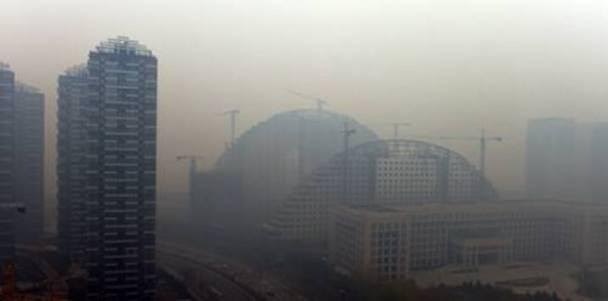
Air quality reached extremely hazardous levels in the northeastern Chinese city of Shenyang as northern China began to burn coal to heat homes for winter.

Real-time data released by the Shenyang Environmental Protection Agency on Sunday showed the density of the poisonous tiny airborne matters known as PM2.5 was more than 1,000 micrograms per cubic metre. Nearby cities also reported very high levels of the harmful particulates.

The World Health Organisation considers the safe level of PM 2.5 to be 25 micrograms per cubic meter on a 24-hour average basis.

The readings from Shenyang are possibly the highest pollution levels ever recorded in China since the country began to monitor air quality and release real-time data in 2013.

The local authorities said the density of PM 2.5, considered extremely harmful to human health, peaked on Sunday afternoon at more than 1,200 micrograms per cubic metre.

The state-run Xinhua News Agency reported that the reading had reached as high as 1,400 micrograms per cubic meter at some monitoring sites.

unnamed (3)

The local authorities issued the highest alert, warning residents to stay indoors and demanding that factories cut output to reduce pollution.

Photographs posted on social media showed grey skies and members of the public complained of sore throats.

Northern China typically burns coal to heat homes in the winter, a practice believed to have fouled the air.

Emissions from industrial plants and the increasing use of cars also are major causes of air pollution in China.

Source URL: http://www.scmp.com/news/china/society/article/1876952/smog-soars-chinese-city-over-40-times-safe-limits-winter-central

China has ‘duty to humanity’ to curb pollution, premier says

http://www.theguardian.com/world/2015/nov/04/china-duty-to-humanity-curb-pollution-premier-li-keqiang

Li Keqiang says Chinese economic model is ‘unsustainable’ and it must cut energy use, but does not outline specific measures

China has used up too much energy and too many resources in its quest for growth, premier Li Keqiang has told visiting French president François Hollande, adding that the country has a “duty to humanity” to clean itself up.

Li’s comments come ahead of a UN climate summit in Paris, which will seek to unite all the world’s nations in a single agreement on tackling climate change.

Hollande said in a radio interview the summit’s success was “possible, not certain”, with some issues still to be settled.

As the world’s largest polluter, China will be a key player at the event, in the face of disputes over whether developed or developing countries should bear more of the burden for reducing emissions.

Li said more environmentally-friendly development would be “obligatory” for China to “promote a restructuring of its national economy”, currently experiencing its slowest growth in years.

The shift was China’s “duty and a contribution to humanity” as one of the world’s largest countries, he added.

China’s decades-long boom, which has propelled it to global prominence, largely depended on heavy industry, real estate and infrastructure investment. But growth has slowed in recent years and now stands at its lowest since the global financial crisis, according to official figures.

“For a great many years, we consumed too much energy and resources to achieve our development, and this model has since become unsustainable,” Li said, adding that China must now rely more on developing its human resources.

But he did not cite any specific measures it would take.

On Monday China and France issued a joint declaration on climate change saying that the Paris accord – intended to cap warming at two degrees Celsius over pre-industrial revolution levels – should include checks for compliance.

Each signatory’s progress should be reviewed every five years, the statement said, to “build mutual trust and confidence and promote effective implementation”.

Hollande called the declaration a “historic” step forward, and on Tuesday, the final day of his two-day trip, urged Beijing to “discuss with and convince a number of countries known to be vital” to the negotiation process.

“When China is committed, it of course commits itself, but it is an example, a benchmark.”

In comments to Europe1 radio during his visit to China, Hollande said there “are still a few issues that have to be settled” before the Paris talks.

“Yes, failure is still possible, but today I am confident,” he said.

The UN summit, held from 30 November 30 to 11 December, will be opened by world leaders, including US president Barack Obama, China’s Xi Jinping and Narendra Modi of India.

Hollande said it was encouraging that major emitters such as China and the United States, as well as developing nations, were all deeply engaged in the notoriously combative negotiating process.

Asked if he thought the conference would be a success, he said: “It is possible, not certain.”

Among the key points still in dispute, he cited $100bn (€91bn) in annual climate finance that rich nations had promised for developing countries from 2020.

Some $65bn has been secured and another $20bn promised, said Hollande, but “we are not yet at $100bn”.

A recent report by the Organisation for Economic Cooperation and Development said a total of $62bn was paid in climate aid in 2014.

Rich nations say this indicates progress towards the $100bn goal for 2020, while developing countries say the figure is not a useful measure.

China is an important member of the largest negotiating bloc, the G77 group of developing nations, which insists that rich nations must bear more responsibility for cutting emissions since they have been polluting for longer.

Developed nations point the finger, in turn, at emerging giants such as China and India, which burn massive amounts of fossil fuel to power their fast-growing economies and populations.

Guangdong Riot Police Crack Down on Two Waste Pollution Protests

http://www.rfa.org/english/news/china/guangdong-riot-police-crack-down-on-two-waste-polution-protests-10142015113708.html

Residents at two locations in the southern Chinese province of Guangdong launched mass campaigns against waste disposal units near their homes this week, amid clashes between police and protesters near one site, local people told RFA.

Thousands of residents of Chunwan township near Guangdong’s Yangchun city faced off with police outside the Conch Cement Factory in their neighborhood in a protest that ended in clashes on Tuesday, protesters said.

Police have now cordoned off the area around the factory, where the construction of a privately owned waste incinerator plant had sparked the protest in the first place.

“The riot police came in and cracked down on everything,” a Chunwan resident who declined to be named told RFA on Wednesday. “They had been sending them here for several days, and they beat up anyone and everyone.”

“Lots of people were injured each day [of the protest]. The police came in several dozens of buses and minivans,” the resident said. “Some of the local people were going up against them with firecrackers. The police had anti-riot gear, and they fired tear gas [on Tuesday].

“Anyone who couldn’t run fast enough got a real beating … and a lot of people were detained, although some have been released now, but we haven’t seen the others yet.”

He said police have sealed off all roads into and out of the township and are preventing anyone from entering or leaving.

“They have people standing guard in all the villages; nobody can get out,” he said.

The protests started after the Conch factory ran its newly constructed incinerator plant for three hours on Oct. 3, spreading evil-smelling gases and black sooty particles across residential areas within a three-kilometer radius of the plant, residents said.

Before then, nobody had any idea that a waste incinerator had even been built near their homes, they said, adding that they immediately feared the impact on their health of dioxins, a carcinogenic byproduct of the process.

A resident surnamed Hong said the authorities had not informed or consulted with local people before giving the go-ahead to the plant.

“They just sent people here to beat them up, more and more every day,”
she said. “They fired tear gas when they saw people gathering and beat them. The local people were very, very angry.”

She said private security guards were drafted in as reinforcement to regular police officers.

“They brought them in from Foshan and Dongguan, elsewhere in Guangdong,” Hong said. “They put on their police uniforms when they got to the Chunwan police station, took their batons and then set about anyone they saw on the street.”

“Yesterday was totally crazy, with police firing tear gas and dragging people away. Both police and villagers got injured,” she said.

Dealing with the problems

An employee who answered the phone at the Yangchun long-distance bus station confirmed that road blocks had been in place.

“The police have sealed off the roads … things are running normally for now, but they won’t if the police seal the roads again,” he said.

“The police road blocks are temporary, but they don’t inform us about them.”

And an official who answered the phone at the Yangchun municipal government offices on Wednesday said local leaders are “dealing with” the problems at the Conch factory.

“Our leaders are dealing with this matter, but we don’t know what is going on; all we know is what’s already on the Internet,” the official said. “You need to call the propaganda department.”

But calls to the propaganda department rang unanswered during office hours on Wednesday.

Decades of rapid economic growth have left Guangdong with a growing waste disposal problem, but attempts to build incinerators in the province in response to generous government subsidies have drawn widespread anger and fear of pollution.

Authorities in Guangdong’s Qingyuan city are holding three people after several hundred people stormed government offices on Tuesday in protest at a waste transportation depot.

“The people on the square outside city hall were holding up banners which read, ‘Strongly opposed to the waste depot on Banhuan North Road,'” an eyewitness and local resident surnamed Yang told RFA on Wednesday.

“They shoved in through the glass doors; a lot of people managed to get to the main entrance waving banners and placards,” she said. “After that, they sent in the riot police.”

Residents are angry over plans to build the waste depot less than 50 meters from their homes, Yang said.

“They haven’t even put up a wall; just a metal barrier [around the site], and it’s less than 50 meters away,” she said.

A second resident surnamed Cao said local people are very worried about pollution.

“Of course, we will be affected by it, especially children and older people, because the air we breathe won’t be as good,” Cao said. “It will probably also encourage mosquito breeding.”

Guangdong’s seriously degraded environment has prompted a fast-maturing environmental movement to emerge among the region’s middle classes and farming communities alike.

Last May, tens of thousands of residents of Qianshui township near Guangdong’s Wuchuan city gathered outside government offices, calling on the government to cancel plans to build a waste incinerator near their homes.

A few weeks earlier, thousands took to the streets of Langtang township near Guangdong’s Yunfu city over similar plans by their local government.

Environmentalists say Chinese environmental protection laws are well-drafted but seldom implemented, thanks to a proliferation of vested interests and collusion between local governments and business.

Campaigners have raised growing concerns over the falsification of pollution testing and environmental impact assessments, amid worsening levels of air and water pollution and widespread disputes over the effects on children’s health of heavy metals from mining and industry.

Reported by Yang Fan for RFA’s Mandarin Service, and by Wong Lok-to and Lin Jing for the Cantonese Service. Translated and written in English by Luisetta Mudie.

China detains 11 after trash incinerator protest sparks riot

http://news.yahoo.com/china-detains-11-trash-incinerator-protest-sparks-riot-105505704.html

BEIJING (Reuters) – Hundreds of protesters rioted in southern China after weekend demonstrations against a project to build a trash incinerator turned violent, with city government officials saying they had to detain 11 people to restore order.

Decades of breakneck economic growth have led to severe environmental damage in many parts of China, where choking smog often angers increasingly educated and affluent city-dwellers.

Protesters said the demonstrations, which began on Saturday in Yangchun, a city with a population of about a million located in the manufacturing powerhouse of Guangdong, drew hundreds of people agitated over the risk of pollution from the project.

“How will we survive breathing in noxious smoke?” an employee of a small Internet firm told Reuters by telephone on Tuesday.

“Yesterday night, the police have already beaten a lot of people, and arrested more,” added the woman, who gave only her surname, Mo, for fear of reprisals from the authorities.

Photographs posted online, some on the website of the official Xinhua news agency, showed protesters pinning a police officer to the ground, and flames engulfing an overturned car. Three vehicles were damaged, the government said.

In an online statement on Sunday, the city government said 11 lawbreakers had been detained, but no one was injured. Police could not be reached for comment.

Tension persisted on Tuesday, with protesters saying hundreds of people were still gathered near the gates of a cement plant that is cooperating with the trash incinerator project.

Every year, China experiences tens of thousands of “mass incidents”, the usual euphemism for protests, triggered by grievances over corruption, pollution and illegal land grabs.

The events are unnerving to the ruling Communist Party, which is obsessed with the need to maintain stability.

A rash of health scares and accidents has also fueled public scepticism about the safety of industries ranging from food to energy.

(Reporting by Megha Rajagopalan; Editing by Clarence Fernandez)

Thousands dying in region from ozone pollution caused by warming, Chinese University study finds

ENVIRONMENT

Ernest Kao ernest.kao@scmp.com

Deadly ozone levels rising as emissions of fossil fuels increase, Chinese University study warns

Regional warming in East Asia over the past 30 years has led to a rapid rise in surface ozone pollution that may have led to thousands of premature deaths a year, a Chinese University study found.

The researchers warn the situation is likely to get worse as fossil fuel emissions increase.

Ozone is formed by volatile organic compounds (VOCs) reacting with nitrogen oxides (NOx) from sources such as vehicles. The pollutant can cause breathing problems and serious lung disease.

The study found that summertime temperatures in mainland China and surrounding regions had risen by up to 3 degrees Celsius over the past three decades, intensifying ozone in the lower atmosphere by 2 to 10 parts per billion by volume (ppbv).

This increase was associated with an estimated 5,600 extra premature respiratory deaths per year in East Asia – which includes mainland China and Hong Kong – between 1980 and 2010.

But Professor Amos Tai Pui-kuen of the university’s earth system science programme said increases in human-induced emissions from fossil fuel burning had raised ozone levels to 25ppbv over this period, which may have caused an extra 65,000 ozone-related premature deaths per year.

“Our results show that warming in China, indeed, might have exacerbated air pollution further over the past few decades and had a direct impact on human health,” said Tai. “If we include the health impact of more frequent heat extremes, such as heatstroke, the real costs of climate change might have been even higher.”

The 18-month study analysed historical weather and satellite observations of land cover in computer modelling that simulated atmospheric chemistry and pollutant formation.

Tai said warmer temperatures and carbon dioxide increased the growth of vegetation. Trees and plants emit VOCs naturally and these react with NOx emissions from vehicles and power plants, creating yet more ozone.

“South China and Hong Kong will likely experience more serious ozone pollution due to the ‘double impact’ of climate change and enhanced vegetation growth in the future if background nitrogen oxides from industrial [sources] and vehicles remain high.”

Tai urged regional governments to reduce NOx emissions, especially from vehicles, and to take into account future warming and land use changes in the greater Pearl River Delta region.

Clean Air Network campaign manager Patrick Fung Kin-wai said the findings were in line with his own group’s research, which last year found that ozone pollution in Hong Kong had hit a historic high. VOC emissions in the delta region have long been a problem and even with the Chinese economy slowing, there were no signs of it coming down yet, he said.

According to the Environmental Protection Department, ozone concentrations measured at the city’s air quality monitoring stations have increased by 25 per cent over the past five years.

Hong Kong and other cities in the Pearl River Delta have pledged to reduce VOC emissions by 15 to 25 per cent by 2020 from 2010 levels.

Green China: Why Beijing Fears a Nascent Environmental Protest Movement

http://www.takepart.com/feature/2015/10/09/china-environmental-protest

Worried about the health effects of China’s out-of-control pollution, citizens are starting to take action.

By Jennifer Duggan

Sometimes in the middle of the night, a pungent odor permeates the suburb of Asuwei, outside Beijing. A chemical tang mixed with the rotten smell of garbage, it can be so strong that it awakens Hu Jun from her slumber. She says that when the wind blows in a certain direction, she knows the smell is coming and closes the windows before going to bed. But it still gets in. “I can smell it when I’m asleep. It comes through the cracks. It can permeate the room and wakes me up,” says Hu, a university professor in her late 50s. (Her name has been changed, as speaking negatively about the government in China can result in harassment, persecution, or imprisonment.)

Asuwei is past the end of Beijing’s sprawling subway line, where the city meets the countryside, close to a river and a hot spring resort. The stench comes from an overflowing nearby landfill; opened in 1996, it has grown with the Chinese capital’s population and wealth to exceed capacity. Hu knew about the landfill when she left the city center a decade ago but believed the upmarket development of neat houses with tidy lawns where she was making her new home would be a quiet, idyllic place to live. But soon residents were complaining about the garbage smell, and five years ago, the local government installed giant chemical-spraying guns, a kind of enormous version of a Febreze air freshener. But instead of solving the problem, the putative deodorizers created another. Hu says that now she can almost taste the chemicals in the air. “It is not merely a bad smell; it is a smell that is a mix of the chemicals and the garbage.”

Beijing now produces almost 15 billion pounds of municipal household waste each year; the landfill at Asuwei receives 7.2 million pounds. In an effort to deal with the growing amount of trash generated by China’s expanding middle class and increasingly consumerist society, Beijing and other cities are building huge incinerators—including one close to the landfill in Asuwei. Hu is worried; once fully operational, the new incinerator will reportedly burn 6 million pounds of garbage a day. Environmental authorities have said the project passed the required assessments, but Hu and other residents are mistrustful, fearing the emissions that will come from the plant. “The environment cannot tolerate it, and our health would be at risk,” she says. She maintains that everyone in the area is against the incinerator, though only a few—including Hu—are taking action, organizing and participating in public protests. She spends a lot of time reading and analyzing reports and environmental assessments, trying to find a way to stop the incinerator from opening.

China’s leaders appear fearful that the many, small localized bands of discontented citizens like Hu will coalesce into a larger movement; it now spends more money on internal security, which includes managing and suppressing these protests, than it does on its military. The unification of what are now disconnected grassroots actions against specific pollution sources into a national environmental movement is perceived as a threat to the rule of the Communist Party. The Internet, used by activists and protesters as a tool for sharing information, is often quickly scrubbed of evidence of any protest actions or criticism of the government. Earlier this year, a documentary film on China’s environmental ills received hundreds of millions of hits in just one week before being taken down by government censors, presumably out of fear that it could become China’s Silent Spring moment, sparking a nationwide outcry. At the same time, citizens are fearful too—of the rash of toxins that threaten their lives, and of the government that has shown it is willing to punish those who dare complain about the threat. Nevertheless, complaining they are, in increasing numbers and with increasing boldness—and impact.

Over a traditional lunch of shared dishes, Hu explains her motivation. “Our main disagreement is that the government believes the pollution can be under control, but we don’t,” she says, getting animated and waving her chopsticks. “The government said they could control the pollution in the landfill, but the stinky air is constantly there. I’m told the landfills in the U.S. don’t have any smell at all. Golf courses, parks, and cafés are right around them. But our government doesn’t have good management ability. It’s actually a public trust issue.”

Such fears seemed to be confirmed on the night of Aug. 12, when a series of explosions at a chemical warehouse rocked the port city of Tianjin, 75 miles from Beijing. Cell-phone video broadcast around the world recorded a fiery red ball exploding from a building, a flash, and then a massive bang as a second, even bigger fireball engulfed the sky. More than 150 people were killed.

Criticism and anger have since been expressed across China, with users on Weibo, a Chinese social media platform similar to Twitter, questioning how hazardous chemicals could be stored so close to residential areas in violation of national safety standards; facilities with hazardous chemicals are forbidden from operating less than one kilometer from residential and public buildings, though it’s not clear whether the warehouse owner will face fines or criminal penalties. Residents whose homes were destroyed in the blast also took part in protests, demanding compensation. The warehouse that exploded was found to have been holding 40 types of chemicals, which according to state media included 700 tons of sodium cyanide, 800 tons of ammonium nitrate (the fertilizer used in the Oklahoma City terrorist bombing of 1995), and 500 tons of potassium nitrate. Residents fear pollution in the area since the explosion, and reports surfaced of chemical rain falling afterward and thousands of dead fish washing up nearby.

The outrage expressed around the Tianjin disaster reflects significant and growing concern about the state of the environment and pollution caused by the country’s coal-fired power plants and industrial operations. According to a Pew Research Center poll published in September, air pollution and water pollution are Nos. 2 and 3 on the list of Chinese citizens’ top concerns. (No. 1—corruption—is itself linked to pollution, as those in a position to do something about it have connections to industry, and if air and water pollution are counted together they dwarf corruption as the chief concern). Air pollution is a visible and highly publicized problem, and the burgeoning middle classes, well educated and with newfound leisure time, are becoming increasingly upset and outspoken about toxic water and soil. Last year, almost 90 percent of China’s biggest cities failed to meet air-quality standards, according to the Ministry of Environmental Protection (even as emissions of sulfur dioxide and nitrogen oxide fell slightly, the ministry reported in September). Despite gaining worldwide attention for its “airpocalypses,” when pollution levels have reached 755 on a scale of 500, Beijing isn’t even in the top 10 of China’s most polluted cities. While emissions from coal-fired power stations cause choking air above, polluting factories leak chemical-laden wastewater, poisoning rivers and farms. Only recently did the full scale of China’s environmental degradation come to light: After years of keeping the results of a soil pollution survey a state secret, the Ministry of Environmental Protection in 2014 admitted that almost 20 percent of the country’s farmland is polluted, mostly with toxic heavy metals from heavy industry and petrochemicals from intensive agriculture. Nearly 60 percent of groundwater is polluted. A study published in the scientific journal PLOS One in August estimated that air pollution contributes to the deaths of as many as 1.6 million people in China each year.

People are now making their voices heard in the form of protests, mostly against site-specific issues such as incinerators or chemical plants. Hu has written to authorities expressing concern about the Asuwei incinerator and in September 2009 took part with around 100 of her neighbors in a protest against it. Hu is smartly dressed, with jewelry and fashionable dark-rimmed glasses. She was at the vanguard of a new class of protesters—well-informed citizens concerned for their health and their families’ future. When construction plans were delayed soon after they first protested, some thought their actions may have had an effect, but blueprints for the incinerator were later revived—it would now be double the size originally planned. Residents say they weren’t consulted; the first they heard about it was when an environment assessment paper was published. “We started to fight against it again,” says Hu. Construction has begun anyway.

Maya Wang, a researcher on China at Human Rights Watch, says that although these protests focus on local issues, they are connected to the bigger environmental problems facing the nation. “Chinese people in general are more concerned about pollution. In big cities in particular there have been large scale protests, often because the environmental pollution in China has increased quite dramatically,” she says.

Protests have been growing in number and size over the past decade. According to Yang Zhaofei, vice-chair of the Chinese Society for Environmental Sciences, a Beijing-based NGO, the number of environmental protests has increased by an average of 29 percent every year since 1996; in 2011 the number of major demonstrations rose 120 percent.

Lu Yuyu runs a website that tracks protests in China using search engines and information gathered from social media and also sees the number of environmental protests rising drastically. Lu tracks all types of demonstrations, but, he says, “protests about environment and pollution are increasing not only in number but also in scale. Environmental protests are seen across the country in every province, in both cities and the remote countryside.”

The government appears worried. The first year China spent more on internal security than on military defense was 2011; the gap widened over the next two years, and in 2014 Beijing stopped reporting the numbers separately. Official figures put the number of “mass incidents”—protests over corruption, abuse of power, pollution, and other issues—as having risen more than tenfold between 1993 and 2010. Beijing has also since stopped reporting those figures.

Lu says one thing he’s noticed over years of tracking public protests and demonstrations is that environmental protests “are usually by far the largest.” They’re also the ones that see the most violent crackdowns. “Pollution is something that affects everyone,” he says. “It can easily gather the whole village, town, or city onto the streets.”

Hu is cautious when discussing the protest she took part in, outside the Agricultural Exhibition Center in the center of Beijing, where she and her fellow demonstrators unfurled banners calling for the incinerator project to be scrapped. Such acts are controversial in society and therefore a sensitive topic for Chinese. She says local authorities and the Beijing government opposed the action—a polite way of saying there was retribution. According to media reports at the time, the protest was deemed illegal and broken up by police; five protesters were arrested and detained.

Incinerators are a particular flash point of public opposition. So are chemical plants, particularly those producing paraxylene (PX), which is used in the manufacturing of plastic and polyester. People living nearby worry about cancer, asthma, and local water and soil quality—doubtful, as Hu is, that the facilities will be run properly and that potentially toxic emissions will be kept within safe limits.

In June, a series of large-scale protests took place in Jinshan, a suburb of Shanghai, just on the rumor that a PX plant was to open in the vicinity. The local government issued assurances that there would be no such plant, but according to Chen Liwen, an environmental activist, few people believe such statements. “The local government tell the people there are plans for a park or a temple and after they get the land they change the land use,” she says.

Thousands took to the streets. Protests continued for more than a week; many came out several days in a row. Local and national media, controlled by the state, are thought to have been ordered not to report on the protests, as few news stories about them surfaced in China—only the local government’s official statements—and a camera operator for an international news outlet was blocked by police from filming. However, photos and video circulated widely on social media before they were deleted, presumably by censors. Photos showed protesters filling four lanes of a highway. Some wore symbolic face masks; others carried banners reading, “Give us back our Jinshan,” “No to PX,” and “Protect the environment.” Around 40,000 people took part, according to one report. A small number of protesters managed to get to the municipal government offices in the center of Shanghai but were hauled away after scuffles with police.

One protester, who did not want to be named, said by WeChat, a messaging app popular in China, that a number of chemical plants are already in Jinshan, and many feel the emissions are a problem. She said locals are worried about their health, as a lot of people in the area suffer from cancer. “Our main request in this protest is asking the government to stop building new chemical factories; do not expand the chemical area in Jinshan,” she said. “The chemical factories are swallowing our living space and emit poisonous air.” One statistic widely circulated in China puts the rise in lung cancer deaths over the past 30 years at 465 percent. “People are concerned about their health, particularly from heavy metals and dioxins from emissions,” says Chen.

Hu says she has suffered respiratory illnesses a few times a year ever since the chemical sprays began. “It starts with a cough, then fever,” she says, touching her throat. “One time I was in the hospital for several days. The doctors asked me if I do some kind of job that exposes me to dust.” Hu can’t prove her illnesses are linked to the landfill and the deodorizing chemicals but says many others in the area have also fallen ill. “The landfill has had a great impact on nearby residents’ health,” she says. “Most of the diseases are related to air or water pollution. With the incinerator there will be two pollution sources.”

For many years, the focus for China’s citizens has been to increase wages and living standards. Hundreds of millions of people have been lifted out of poverty, but the country’s industrialization has taken a tremendous toll on the environment. Ironically, the huge increase in disposable income has expanded health consciousness and spurred a growing awareness of those ecological ills. In big cities like Beijing and Shanghai, sales of air purifiers and face masks are booming, as are sales of organic and imported food and bottled water as people try to ensure safe food and water and clean air for their families.

These worries were both confirmed and animated earlier this year when the documentary film Under the Dome, researched and presented by a popular former television news anchor, Chai Jing, went viral and gave encouragement to environmentalists and momentum to their cause. Chai, who lives in Beijing, took a stark look at air pollution’s sources and effects. She tells the story of how her daughter was born with a benign tumor. While she doesn’t link her daughter’s condition with air pollution, she says the experience made her aware and “afraid” of pollution, reflecting the fears of parents in cities throughout the country. In one scene, Chai asks a young girl in Shaanxi province, China’s coal heartland, if she has ever seen stars. “No,” the girl replies. Chai asks if she has seen blue sky. “Slightly blue sky” is the answer. Chai asks if the girl has ever seen white clouds; the girl says, “No.”

The minister of environmental protection, Chen Jining, initially praised the documentary, and within days it had been viewed and shared online hundreds of millions of times, blowing up on social media and messaging apps like WeChat. Ma Jun, China’s best-known environmentalist, described the documentary as “one of the most important pieces of public awareness of all time by the Chinese media.” But Under the Dome proved to be a little too popular, and just over a week after its release it was removed from Chinese websites.

Protests like the ones in Jinshan are almost always focused on a particular plant or project. Though significant because the concerns are real and direct—a persistent cough, a daughter’s asthma, a river that no longer produces fish—they are essentially NIMBYish in nature. There is no organized network attempting to address environmental policy at a national level. Protesters to this point, says Daniel K. Gardner, professor of history at Smith College, “are not saying, ‘Down with the government.’ They are saying there has been no environmental assessment or consultation with the public, and the government promised that. And they want the government to do something about it.”

Under the Dome may have changed that. Gardner, who is writing a book on environmental pollution in China, says that while the government admits that pollution is a real problem—state media reported in August that legislators concerned about water pollution “grilled” members of the cabinet, who promised to address it—the popularity of Chai’s film made officials nervous. “Now there was the possibility of some sort of organized movement,” he says. “Chai Jing galvanized what is already an awareness, and that is what the government is afraid of, this galvanization of the public.”

China’s environmental ills are now high on Beijing’s agenda, with Premier Li Keqiang, in March, going as far as to say the government was “declaring war on pollution.” He further declared the government was “determined” to tackle smog and environmental pollution, admitting that the progress made so far “falls far short of the expectation of the people.”

The government knows that a widespread environmental movement could lead to the development of an organized civil society and sees this as a threat to the power of the Communist Party. “If you look at some of the former republics of the Soviet Union or countries in Eastern Europe before the fall of the Berlin Wall, or other countries in Asia,” says Elizabeth Economy, director for Asia studies at the Council on Foreign Relations, “you find that in a number of cases, an environmental issue was the trigger or a contributing factor to the social discontent in large-scale protests and the eventual overthrow of the government. The Chinese government is well aware that the environment can be part of a broader social movement for change.”

Protests are kept local both by officials’ sometimes giving in to the demands of protesters or portraying them as motivated purely by self-interest. “Some of these protests have been quite successful, but none has coalesced into pressure on the government to engage [or] to change the abuse of power and corruption that lead to these environmental problems,” says Wang of Human Rights Watch. “The government have been good at ensuring that these do not spread beyond the local areas that they occur in, [even though] these issues are remarkably similar across the country.”

While some environmental protests appear to be tolerated and at times can be successful in their aims at getting plans for a plant delayed or cancelled, in general protests are not welcomed and can be put down by the authorities. To keep a protest from spreading, local authorities try to stop the flow of information. Chinese media are squelched, and censors delete information shared on social media. While a public action is taking place, mobile communications can be cut (there were reports of this happening during the protests in Jinshan).

During the reporting of this article, I tried, using WeChat and Weibo to make contact with a number of protesters who had been involved with the demonstrations in Jinshan. Most were reluctant to talk, especially on WeChat, perhaps because of reports that the app is monitored. Months afterward, it was still difficult to talk to anyone who took part. One woman who had posted a lot of information and photos on social media during the protests had seemed eager to talk. We exchanged messages over a number of weeks, and she invited me to Jinshan to show me the chemical plants.

A few days before we were to meet, though, she stopped replying to messages. Another protester, who had agreed to talk by telephone, also stopped responding. While I can’t know for sure why these individuals shut down our correspondence, it seems likely—as other sources have expressed similar concerns to me and other journalists here—that they were worried about the consequences of talking to a foreign journalist about protests against the government. Wang of Human Rights Watch says it is likely there have been some repercussions for those involved in the Jinshan protests, especially as civil society and activism across all areas—from labor to freedom of speech to ethnic autonomy to religious rights—have seen crackdowns in the last couple of years. “It’s quite common to expect that the authorities take measures that have to do with intimidation and harassment of people who were involved in [the Jinshan protests],” Wang tells me when I ask her why she thinks these sources might have gone silent. “From NGOs to activists to the participants of these protests, the amount of pressure has generally increased.”

Chen Liwen echoes this sentiment, saying it has become riskier for people to take part in protests in recent years. “It is more and more dangerous than before. Because the control in China is very strict, after the protest the police will find out the organizer and they will detain them,” she says.

As if to prove Chen’s point, the night before I was to meet with an environmental activist, the source received a phone call warning her not to meet with me. The caller knew the time and place of our meeting, which had been arranged over email. We made alternate plans, but the day after we met she received a visit from two men believed to be public security officers, wanting to know what we had discussed. A military parade—for which the government slowed or ceased operation of more than 12,000 power plants, factories, and cement plants in the region to ensure blue skies—commemorating the end of World War II was to take place the following week, and activists frequently come under increased pressure and surveillance before such official spectacles.

Despite potential consequences, Hu has not ruled out organizing or protesting against the incinerator in Asuwei now that it isunder construction. She sighs heavily at the suggestion, indicating it is not something she wants. “It’s still a long way to go,” she says. In the meantime she is trying to fight by legal and administrative means. She and her neighbors have consulted experts and activists on strategy. “It’s very tough,” she says. “I need to read a lot of paperwork. It’s a learning process.” Nevertheless, she’s not giving up. “This is for the common good. So I’m not afraid of anything.”

Beijing Blue Sky Turns into Pollution Clouds Immediately After Huge Parade

http://www.i4u.com/2015/09/94797/beijing-blue-sky-immediately-turns-pollution-clouds-after-huge-parade

image001 (2)The pollution levels went sky high shortly after a huge military parade in Beijing. That is why, Beijing bans 2.5m cars for 2 weeks to achieve blue sky for parade

It was a sudden reversion to the old way of things. But such a thing was to be expected. A day after China’s massive military parade, the smog levels in Beijing went up, up and up.

Smog as everyone knows is smoke plus fog. And it is dangerous for lung function and public buildings. The blue skies that had been the norm since half a month or so had vanished overnight.

Beijing had a two week cleanup operation during which extra special care was taken to subdue the pollution levels. All car exhausts and sources of billowing smoke were eradicated.

The whole shebang was in preparation for the parade.

This parade was to celebrate the defeat of Japan in WWII. Scores of industrial outlets were closed during the two weeks and all cars were banned from the streets. Obviously the pollution levels simply vanished into thin air.

It was the most humongous parade ever held in China. And the excitement was at an all-time high. The parade was termed Parade Blue in honor of the pure skies of clean crispy air.

But such a state of affairs was not to last. A single day has passed and the same old grey skyline has resumed to cast its dismal shadow over all of Beijing. This is sad indeed.

According to the EPA, the smog and pollution levels are even worse than before. It is almost like the lull in things has caused a backlash of sorts. Now the industrial units are back in action and they are churning out pollutants.

The satanic mills are sending forth smoke that is black as hell. And all that effort that had lasted two weeks is gone within a time span of 24 hours.

The Victory Day Parade was a charade that has ended as suddenly as it had materialized. A year ago for a similar occasion, the pollution was cut to zero and the clear blue skies re-emerged.

But way back then the selfsame thing happened and the pollution returned in a villainous manner. China has always had a problem with pollution, according to CNN.

Being the carbon copy technology center of the world, it is only natural that all the pollutants would be concentrated in the Sino-Sphere. The dense black and grey clouds of smog have enveloped the city of Beijing once more. And so it is back to reality which is indeed a very depressing thing.

Air Pollution a Cause of Extreme Weather Conditions, Says Chinese Scientist

http://en.yibada.com/articles/60496/20150905/air-pollution-cause-extreme-weather-conditions-chinese-scientist.htm

Other than being directly hazardous to health, air pollution has been pinpointed as a factor that causes extreme weather conditions such as floods and droughts, according to Fan Jiwan of the Pacific Northwest National Laboratory (PNNL).

Fan is a leading figure in atmospheric science at the facility, which specializes in research affiliated with the U.S. Department of Energy.

After two years of research combining real-life observations with computer simulations, Fan and her research team have published findings that put the spotlight on how man-made air pollution has contributed to natural disasters, such as the catastrophic floods that hit Southwest China in July 2013.

According to Fan’s study, the disaster could have been less severe had the air quality in the region not been so poor.

“Our modeling and simulation results show that if the emissions level had been the same as it was in the late 1970s, the extreme precipitation in the mountainous region would have dropped by up to 40 percent, and only minor precipitation would have occurred in the basin,” Fan explained to the Global Times.

The study of Fan’s team was published in the scientific journal Geophysical Research Letters and was highlighted by other leading international scientific publications like Nature and Science.

Fan first developed her hypothesis when she was watching the news of the 2013 storm in Sichuan, Southwest China, on TV.

“While I grieved over the casualties and damages, I was surprised by the fact that the heavy rainfall mainly occurred downwind in mountainous regions, instead of the broad basin area,” Fan recalled.

This eventually led her to form a team and collect data that would prove her hypothesis right

Smog data shows 92 per cent breathe in unhealthy air

China’s pollution on Google Maps: Smog data shows 92 per cent breathe in unhealthy air … but how does Hong Kong fare?

James Griffiths james.griffiths@scmp.com

A map of pollution levels across China, as of September 3, 2015.

Google may be blocked for Chinese users, but that hasn’t stopped scientists from using the US internet giant’s services to help map China’s pollution problem [1].

Scientists working at the University of California Berkeley and Nanjing University previously mapped hourly pollution data from over 1,500 sites across China – including Hong Kong – to produce a comprehensive smog map of the country’s heavily populated eastern provinces.

“The greatest pollution occurs in the east [of the country], but significant levels are widespread across northern and central China and are not limited to major cities or geological basins,” Robert Rohde and Richard Muller wrote in their paper [2], published in the journal Plos One.

During the period covered by the scientists’ paper, from April to August 2014, 92 per cent of the population of China experienced at least 120 hours of unhealthy air (according to US environmental protection agency standards) and 38 per cent experienced unhealthy air on average.

unnamed (1)

The scientists calculated that the observed air pollution is calculated to contribute “to 1.6 million deaths [per] year in China [4]” or around 17 per cent of all deaths.

Rohde and Muller have now adapted the method used to gather data for their paper, and used it to create a plug-in for Google Maps to display live pollution data across much of China.

“[The] map provides near real-time information on particulate matter air pollution less than 2.5 microns in diameter (PM2.5),” they wrote.

“Under typical conditions, PM2.5 is the most damaging form of air pollution likely to be present, contributing to heart disease, stroke, lung cancer, respiratory infections, and other diseases.”

The researcher’s map for today shows there are several pockets of northern China marked in green which means ‘good air’. Hong Kong is also clearly identified as having ‘good air’. Large swathes of eastern China have ‘moderate’ air.

Hong Kong has had its share of choking smog, according to the latest air quality index report from the Environmental Protection Department. Pollutants including nitrogen dioxide, ozone and PM2.5 exceeded the government limits in various areas of Hong Kong last year, according to the report.

PM2.5 are microscopic particulate matter smaller than 2.5 microns that can lodge deep inside a person’s lungs and cause health problems in the long term. It hit a high of 119 micrograms per cubic metre, exceeding the 75-micrograms a day limit.

High levels of nitrogen oxide – a compound mostly coming from vehicle exhaust – peaked at 429 micrograms per cubic metre last year in Causeway Bay. This was more than double the limit of no more than 200 micograms per hour set by the government.

A new study suggests that air pollution is even worse than thought

http://www.economist.com/news/china/21661053-new-study-suggests-air-pollution-even-worse-thought-mapping-invisible-scourge

image003

THE capital’s “airpocalypse”, the choking smog that descended on Beijing in the winter of 2012-13, galvanised public opinion and spooked the government. The strange thing is, though, that information about air pollution—how extensive it is, how much damage it does—has long been sketchy, based mostly on satellite data or computer models. Until now.

Responding to the outcry, the government set up a national air-reporting system which now has almost 1,000 monitoring stations, pumping out hourly reports on six pollutants, including sulphur dioxide, ozone and (the main culprit) particulate matter less than 2.5 microns in diameter, or PM2.5. These are tiny particles which lodge in the lungs and cause respiratory disease. The six are the main cause of local pollution but have little to do with climate change, since they do not include carbon dioxide, the main greenhouse gas. Scientists from Berkeley Earth, a not-for-profit foundation in America, have trawled through this recent cloud of data for the four months to early August 2014, sieved out the bits that are manifestly wrong (readings where the dial seems to be stuck, for instance) and emerged with the most detailed and up-to-date picture of Chinese air pollution so far.

Pollution is sky-high everywhere in China. Some 83% of Chinese are exposed to air that, in America, would be deemed by the Environmental Protection Agency either to be unhealthy or unhealthy for sensitive groups. Almost half the population of China experiences levels of PM2.5 that are above America’s highest threshold. That is even worse than the satellite data had suggested.

Berkeley Earth’s scientific director, Richard Muller, says breathing Beijing’s air is the equivalent of smoking almost 40 cigarettes a day and calculates that air pollution causes 1.6m deaths a year in China, or 17% of the total. A previous estimate, based on a study of pollution in the Huai river basin (which lies between the Yellow and Yangzi rivers), put the toll at 1.2m deaths a year—still high.

The sliver of good news is that pollution levels are better in some places than in others. They are worst in the corridor between Beijing and Shanghai and least bad in the south (see map—the study covers China east of 95ºE, accounting for 97% of China’s population), probably because that area was washed by monsoon rains during the period of the study. More importantly, levels of PM2.5 in large western cities such as Chongqing and Chengdu are about half the national average. Figuring out what they are doing right would be a first step towards reducing the smog elsewhere.