Clear The Air News Blog Rotating Header Image

Incineration – Solid Waste Disposal

Incinerators and their Health Effects

Incinerators and their Health Effects

Incinerators and their Health Effects           June 2006-06-15     http://www.ideaireland.org/incineratorsandhealth.htm

Incineration is a topical subject in Ireland as our government presses ahead with plans to build various incinerators around the Irish countryside to deal with our waste problem. History has demonstrated that it may take decades to identify the health effects of procedures that produce more chemicals into our environment. Time and again, early warning signs have often gone unheeded and proven to be far more important than we realized at the time. Aside from the well-known premature assurance given regarding the use of toxic pesticides such as DDT in the past, it was also unexpected to find that a major source of dioxin contamination of food supplies was due to the older generation of incinerators in the UK. For these reasons, the British Society for Ecological Medicine has recently published a report on the health effects of waste incinerators. They explain in their introduction that the purpose of their report is “to look at all the evidence and come to a balanced view about the future dangers that would be associated with the next generation of waste incinerators”.

Incineration does not solve the problem of waste, it only reduces waste to approximately 30 – 50 % of the original compressed waste mass, and this is converted into an ash that contains some of the most toxic concentrations of substances, such as dioxins and heavy metals. The generation and safe disposal of this toxic waste is very problematic as pollutants from landfill sites have been known to seep out, polluting local water sources, and once they contaminate the water table, their removal is considered to be almost impossible. The EU Commission have stated that this may be one of the most important sources of dioxins in the future. Accidents are also a possibility when moving toxic ash on lengthy road journeys to special landfill sites.

Incinerators release hundreds of toxic chemicals into the atmosphere when the waste is burned. Little is known about the risks of many of these toxic chemicals, particularly when they are combined. The exact composition of the emissions from incinerators is variable depending upon the waste being burnt, the efficiency of the incinerator and the pollution control measure available. As the chemical nature of our waste is changing, the potential for adverse health effects from incineration emissions are very difficult to assess. In terms of health effects, some of the most important constituents of emissions are considered to be particulates, heavy metals and combustion products of man-made chemicals.

Particulates, or particulate matter (PM) is a complex mixture of organic and inorganic particles that can be solid, liquid or both, suspended in the air.There is a large, and increasing body of research highlighting the health dangers of particulates found in incinerator emissions. Research done in 2004 by the WHO European Centre for Environment and Health, Bonn found that:

  • PM increases the risk of respiratory death in infants under 1 year, affects the rate of lung function development, aggravates asthma and causes other respiratory symptoms such as cough and bronchitis in children;
  • PM2.5 seriously affects health, increasing deaths from cardiovascular and respiratory diseases and lung cancer. Increased PM2.5 concentrations increase the risk of emergency hospital admissions for cardiovascular and respiratory causes; and
  • PM10 affects respiratory morbidity, as indicated by hospital admissions for respiratory illness (WHO fact sheet, 2005; 2).

In terms of heavy metals, several of the metals found in the emissions and ash produced by incinerators are known or suspected carcinogens. These toxins accumulate in the body over time. In children they have been implicated in childhood problems including autism, dyslexia, allergies, impulsive behaviour attention deficit and hyperactivity disorder (ADHD) as well as learning difficulties, lowered intelligence and delinquency. Exposed adults have demonstrated higher levels of violence, dementia and depression than in non-exposed adults. They have also been implicated in Parkinson’s disease. Inhalation of some of them, such as nickel, beryllium, chromium, cadmium and arsenic, is found to increase the risk of lung cancer. Mercury, one of the most dangerous heavy metals, is neurotoxic and implicated in learning disabilities, hyperactivity as well as Alzheimer’s Disease.

The report also found that a large number of the toxins emitted by incinerators can cause damage to the immune system. It is now thought that the synergistic effect of the combination of various toxins is likely to have an even more potent and damaging effect on immunity than any pollutant in isolation. Most of these chemicals are fat-soluble and accumulate in the fatty organs and tissue. They are particularly dangerous to the unborn child because many of these toxins are actively transmitted to the foetus across the mother’s placenta, for the body mistakes heavy metals for essential minerals. Until very late in the pregnancy, the only fatty tissues that the foetus has, is its nervous system and particularly the brain, so it is there that they accumulate.

The National Research Council was established to advise the US government on the extent of population that would be exposed to health hazards by an incinerator. They concluded that,

Persistent air pollutants, such as dioxins, furans and mercury can be dispersed over large regions – well beyond local areas and even the countries from which the sources emanate. Food contaminated by an incinerator facility might be consumed by local people close to the facility or far away from it. Thus, local deposition on food might result in some exposure of populations at great distances, due to transport of food to markets. However, distant populations are likely to be more exposed through long-range transport of pollutants and low-level widespread deposition on food crops at locations remote from an incineration facility (B.S.E.M.report,2005;34).

When looking at the updated incinerators that cause less air pollution, they found that they cause more toxic ash, which is easily wind-borne. It is of critical importance, that there is still no adequate method for disposing with this toxic fly ash and that it has a record of being poorly regulated.

The evaluated cost of incineration is enormous, not just in the waste disposal costs, which are very high, but also in health and environmental damage, which can cost countries billions to address. It was exactly for these types of situations that the Precautionary Principle was introduced into national and international law. A recent review of health effects of incinerators found a positive exposure-disease association with cancer and congenital malformations. It would therefore seem that from the evidence presented in this report, that building municipal waste incinerations not only contravenes the Precautionary Principle but possibly, European law.

Finally, the authors of the report note that,

Taking into account these results and the difficulty in identifying causes of cancers and other chronic diseases, it is a matter of considerable concern that incinerators have been introduced without a comprehensive system to study their health effects and that further incinerators are being planned without comprehensive monitoring either of emission or of the health of the local population. (B.S.E.M. report, 2005; 21)

As Professor C. V. Howard from the Centre for Molecular Biosciences, University of Ulster, concluded in his foreword on the report,

Incineration destroys accountability and this encourages industries to go on making products that lead to problematic toxic wastes. Once the waste has been reduced to ash who can say who made what? The past 150 years has seen a progressive “toxification” of the waste stream with heavy metals, radionuclides and synthetic halogenated organic molecules. It is time to start reversing that trend. We won’t achieve that while we continue to incinerate waste.

Juliet Duff,
Irish Doctors’ Environmental Association (IDEA)

References:

British Society for Ecological Medicine Report (2005) The Health Effects of Waste Incinerators can be downloaded from the website:www.ecomed.org.uk/pub_waste.php

WHO, EUROPE, fact sheet euro (04/2005) Berlin, Copenhagen, Rome,Particulate matter air pollution: how it harms health, can be downloaded on:www.euro.who.int/document/mediacentre/fs0405e.pdf

The Health Effects of Waste Incinerators

download PDF : IncineratorReport_v3

Government space cadets…

120313_NSL_Forget Herostratus_Fringe re-run_press release_1

Don’t swallow the line that an incinerator is a necessary evil

SCMP – 23 March, 2012

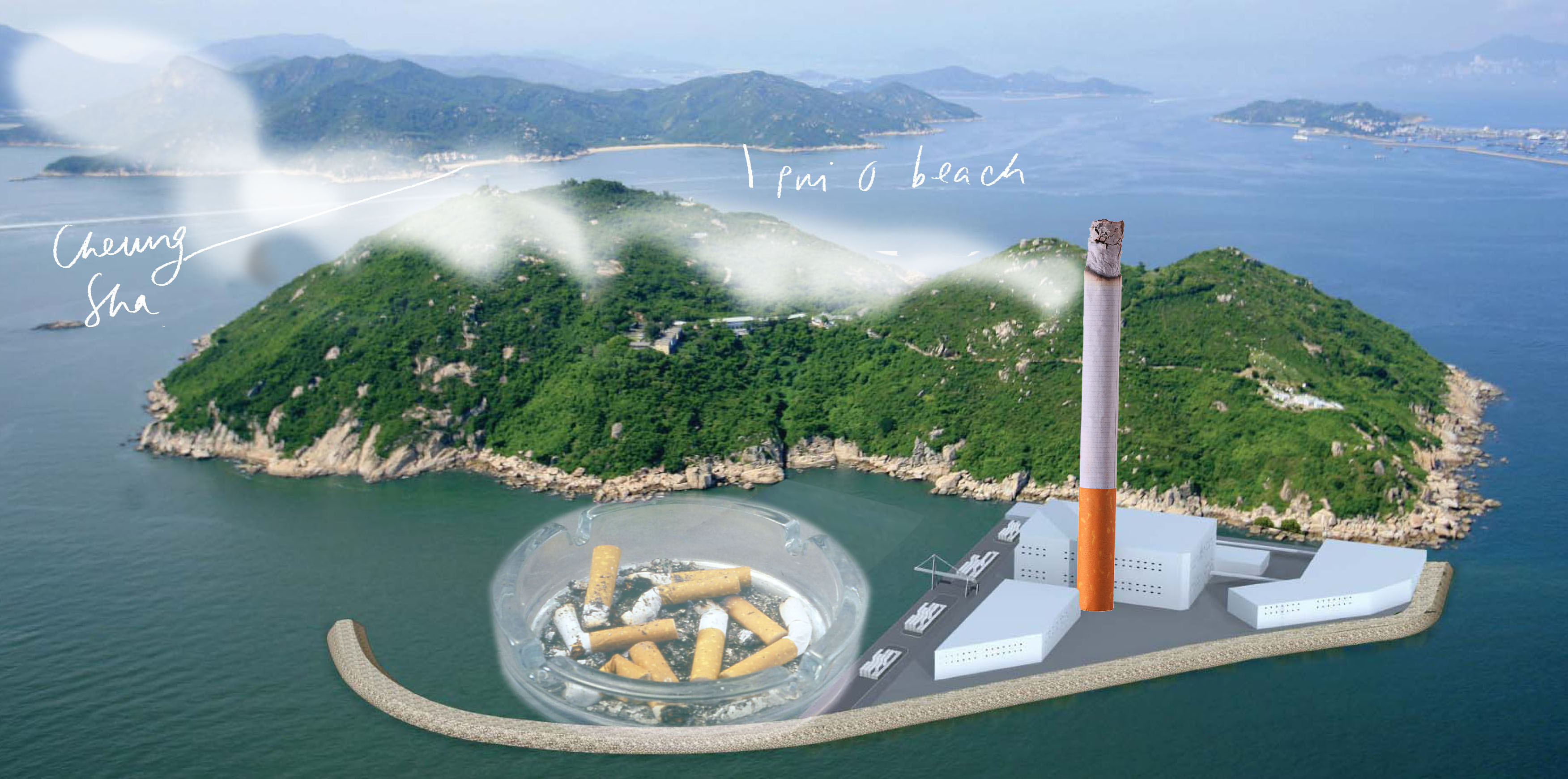
On Monday, the Legislative Council panel on the environment begins listening to reports on the administration’s progress on waste management, which includes an update on its plans for an incinerator on Shek Kwu Chau. This has aroused opposition from various groups objecting to the location, which is on a site of natural beauty, and the type of technology, which they fear is expensive and will add to air pollution.

There have been calls for the use of plasma arc technology, which is cleaner and produces energy that can be sold, resulting in cheaper and more efficient waste disposal.

The Environmental Protection Department insists that plasma arc is not suitable for Hong Kong, and is only used in disposing of highly toxic waste in small quantities. Yet this flies in the face of abundant evidence elsewhere.

New York recently asked for proposals for a waste-to-energy facility that specifically excluded the kind of moving grate mass burn incinerator that the EPD wants. Plasma arc technology incinerators are either in use or being built in Shanghai, Hainan, India, Britain, the US, Mexico and Japan.

Meanwhile, Imperial College London is carrying out a survey of traditional incinerators on behalf of Britain’s Health Protection Agency after fears emerged over health risks, particularly for children. The study was commissioned after a high incidence of infant deaths among those living downwind from incinerators.

Another report shows people living in Detroit, the location of the world’s largest incinerator, are three times as likely to be hospitalised with asthma compared with the state of Michigan as a whole. The city’s asthma death rate is twice that of the state.

A study in the US shows plasma arc waste to energy projects can break even in terms of running costs when munching through 180 to 270 tonnes of municipal solid waste per day, and profitable if more waste is processed.

It seems odd that the EPD maintains the view that plasma arc can only be used for small quantities of waste while the US branch of its consultant Aecom appears to differ. “We believe that this technology is not only environmentally friendly, but ready for large-scale commercialisation,” says Aecom’s Mike Zebel in the US.

Why does Aecom sing a different tune in Hong Kong? Hopefully, Legco will get some answers out of the EPD and will not fall for its line that the incinerator is a necessary evil.

Talking rubbish

Looking through the papers on waste management submitted to the environmental panel, we came across one from the Hong Kong Institute of Architects. The institute’s considered wisdom is that the government’s proposed facility should “be a demonstration and education centre for sustainable development, incorporating sustainable lifestyle experience such as organic farming, organic food restaurant, swimming pool and spa, and education centre operated as a social enterprise”. And like the proverbial rabbit in charge of the lettuce patch, it urges that “the architecture of such facility should be of the highest quality”. More fuel for the incinerator perhaps?

EPD seeks 23bn for incinerator and landfill extensions

Dear Legco,

Please pass to the Panel on Environmental Affairs prior to the meeting on 26 March 2012.

kind regards,

James Middleton

Chairman

www.cleartheair.org.hk

crymlynburrows2008_opt_opt

CTARRRsubmission

FutianTsangTsui

LandfillMining

recycling_adcode

Tees-Valley_Renewable_Energy_Facility

incinerator

SCMP

Clear the Air says:

The decision to move to Mass Burn by the EPD was made in 2005.

The incumbents are seeking funding just now.

They expect the project to take 7 years.

That means the mass burn technology on startup will be 14 years older than when the mass burn decision was made in 2005.

The Shek Kwu Chau island decision means that eventually other islands, probably the south Cheung Chau proposed man made island will become a further landfill for the ash.

Government’s own figures in the EIA showed an expected 22% bottom ash per massburn day. That means the landfills will continue to be required and to expand. When we add 6% fly ash that must be treated as well as the bottom ash approx 29% of the items incinerated will remain in the form of ash per day. This immediately defeats the Govt statement that our landfills are full.

The lack of RRR in Hong Kong is diabolical and laws should be enacted to enforce the public’s recycling and collection thereof by Govt.

It is ludicrous to spend more on extending landfills when the easily assembled installation of a plasma gasification plant at each landfill site can mine the existing landfills and create space in the landfills whilst generating electricity or producing jet fuel from the syngas.

The only waste generated by the plasma system is plasmarok that can be re-used as road aggregate.

This inadequate Government is playing with our public money in a stupid manner and it needs to be stopped by the Finance Committee from doing so.

Incinerator, bigger landfills cost HK$23b

Environmentalists say they will lobby politicians to reject funding request for Shek Kwu Chau project and vow to launch further challenges

Cheung Chi-fai 
Mar 22, 2012

The government will seek HK$23 billion in June to fund construction of a waste incinerator and expansion of at least two landfills, amid strong opposition and looming legal challenges.

The Environmental Protection Department (EPD) has put a price tag of HK$14.9 billion on an incinerator with a handling capacity of 3,000 tonnes on a reclaimed site next to Shek Kwu Chau island off south Lantau, far more than the HK$5 billion spent on a similar project to burn 2,000 tonnes of wastewater sludge in Tuen Mun, approved in 2009.

The incinerator will also cost about HK$353 million a year to run. A contractor will be selected to design, build and operate the plant, for an initial period of 15 years.

Opponents are vowing to step up their lobbying of politicians in different parties to ensure the request for what they call misallocated funding will be rejected.

Some Cheung Chau residents, who live five kilometres away from the proposed plant, vowed to file a legal challenge against the project once it was approved. One resident has already filed a judicial review.

Environmental officials said the funding was crucial for long-term waste management. If approved, Hong Kong could start burning waste by 2018. This would fill the vacuum in a waste-treatment strategy that has relied on landfills as the sole disposal channel since 1997, when the last incinerator was shut down over pollution concerns.

Officials will also seek about HK$8 billion to lengthen the life of the Tseung Kwan O landfill by six more years to 2020, and the Ta Kwu Ling landfill in North District by eight to 10 years to 2026. A HK$33 million consultancy will also be carried out to review a Tuen Mun landfill expansion plan.

All three plans also face strong opposition from local residents.

The government hopes that with the incinerator, stepped up recycling efforts, and organic waste-treatment plants in planning, the amount of daily waste dumped in landfills could be cut by 2,000 tonnes to 10,000 tonnes by 2018.

Living Islands Movement chairwoman Louise Preston opposed the incineration scheme, and plans to lobby politicians to block the funding. She said the moving grate technology the incinerator used was outdated. Instead, she favoured plasma arc technology, which she said was cleaner and more efficient, although the environment department said it was only suited for small-scale operations and was used mainly for hazardous waste. “Technology has developed dramatically over the past year and the EPD’s information is absolutely outdated,” Preston said.

She also said siting the waste-treatment plant in Tuen Mun, an alternative site also found acceptable in the environmental-impact assessment study, would be substantially cheaper, as the site had industrial land ready for use. She believed a substantial amount of the plant’s cost was due to the need to reclaim 16 hectares of land. The reclamation work will cost HK$2.4 billion.

Friends of the Earth described the funding request as “robbery” of taxpayers’ money, since the government had failed to deliver the waste reduction targets it set out in 2005, and now proposed to spend a huge sum to fill the gaps.

chifai.cheung@scmp.com

Hong Kong: Asia’s Waste City?

http://www.youtube.com/watch?v=gpwzBbXzAOs&feature=youtube_gdata_player

太陽 – 20120319 – 離島居民遊行反建焚化爐

新報 – 20120319 – 500人抗議石鼓洲建焚化爐

東方 – 20120319 – 石鼓洲擬建焚化爐 500市民遊行反對

爽報 – 20120319 – 人肉焚化爐 抗政府危害健康

經濟 – 20120319 – 團體遊行 反石鼓洲建焚化爐

蘋果 – 20120319 – 蘋果汁_500市民抗議建焚化爐

Burning issue of Shek Kwu Chau

SCMP – Laisee

The campaign to block the government’s proposed incinerator on the island of Shek Kwu Chau is reaching a critical phase. Opponents applied earlier this month for leave to apply for a judicial review of the Environmental Impact Assessment of the proposed waste management scheme and the decision by the Town Planning Board and the Director of Environmental Protection to rezone Shek Kwu Chau to change its legal status, enabling the incinerator to be built.

However, the government has said it intends to oppose the attempt to initiate a judicial review. The EPD will shortly be asking the Legislative Council for financing for the project. A protest march is planned for Sunday at 3.30pm from Pier 6 in Central. Opponents object to the building of the incinerator at Shek Kwu Chau, a place of natural beauty, and also believe the government is employing outdated “mass burn” technology when more advanced, cheaper and efficient waste to energy technology could be used.

Waste can become the fuel for a greener Hong Kong; Douglas Woodring says we need creative management, not an incinerator

Waste can become the fuel for a greener Hong Kong; Douglas Woodring says we need creative management, not an incinerator
Douglas Woodring
South China Morning Post
March 8, 2012
The large-scale incinerator planned for the island off southern Lantau, Shek Kwu Chau, has sparked strong debate about its practicality and, in many ways, the future of Hong Kong. This is not just a “not in my backyard” issue, it is about an ill-planned project that will affect the entire city and even those who might want to visit or live here in the future.

By holding the public hostage to a railroaded approval process, forcing us all to accept outdated technology, poor planning and lack of foresight, the government is setting itself up for further alienation from a public it is trying to win over with “harmonious” activities.

Southern Lantau is valuable because it will increasingly be the “lungs and heart” of the city we live in, along with the coasts and islands within our reach. Once these assets are taken away, there will be nothing left in the bank for us to draw on.

It was not so many years ago that Hong Kong remained one of the few countries that did not classify waste as a renewable energy source. This hindered many potential waste-to-fuel technologies and innovations that could have been set up around the existing landfills, where our waste planning basically equates to digging bigger landfill holes.

When Beijing put some pressure on our city to have a higher renewable energy input, the government then realised it had to allow waste to be turned to fuel in order to achieve its goals, already meagre when compared with the rest of our neighbours in the region.

So, we are now being told that waste can be valuable, and incineration can be the solution to our landfill issues, but we are being presented with an outdated way of thinking and planning that will greatly reduce the perceived benefits of such a plan. Why should our population, with a wealthy government, accept substandard thinking and solutions, and environmental degradation all at the same time? This is like building a highway and ensuring that it is designed with large potholes.

Technologies today have shown that waste has value as secondary raw materials. It is something we want to preserve, re-use and extract value from, while maintaining the value of our assets in the “bank” – our environment. Incinerating waste is the lazy way out of a problem; it depletes the resources right under our noses.

By separating all plastic waste, for example, economies of scale can be created for proper, value-added recycling. This saves energy and creates material that leading brands of the world are starting to use. After all of the valuable plastic material is extracted, the remaining material can be turned into fuel, not via incineration, but via distillation, which turns it back to a liquid. Plastic is stored energy after all, derived from petroleum.

The huge benefit this now creates is that all of our food waste and organic material can be treated separately, using new composting or other technologies. When all of these waste streams are separated, the creation of methane in landfills is avoided. Plastic can be harnessed as a fuel in a much bigger way. And, no incineration is needed.

An incinerator at Shek Kwu Chau will not only cause immeasurable long-term damage to the value of Hong Kong as a city by the sea, to the island it occupies, to the ocean it fills, and to the quality of life for tomorrow’s generation – it will show the world that we lack the skills and planning to create a truly world-class city. The plan will also create carbon emissions from support transport, probably offsetting the “renewable” resources it is meant to create.

Instead, we could deploy new recycling, composting and specialised waste-to-fuel options which would maximise the value that this secondary raw material represents.

We are missing out on a huge job creation opportunity here, not to mention an impressive environmental leadership role to be proud of.

Do we have the ability to guide this project and planning in the direction that this city deserves?

Douglas Woodring is founder of the Ocean Recovery Alliance and a Clinton Global Initiative Commitment Maker

Copyright 2012 South China Morning Post Ltd.All Rights Reserved

South China Morning Post