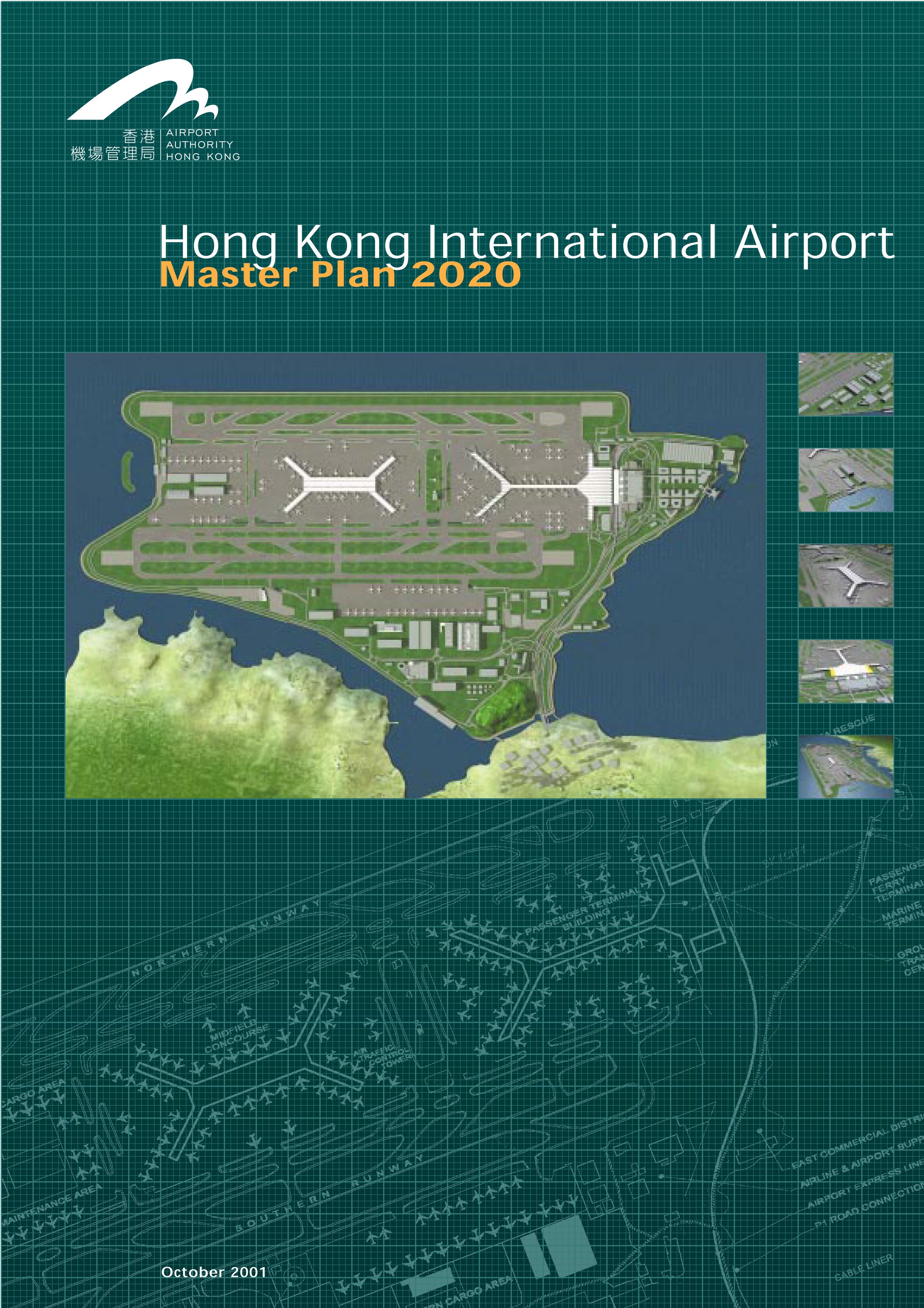
Download PDF : MP2020
Green Groups, Air Pollution, Global Warming, Diesel, Idling Engines, Town Planning & More!

Philip Bowring says that if the financial projections for the third runway are to be believed, then the private sector and aviation industry should be willing to bear the risk www.scmp.com
3 July 2011
| Before legislators get carried away on the public relations wave created by the Airport Authority and Cathay Pacific in support of spending HK$100 billion or so of public money on a new runway, they should consider the government’s abysmal records both in forecasting and infrastructure planning.
The nearest comparison to the airport proposal is container terminals. Remember how long the government insisted that new terminals at Tsing Yi/northwest Lantau were essential to keep up with trade growth and to retain Hong Kong’s position as the world’s top port? Of course, if planning by bureaucrats consists of drawing straight lines on graphs, that is the result. As late as 2008, it was still insisting on the need for CT 10 despite the massive container development across the border. It wasted a way-over-budget HK$3.7 billion on Stonecutters Bridge, which was justified on the grounds of developments that never happened. Hong Kong has now lost out to Shenzhen and Shanghai in container port throughput but do we now care that we missed out on more of these low-wage, polluting activities? Of course not. There are plenty of other examples of wasted investment by bureaucrats with their straight-line growth charts. Some aspects of aviation are high-value business compared with container handling, but not all. Simply acting as an interchange hub is of limited value-added, and, for low-end travel, Hong Kong should not try to compete with Pearl River Delta airports with their plentiful land and access to government largesse. The pollution issue is as serious for aviation as it is for shipping. The government should also be reminded that the Airport Authority was supposed to be partly privatised and face the same financial disciplines and return expectations as other listed and privately owned or operated airports such as those in Beijing, Sydney, Frankfurt and London. So let’s see such a move in supposedly free-market Hong Kong before any decision is made on expansion. That would provide a sterner test of the claims in the authority’s financial and overall economic projections. If this is such a good deal, why not try to raise, say, HK$35 billion from an offering of new shares, giving outside investors a 50 per cent or so stake and the company an equity base of HK$70 billion, and borrow the rest as and when needed? Meanwhile, one must wonder about returns on a much enlarged equity when, even now, its profits are hardly spectacular – HK$4.03 billion in 2010/11 on equity of HK$36.38 billion, or 11.1 per cent. The airport is little used at night and flight frequency is constrained by air traffic issues out of Hong Kong’s control. The ability to keep raising fees in line with inflation with a huge increase in capacity is also debatable, given the regional competition and the fact that Hong Kong’s charges are already high – suggesting that maintaining its position as a premium airport is more important than going after volume. The authority’s overriding requirement is to “maximise value” for Hong Kong’s benefit. That means maximising its returns, not putting out contentious claims about its contribution to gross domestic product. That may justify expansion but let the private sector, and the aviation industry itself, bear the risk and reward. The government’s so-called planning is no more than knee-jerk responses to particular vested interests – including those of its own departments. In total, the airport, express railway and bridge to Zhuhai and Macau constitute spending of about HK$200 billion at today’s prices. Officials justify them all not by the rate of return but by the general benefits of improving links with the mainland and the outside world. Yet, quite extraordinarily, there is no logical connection between the three. The bridge links to the airport but, being only a road bridge, does not link to the existing airport rail line – another expensive, money-losing piece of publicly financed infrastructure. The ultra-expensive high-speed railway goes nowhere near the airport but, for reasons best known to vested interests, to the dense heart of Kowloon, a shopping and residential area more than a business district. It will take the high-speed train 20 minutes to reach the border – compared with 25 minutes by car from Central via the western tunnel – and only be of use to travellers going to middle-distance cities. The problem of border controls is brought up to support expanding Chek Lap Kok rather than making more use of delta airports, but the same argument is never used to show the futility of high-speed trains which cannot reach very high speeds over such a short distance. Other mega projects sponsored by interest groups are already consuming large sums of money for pouring concrete. One is the cruise liner terminal, which will serve a tiny percentage of visitors at huge opportunity cost in terms of harbourfront land. Another is the sports stadium when the existing Hong Kong Stadium is only filled once a year. But with this government and its cronies, big vanity projects always take precedence over sports facilities for schools and the public. Economics is about choosing how to use scarce resources. Unfortunately, Hong Kong’s HK$1.2 trillion reserves are not scarce enough to be used prudently or efficiently. They are now the plaything of officials and vested interests. Legislative Council, wake up to this fact. There may be justification for the new runway, but let investors decide. Aviation does not merit implicit public subsidy. Philip Bowring is a Hong Kong-based journalist and commentator |
||
| Former aviation chief says the public has a right to know what is being done with taxpayers’ money | |||||||
| Lana Lam Jul 03, 2011 |
|
||||||
The transparency of the Airport Authority is in question after the statutory body refused to reveal the marketing budget for its controversial third runway plan.
The authority is wholly owned by the government and operates under the Airport Authority Ordinance. Lok said the authority was jumping the gun by pouring millions of dollars into producing 21 videos that all supported the expansion plan. He estimated the production cost of the videos would “be in the millions” because “videos take ages to create, even just one minute”. “[But] you are dealing with airports so this amount of money is peanuts,” he said. “I’m not surprised … but it’s premature,” he said of the videos which feature high-profile personalities such as Cathay Pacific (SEHK:0293) chief executive John Slosar, transport sector lawmaker Miriam Lau Kin-yee, Ocean Park chairman Allan Zeman, Hollywood director John Woo Yu-sen and actor and Canto-pop singer Aarif Rahman. The videos echo the sentiment in the authority’s written documents which state that Hong Kong’s overall competitiveness as a world city would be at risk if the third runway plan does not go ahead. An authority spokeswoman refused to disclose the amount spent on the videos or reveal the name of the company that won a tender for the project. She also refused to reveal the total budget of the marketing strategy for the authority’s 2030 master plan which includes roving exhibitions, public forums and advertisements on TV and billboards. She did confirm that all the interviewees appeared “on a voluntary basis at no cost to us”. The videos are currently screening on more than 100 monitors throughout the airport. The authority has not spent any money on producing equivalent videos featuring local personalities who do not want the third runway. One video production company in North Point provided a conservative quote for a half-day of filming for one video at HK$12,000, so 21 videos would total about HK$250,000. Lok, who supports a third runway, but not at the existing site, said he was not surprised that the videos only presented one side of the argument and he criticised the authority for hiding vital information about the feasibility of the third runway plan. “If you look at the technical report, there is a caveat laid down that this scheme requires very extensive revision with Pearl River Delta airspace which we share with several other airports,” he said. “To develop and implement the changes, we need to confer with Macau and mainland authorities. “If you fail to get their consensus, there’s no point talking about how much it’s going to cost or if it’s cost-effective. They have never mentioned this caveat in all the publicity, which I think is rather immoral.” In documents for the master plan, the authority states its intention to ensure a “transparent, professional and objective planning process”. Questions the Post sent to the authority on the spending several times last week went unanswered and at a public forum on the master plan yesterday, Howard Eng Kiu-chor, executive director of airport operations, did not take questions from the media. |
|||||||
” Sung believes too that what officials fear most is an environmental impact assessment unfavorable to the project.
The airport opened in July 1998. Seventy billion dollars of public and private money went for terminals, runways, taxiways, bays and ancillary facilities.
Another HK$34 billion went into the airport railway, and billions more on bridges, tunnels and expressways to make the Lantau site accessible.
The all- in cost was HK$155 billion.”
http://www.chinadaily.com.cn/hkedition/2011-06/24/content_12764351.htm
” The diversification of firms such as Foxconn and the consequent drop in air cargo have taken place therefore mainly at the Hong Kong International Airport, and it probably explains the monthly declines in cargo turnover in April and May this year. If this truly is the case and the decline is structural instead of seasonal, one should expect further declines in air cargo shipments in the coming months and perhaps even years. It may become a long-term declining trend if the metropolitanization process in the PRD region turns it into a service economy instead, thereby forcing most of the manufacturing activities to shift to places further away from the core areas of Guangzhou and Hong Kong. Thus Hong Kong’s airport will lose the local industry’s demand for air cargo freight from the region forever.
Hong Kong has to find new sources of demand to sustain its current operations and the new runway beyond the next 12 years. Even so, the competition will be very acute because of the large increase in capacity in the regional cluster of airports. Thus late expansion of the airport in Hong Kong is running counter to any conventional wisdom.
The author is head of China Business Centre, Hong Kong Polytechnic University. ”
http://www.chinadaily.com.cn/hkedition/2011-06/18/content_12727350.htm Hong Kong China Daily
More studies demanded on third runway impact By Joseph Li (HK Edition) Updated: 2011-06-18 06:45
“Besides, the report does not take into account carbon emissions by vehicles passing by the airport’s vicinity, including Tung Chung and North Lantau, Choi said.
Samuel Hung, chairman of the Hong Kong Dolphin Conservation Society, said the authority has attempted to dismiss the impacts on the Chinese White Dolphins by modifying the document on dolphin movements that he had prepared for the Agriculture, Fisheries and Conservation Department. The authority management finally apologized to the green groups. The environment groups responded that the authority should apologize to the public for having misled the people of Hong Kong. ”
Emissions from aircraft will grow (Letters Page)
The 2 per cent aviation emissions figure Cathay Pacific Mark Watson cites (“Aviation industry is committed to addressing climate change impact”, June 20) in response to my letter (“Emissions accelerating, not declining”, June 13) differ from the 3-3.5 per cent cited by the International Civil Aviation Organisation (ICAO) website.
The ICAO’s projected aircraft emissions growth of 3-4 per cent per year contrasts with Mr Watson’s planned halving of emissions by 2050. In 38 years, a 3.5 per cent exponential growth will quadruple, not halve, current emissions: 628 million tonnes of carbon dioxide (CO2) annually will become 2,512 million tonnes. Because aircraft engines release CO2, nitrogen oxides (NOx) and particulates into the stratosphere, their impact is amplified. Current contrail-generated cirrus clouds insulate the atmosphere adding an independent warming effect greater than all previous aircraft CO2/NOX emissions since we began flying. Also, the 70 per cent of improvement in aircraft fuel efficiency has already been achieved. To “radically reduce” that remaining 30 per cent of emissions is technically increasingly difficult.
Any future efficiency improvements are offset by the doubling of flights projected by the Airport Authority……………… I quote: “HK’s GDP forecast at compound annual growth rate (CAGR) of 3.4 per cent” (GDP doubles in 20 years); “Mainland’s CAGR at 7 per cent” (an unrealistic quadruple GDP increase over 38 years); “Air traffic demand doubling by 2030”, coincidentally, a 3.5 per cent annualised growth in demand. Where is this growth to come from? Cheap extractable oil, without which these growth projections are unfeasible, is almost exhausted. If the authority’s growth projections are correct, aircraft emissions will rise exponentially, making climate change a major problem – or Peak Oil will terminate the 20th century infinite-economic-growth/business-as-usual model, making flying prohibitively expensive, thereby killing demand. Thus, a third runway either adds to climate change or is redundant.
Richard Fielding, Pok Fu Lam
http://sph.hku.hk/faculty_and_staff_detail.php?id=20
Flyertalk discussion on the HK airport 3rd runway
http://www.baf.cuhk.edu.hk/research/aprc/activities/files/AirSpace.pdf
“The PRD region also does not have sufficient ‘air corridors’ for aircraft to fly en-route from one airspace to another. All these limitations plus the complex operating environment of PRD region have significantly reduced the flight operational efficiency and capacity in the rapid growing PRD region. According to the forecast by CAAC, the PRD region will experience around 200 million passenger with 1.76 million aircraft movement per annum by 2020. This is about three times as much as the current figures [CAAC, 2007]. The airports in the PRD have altogether 7 runways, with considerations to add 4 to 5 more in the foreseeable future. However, more runways do not necessarily provide more capacity if the airspace congestion issue cannot be solved. Furthermore, the military plays a significant role in the arrangement of airspace in China. In fact, any change in the civil airspace requires the approval of
the military. Figure 2 summarized the major issues of the PRD airspace congestion.”
http://deltabridges.com/news/shenzhen-news/shenzhen-foxconn-relocates-production-cut-costs
Shenzhen- Foxconn Relocates Production to Cut Costs
Posted Fri, 2010-07-02 14:14 by John Wieja
Taiwan’s high-tech giant Foxconn plans to move its major production line from Shenzhen to Langfang in North China’s Hebei province in an attempt to reduce labor costs, chinanews.com.cn reported Thursday.
Vincent Tong, spokesman for the corporation, says the relocation is estimated to be completed by the end of this year. After that, only a small part of its business will remain in Shenzhen.
He adds that the fees for the relocation could hinder performance in the first half, which has already witnessed a larger loss compared with the same period of the previous year due to price reduction, adjustment of product lines and spending on depreciation.
It is reported that Foxconn suffered a loss of $18.7 million in the first half of 2009.
The company started its relocation project in the mainland in 2007. Right now part of its product lines have been removed to northern areas of China and India.
-Asiaone, Yan Weijue
I refer to Paul Zimmerman’s article (“Airport plan can’t take off without reliable growth forecast and cost-benefit analysis”, June 18).
The air traffic forecast made for Hong Kong International Airport’s Master Plan 2030 by Iata Consulting is based on gross domestic product, the most reliable and proven indicator known to the industry. Over the past 40 years, global air traffic has demonstrated a strong correlation to global economic growth as measured by GDP. Hong Kong has an even stronger correlation because of its externally oriented economy.
Air traffic grows because of economic, not population, growth. As economies grow, trade and business activities increase, boosting the need for air travel. Airbus projects emerging travel markets will comprise 68 per cent of global air travel by 2029, up from 55 per cent in 2010.
It is critical to note the important contribution of transfer (or connecting) and transshipment traffic alongside origin-destination traffic. Iata Consulting’s air traffic forecast for Hong Kong airport employed a robust, GDP-based linear regression model that was developed after extensive testing of variables using simple, multiple linear and log regression models, and a review of market trends. In 2010, around one third of the airport’s passenger traffic was connecting, while approximately 20 per cent of cargo traffic was transshipment. This traffic mix is projected to be similar in 2030.
Connecting traffic — illustrative of air hub status – brings as much value to Hong Kong as origin-destination traffic because it helps preserve and enhance the airport’s extensive network, connectivity and frequency. Each flight typically carries both origin-destination and transfer/ connecting traffic. In addition, transfer traffic helps airlines operate new routes and build higher frequencies, which in turn helps the hub airport stay competitive with a bigger network and more flights. Travellers then benefit from more choice, destinations and frequency, and even lower fares because of it.
Transshipment also contributes greatly to Hong Kong’s economy, one of the most trade-dependent in the world. Hong Kong airport is the dominant international cargo gateway for South China, and Mr Zimmerman is correct that we handle around 90 per cent of the greater Pearl River Delta’s international cargo throughput. This supports Hong Kong’s leading regional role in trade and logistics, an industry that contributed 26 per cent of Hong Kong’s GDP and employed more than 800,000 people in 2008. It would be hard to imagine the impact on Hong Kong people’s livelihoods if we turned away future cargo and trade activities currently supported by the airport.
A comparison of Hong Kong’s regional market and those of other major cities further demonstrates Hong Kong airport’s tremendous potential. London’s five airports (Heathrow, Gatwick, Stansted, Luton and London City) served nearly 140 million passengers in 2008, while New York’s JFK, LaGuardia and Newark served more than 100 million. Both cities have populations of about eight million. Hong Kong, a city of seven million, located on the doorstep of China, served more than 50 million passengers via its airport alone in 2010, making the enormous growth potential of Hong Kong airport even clearer.
Julia Yan, general manager, strategic planning and development, Hong Kong Airport Authority
South China Morning Post – 30 June 2011
Hong Kong airport made a record profit of more than HK$4 billion last year following a strong rebound in passenger and cargo throughput, but expansion plans could make for a bumpy ride in the years ahead.
Even without building a third runway – which is still in the planning phase – depreciation and amortisation of the HK$9.3 billion midfield expansion programme due to be completed by 2015 could drag the Airport Authority into the red.
“If you only look at the [financial] statement, there will be fluctuations, or even losses,” said William Lo Chi-chung, the authority’s executive director for finance. “However, we have a very strong cash flow. If we maintain that, we shouldn’t have problems handling any future projects.”
It will have to deal with a funding shortfall of HK$102 billion if the third runway goes ahead, but chief executive Stanley Hui Hon-chung said it had no plans yet to raise landing and parking charges for airlines.
Even though the authority projects an annual increase of 3 per cent in airport charges until 2030 in its estimated future cash flow, the airport has not raised the landing and parking fees for airlines in 13 years. Fees, in fact, were cut by 15 per cent during the economic downturn of 2000, with another temporary reduction in 2009 following the credit crisis, which has now been reinstated.
Record passenger and cargo throughput last year plus strong growth in rents, retail licences and advertising revenues pushed the airport’s revenue up by 17.4 per cent to HK$10.58 billion. Helped by good control over operating expenses, net profit jumped 41.9 per cent to HK$4.04 billion.
The operating margin also rose to 66.3 per cent in the 12 months to March from 62.3 per cent a year ago – the highest among utilities investments, while return on equity reached double digits for the first time, at 11.1 per cent.
Hui said if passenger throughput continued to grow at an annual clip of 3.2 per cent, Hong Kong might overtake Heathrow as the airport handling the most international passengers by 2015.
Despite the record profit, the government will only receive HK$3.1 billion in ordinary dividends, less than the HK$4.5 billion from an ordinary and a special dividend in 2009. There is no special dividend this year.
While Japan’s natural disasters and political unrest in the Middle East pushed cargo throughput down by 1.2 per cent in the first five months of this year, passenger and aircraft movements saw year-on-year growth of 5.4 per cent and 12 per cent respectively. Despite a high base, Hui said, Hong Kong airport should end the year with moderate growth.
South China Morning Post – 24 June 2011
Edwin Lau urges airport officials to ensure that residents’ well-being will not be further damaged
| The Airport Authority says that preliminary information about the potential environmental and health impact of its proposal for a third runway at Hong Kong International Airport will be made available when the proposed expansion gets the nod. Only then will a detailed environmental impact assessment on air pollution, noise and marine habitat be conducted.
If the authority were sincere about its green concerns, it would make available immediately the data jointly requested by nine environmental groups, including Friends of the Earth (HK). This would help the community make an unbiased judgment. Without this vital information, the three-month consultation will merely be a public relations exercise. The authority has conducted preliminary assessments on nine aspects including economic and environmental issues, but two important ones are missing – a health impact assessment and climate change assessment. A 2005 survey of Tung Chung residents conducted by Friends of the Earth found that 44 per cent of respondents said family members had suffered respiratory illnesses. According to Environmental Protection Department data, Tung Chung’s air quality is one of the worst in Hong Kong. Yet, more pollution is likely to be generated by the additional air and road traffic resulting from the runway expansion, not forgetting the extra pollution emitted by the thousands of trucks that will be using the bridge to Zhuhai and Macau every day. By 2020, we estimate that there will be somewhere between 5 million and 7 million vehicle journeys added to Tung Chung in a year. That means there could be up to 20,000 heavy diesel vehicle journeys through north Lantau every day, more than six times the vehicle journeys for the whole of Lantau in 2004. This could bring even more health risks for people living in Tung Chung and the surrounding area. The Airport Authority should study this and share its findings as soon as possible. The authority also needs to unveil its proposals to mitigate the additional greenhouse gas emissions resulting from the runway expansion, to act in line with government policies. With expansion plans on such a grand scale, it is irresponsible for the Airport Authority not to provide the public with a preliminary health impact assessment and proposed mitigation measures to ensure, at the very least, that the health of residents living near the airport will not be further damaged. Reviewing a project’s environmental impact does not mean stopping any development; we should make sure it will be a genuinely sustainable development project. Edwin Lau Che-feng is director of Friends of the Earth (HK) |
||
http://www.chinadaily.com.cn/usa/china/2011-06/21/content_12752600.htm
Beijing has drafted the timetable for the construction of its new airport and it is expected the inaugural flight will take off in October 2017, the Beijing Business Today reported Tuesday, citing an unnamed insider.
According to this insider, a new airport is urgently needed in Beijing as the Capital International Airport can not absorb more passengers. The new airport plans to include nine runways, eight of which will be for civil aviation while the remaining one will be for military purposes.
The location of this new airport will be at the Yufa and Lixian township, Daxing district, in the far south of Beijing, according to previous reports.
The first phase of the project will occupy an area of 55 square kilometers and have a carrying capacity of 400 million travelers per year. In addition the passengers will be able to reach downtown Beijing by express rail within half a hour, the newspaper reported.
An aviation industry analyst said the new airport will attract investment, and promote industrial development and infrastructure building in southern Beijing. The huge passenger carrying and cargo loading capacities of the airport will have a significant effect on the economic growth and accelerate the integration of Beijing, Tianjin and Hebei province.
The division of the functions between this new airport and the Capital International Airport has been under hot discussion. Rumors have it that one airport will target domestic flight services while the other will focus on international flights.
But Wang Jian, secretary-general of China Civil Airport Association, told reporters that it is more feasible to divided airline companies by airline alliances and assigned them to one of the two airports. .
By Dr. John C.K. Daly for OilPrice.com
June 20, 2011 (Investorideas.com renewable energy/green newswire) An extraordinary convergence of recent events seems poised shortly to make aviation biofuels the belle of the investor’s ball.
The first is that on 8 June the follows the international standards certifying body ASTM International announcing its approval of its BIO SPK Fuel Standard, to be made official later in the year, of the use of hydrotreated renewable jet (HRJ) Jet A-1 fuel in commercial aviation. The potential financial implications are massive, as together the airline industry and the U.S. military use more than 42.25 million gallons (1.5 million barrels) of jet fuel a day.
One of the leading contenders for ramping up production of Jet A-1 HRJ is camelina, which has undergone extensive testing by both civilian airlines and the U.S. military. Camelina HRJ qualifies as a “drop-in” fuel, which can simply be mixed with regular Jet A-1 in a 50-50 ratio, allowing jet engines to function without any modifications.
In March 2010 Biomass Advisors released their 116-page study, Camelina Aviation Biofuels Market Opportunity and Renewable Energy Strategy Report, projecting that by 2025 one billion gallons of camelina biofuel would be produced for the aviation and biodiesel sectors, creating 25,000 new jobs and producing over $5.5 billion in new revenues and $3.5 billion in new agricultural income for U.S. and Canadian farmers. Biofuels Digest is projecting that global advanced biofuels capacity will reach 4.003 billion gallons by 2015, based on company announcements to date, with capacity reaching 718 million gallons in 2011, 1.522 billion by 2012, 2.685 billion by 2013, and 3.579 billion gallons by 2014.
Fuel and oil comprise 25 percent of civilian airlines’ operating costs. When the price of jet fuel rises one cent, it increases the global cost of aviation $195 million.
The second development is that the critical mass of HRJ fuels on both civilian and military aircraft has been completed, with various military and civilian aircraft flying with HRJ additives made not only from camelina, but jatpropha, algae, babasu and coconut oil, among others. Production is set to soar from small “designer” batches of HRJ produced up to now for testing.
Quick of the block in playing to the big boys, Neste Oil will showcase its NExBTL HRJ renewable aviation fuel at the Paris Air Show later this month and airlines in the Virgin Group are collaborating to attempt to develop and share aviation biofuels at their common port of Los Angeles International airport. More airlines are sure to follow.
Another unexpected development leveling the playing field for aviation biofuels was the unexpected vote on 16 June by the U.S. Senate to repeal tax credits worth about $6 billion annually for producing ethanol, produced from U.S.-grown corn. With its 73-27 vote, the Senate passed an amendment to end the 45-cent-a-gallon subsidy the government gives oil companies for blending ethanol into gasoline and the 54-cent-per-gallon tariff it places on imported ethanol to protect the domestic market. Other biofuel producers for years have complained about the subsidies, which, contrary to popular imagery, go primarily to the oil companies, not small-time farmers.
Ethanol is the most heavily produced biofuel in the U.S., with nearly one third of U.S. corn production diverted to producing it while Brazil distills its ethanol from sugarcane, as an additive to gasoline. Other biofuel producers have complained that the subsidies both gave an unfair advantage to bioethanol producers but also soaked up much of the investment funding that might have other supported other renewables.
Between receiving formal approval for civilian airline use and the federal government preparing to end its support for U.S. ethanol welfare queens, sharp investors will be looking for potential winners on a playing field that is suddenly becoming much more level. And I haven’t even mentioned Pentagon interest in biofuels – yet.
A story for another time.
Source: http://oilprice.com/Alternative-Energy/Biofuels/Aviation-Biofuels-About-to-Take-Off.html
Camelina sativa, usually known in English as camelina, gold-of-pleasure, or false flax, also occasionally wild flax, linseed dodder, German sesame, and Siberian oilseed, is a flowering plant in the family Brassicaceae which includes mustard, cabbage, rapeseed, broccoli, cauliflower, kale, brussels sprouts. It is native to Northern Europe and to Central Asian areas, but has been introduced to North America, possibly as a weed in flax.
South China Morning Post – 20 June 2011
Richard Fielding (“Emissions accelerating, not declining”, June 13) rightly highlights the urgent need for society to address the global challenge of climate change and the role that aviation must play in this regard.
He also points to a little known fact that the aviation industry’s 70 per cent improvement in fuel efficiency since the dawn of the jet age has contributed to significant improvements in the sector’s environmental performance.
However, his assertion that today “aircraft and flights are a major source of anthropogenic emissions” fails to acknowledge that, in 2009, the International Air Transport Association and the UN’s Intergovernmental Panel on Climate Change (IPCC) reported that global aviation produced 628 million tonnes of carbon dioxide (CO2), representing some 2 per cent of more than 30 billion tonnes of CO2 produced by humans worldwide. They measured other activities such as land use change and forestry (25 per cent), energy from buildings (20 per cent) and road transport (13 per cent).
To address the projected increase in aviation’s share of global man-made emissions to 3 per cent by 2050, according to the IPCC, the industry set unprecedented global targets in 2009 aimed at reducing its climate change impacts.
These include capping emissions growth from 2020 and halving net emissions by 2050, based on 2005 levels. Massive investment in new technology, the introduction of sustainable biofuels, improved global infrastructure and adoption of market-based measures such as emissions trading will all be key factors in enabling the industry to meet these ambitious goals.
Mr Fielding links a seven-fold growth in overall global man-made emissions by 2050 under a “business as usual scenario” to the proposal for a third runway at Hong Kong International Airport. But aviation is not on a “business as usual path”. On the contrary, an alternative business model already exists – one that considers climate change as part of a wider need for sustainable development. A third runway, if approved, would be operational by the early 2020s, by which time many of the radical efficiency measures now under development within aviation would have already been realised.
The public can be assured that aviation is fully committed to addressing its climate change impacts, has a strategy in place for tackling them, is investing significantly in solutions and that sustainability is at the heart of our future business model.
Mark Watson, head of environmental affairs, Cathay Pacific Airways (SEHK: 0293)