
 See the graph and real-time camera monitoring from the Hedley Environmental Index Air Pollution Tracker, Hong Kong’s unofficial and real air pollution index.
Roadside
Air pollution level hits record high in Respirable Suspended Particulates
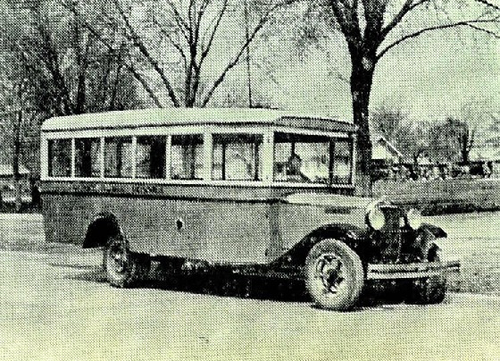
Old buses to be retired by 2019
 First published: March 17, 2010
Source: Hong Kong Government
Secretary for the Environment Edward Yau anticipated all pre-Euro and Euro I buses will be retired no later than 2012 and 2015, respectively, while Euro II buses will retire by 2019.
Mr Yau told lawmakers today if all pre-Euro, Euro I and Euro II commercial vehicles including franchised buses are retired, the economic benefit will be about $24.3 billion.
(more…)
LCQ15:Reduction in the emissions from franchised buses and the resultant pollution problems
 First published: March 17, 2010
Source: Hong Kong Government, via 7th Space
Following is a question by Hon Kam Nai-wai and a written reply by the Secretary for the Environment, Mr Edward Yau, in the Legislative Council today (March 17): Question: Regarding the reduction in the emissions from franchised buses and the resultant pollution problems, will the Government inform this Council: (a) of the current number of buses in each of the bus fleets of franchised bus companies, with a breakdown by the emission standard met by the buses; (b) of the number of old buses replaced by each franchised bus company in the past five years, the replacement cost per bus and the total replacement costs involved; how these figures compare with the corresponding estimated figures in the next five years; whether it knows if such companies have finalised their respective bus replacement timetables for the next five years; if the timetables have been finalised, of the details; if the timetables have not been finalised, the reasons for that; and (c) whether it has studied and estimated the losses suffered and social costs borne by Hong Kong as a result of the pollution problems caused by emissions from franchised buses; if so, of the details; if not, the reasons for that; and what solutions the Government has to reduce the losses and costs in this regard?
Exhausting work

Last updated: March 12, 2010
Source: South China Morning Post
In a letter to the SCMP, Christine Loh Kung-wai, chief executive of the think-tank Civic Exchange, had this to say:
If Hong Kong doesn’t get the “carrots and sticks” formula right, it will continue to be hard to replace the old and highly polluting commercial diesel bus and truck fleet. There is no doubt about the harm these vehicles cause. Government data shows they are the principal emitters of roadside pollution, accounting for 88 per cent of the highly health-damaging particulates and 76 per cent of nitrogen dioxide, another pollutant.
Overseas research shows that those living within 500 metres of busy and congested roads are the worst affected. Negative health impacts include asthma, allergies, impaired lung functions in children and cardiovascular problems for the elderly.
(more…)
Diesel Franchised buses in Hong Kong

By the end 2009, the breakdown on the number of franchised buses by engine type is as follows:
|
Engine Type |
KMB |
CTB |
NWFB |
LW |
NLB |
|
Pre-Euro |
300 |
40 |
30 |
less than 5 |
0 |
|
Euro I |
940 |
310 |
80 |
0 |
0 |
|
Euro II |
1490 |
530 |
480 |
130 |
35 |
|
Euro III |
1100 |
10 |
70 |
20 |
50 |
|
Euro IV |
50 |
30 |
40 |
10 |
15 |
|
Total |
3880 |
920 |
700 |
160 |
100 |
Totals:
|
|
|
|
|
|
|
|
|
Engine Type |
KMB |
CTB |
NWFB |
LW |
NLB |
Total |
|
Pre-Euro |
300 |
40 |
30 |
less than 5 |
0 |
373 |
|
Euro I |
940 |
310 |
80 |
0 |
0 |
1330 |
|
Euro II |
1490 |
530 |
480 |
130 |
35 |
2665 |
|
Euro III |
1100 |
10 |
70 |
20 |
50 |
1250 |
|
Euro IV |
50 |
30 |
40 |
10 |
15 |
145 |
|
Total |
3880 |
920 |
700 |
160 |
100 |
5760 |
Higher fees eyed to drive polluting trucks off road
 Last updated: March 11 ,2010
Source: South China Morning Post
They dangled a carrot, but too few bit.
Now environment officials are considering wielding a stick to get heavily polluting old trucks off the city’s streets.
They have decided to resurrect as soon as possible a proposal to increase licence fees for trucks and vans 15 or more years old, to discourage people from keeping the vehicles.
Under the proposal, higher fees would apply to dirtier vehicles such as those made before the Euro 1 standard, which placed limits on emitted pollutants, took effect in 1995.
Those older vehicles could be as much as 20 times more polluting than those covered by the latest version of the standard, Euro 4, introduced in 2006.
Clear The Air views on the replacement of polluting Pre‐Euro and Euro 1 Diesel commercial vehicles.
 Clear The Air presented its views to Legco on March 10, 2010. Below are some figures.
By end of 2009, there were a total of 3,880, 920, 700, 160 and 100 licensed buses for Kowloon Motor Bus Company (1933) Limited(“KMB”), Citybus Limited(“CTB”),, New World First Bus Services Limited(“NWFB”),, Long Win Bus Company Limited(“LW”),and New Lantao Bus Company (1973) Limited(“NLB”),. The relevant breakdown by engine types is as follows :
|
Engine Type |
KMB |
CTB |
NWFB |
LW |
NLB |
|
Pre-Euro |
300 |
40 |
30 |
less than 5 |
0 |
|
Euro I |
940 |
310 |
80 |
0 |
0 |
|
Euro I above |
2640 |
570 |
590 |
160 |
100 |
Higher fees for older vehicles opposed
 The commercial vehicle industry has objected to government plans to increase licence fees for older commercial vehicles to reduce air pollution. The industry was hoping the government would extend or increase the current one-off subsidy to get these vehicles off the road. But the Undersecretary for the Environment, Kitty Poon, said that instead, the administration intended to raise the fee. She said the subsidy scheme had run its course.
Agree or disagree? Sound off your opinion after the jump.
(more…)
Traffic congestion on the three road harbour crossings
 First published: March 5, 2010
Source: 7th Space
Hong Kong (HKSAR) – Following is a question by the Dr Hon Lam Tai-fai and a written reply by the Secretary for Transport and Housing, Ms Eva Cheng, at the Legislative Council meeting today (March 3): Question: In its paper submitted to the Panel on Transport of this Council in November 2008, the Government has indicated that the traffic distribution among the three road harbour crossings (“RHCs”) is uneven, and there is room for improvement. One of the major causes of uneven distribution is the difference in toll levels of the three RHCs.Moreover, quite a number of members of the public have relayed to me that congestion occurs in north bound and south bound traffic at the Cross-Harbour Tunnel (“CHT”) every morning and evening, and it has not only resulted in longer journey time but has also aggravated air pollution as it has increased vehicle emissions. In this connection, will the Government inform this Council: (a)of the respective average daily vehicular flows, as well as the maximum and minimum traffic flows of CHT, WesternHarbour Crossing (“WHC”) and Eastern Harbour Crossing (“EHC”) in each of the past five years, together with a breakdown by vehicle type; (b)since the implementation of the Journey Time Indication System (“JTIS”) at the end of 2003, whether the authorities have reviewed the effectiveness of JTIS, including the accuracy in its estimation of journey time; if they have, of the details; if not, the reasons for that; (c)whether the Transport Department (“TD”) has received complaints about journey time being wrongly estimated by JTIS; if it has, of the total number of complaints received since the implementation of JTIS and, among such complaints, the maximum and minimum differences in the estimated and actual journey times involved; (d)whether TD has assessed if the traffic congestion problem at CHT is serious at present, and whether it has studied ways to solve the problem, including formulating time indicator for cross-harbour journeys or other vehicle divergent measures (for example, increasing the number of autotoll lanes); if it has, of the details; if not, the reasons for that; (e)whether it had, in the past three years, assessed the impact of the traffic congestion problem at the three RHCs on the journey time to work and to school of members of the public, as well as on air pollution, and whether it had assessed the resultant economic losses to Hong Kong (including the impact on the gross value of production of relevant industries and the development of the tourist industry in Hong Kong); if it had, of the details; if not, the reasons for that; (f)whether it has assessed the impact of the Central-Wanchai Bypass Project, West Kowloon Cultural District Project and the Hong Kong Section of the Guangzhou-Shenzhen-Hong Kong Express Rail Link Project on the traffic at CHT during their construction; whether it will aggravate the traffic congestion problem at CHT; if it has, of the details, and how such problems are to be solved; (g)whether it has assessed if the traffic congestion problem at the three RHCs can be alleviated after the commissioning of the Shatin to Central Link; if it has, of the details; if not, the reasons for that; (h)given that the Government indicated in November 2008 that it had commissioned a 12-month consultancy study on the improvement in traffic distribution among the three RHCs, when the consultancy study will be completed, and whether it will make public the outcome of the study; and (i)given that the franchises of EHC and WHC will expire in 2016 and 2023 respectively, what factors the Government will consider in deciding whether it will propose buying out or extending their franchises; how the outcome of the consultancy study will affect the Government’s decision? Reply: President, (a)A breakdown by vehicle type of the average daily vehicular flow, maximum vehicular flow and minimum vehicular flow of Cross-Harbour Tunnel (CHT), Western Harbour Crossing (WHC) and Eastern Harbour Crossing (EHC) for the past five years is set out in the Annex.
(more…)
Off-peak buses smaller, greener

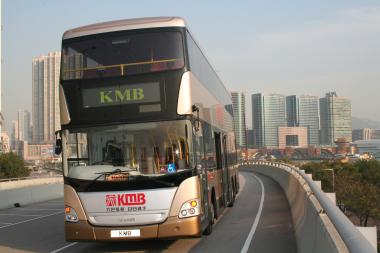
Here is the first KMB bus equipped with Euro V engine, photo taken in 2009. While the new two-axle double-decker will be introduced soon.
SCMP, Anita Lam
27th Jan, 2010
Kowloon Motor Bus will introduce a new two-axle double-decker in a bid to cut costs and reduce pollution.
The new model, to be introduced next month during non-peak hours, meets the Euro V emission standard, which means it releases at least 40 per cent less nitrogen oxide emissions than most buses on the road.
Most Hong Kong buses are 12-metre double-deckers with three axles.
The two-axle buses are not only cleaner but are more cost efficient.
However, they do have a smaller capacity of 88 passengers, compared to over 140 for larger models.
“We could deploy these smaller and greener buses during non-peak hours, when patronage is low,” KMB’s principal engineer, Kane Shum Yuet-hung, said.
The new model has an intelligent gearbox that adjusts automatically to the best shift under different road environments and changes in loading, while its air conditioning adjusts every four seconds.
The new model costs about HK$2.5 million – cheaper than the average price of HK$3 million for three-axle buses, but its mass production will have to wait until the first model completes road testing in the next three quarters of this year.
New World First Bus also plans to introduce the same model next month.
Meanwhile, KMB insists it has no plans to increase fares in the near future.
Bus companies can make a fare rise application when a formula consisting of figures on wage-index changes, the composite consumer price index and the company’s productivity gain calculate to an outcome higher than 2 per cent.
KMB managing director Edmond Ho Tat-man said the latest calculation – taking into account last July’s salary increase for bus drivers – gave an outcome of just 0.59 per cent.
“At present, we have no plan to raise fares,” Ho said. “If we can rationalise more bus routes, it would further ease our pressure for a fare rise.”
The Environment Bureau is consulting the public over an air quality objective that includes 19 proposals to improve the city’s air quality. They include bus route rationalisation and quicker replacement of old bus models – which officials estimate may push bus fares up by 15 per cent.