Clear The Air News Blog Rotating Header Image

China

Proposed 3rd runway on Chek Lap Kok creates more problems than the one that AAHK allege exists

The Airport Authority Hong Kong (AAHK)’s recent proposal to reclaim more land in the Pearl River Estuary to build a third runway has come under much flak, and perhaps rightly so. The AAHK is alleging that, based on the continued growth of air traffic volume in the past years, Chek Lap Kok’s capacity will be saturated by 2030. It seems obviously necessary to expand Chek Lap Kok, but this narrative is less appealing when one considers several other events at play: Chek Lap Kok is currently running only at about 65% capacity; neighbouring airports in Shenzhen and Guangzhou are aggressively expanding, providing fierce competition for the growth pie that is being projected; the airways around Chek Lap Kok are already congested in part because of this competition; poor economic horizon is on the horizon, which will affect airline profits; a growing market to consume internally China’s produce rather than exporting, reducing the demand for cargo shipment.

Rapidly expanding airports in Guangzhou and Shenzhen competes with Chek Lap Kok for both airspace and business. (Shenzhen Media Group)

Of course, AAHK can choose to ignore these warning signs and continue drinking the kool-aid. But they cannot ignore the very real problems that building the Third Runway is going to cause:

  • The increase in simultaneous air traffic is going to generate a lot more noise pollution, a concern for Tung Chung residents not just as annoyance but quite possibly a direct health hazard.
  • The reclamation work required for the runway expansion is huge, and will severely impact pink dolphins native to the Pearl River Estuary. This concern has already been thrown out of the window during the proposals for building the Hong Kong-Zhuhai-Macau bridge and should not be ignored again.
  • The expansion comes into a direct conflict of interest with Shenzhen’s cargo shipping network. Height restrictions on cargo ships passing through shipping channels in the vicinity of the airway will come into play, which will deeply displease Shenzhen’s port development authorities. Incidentally, they are already fuming over a failed proposal to expand the waterways near Chek Lap Kok, which the Hong Kong government rejected on precisely the environmental concerns for the pink dolphins that they themselves now ignore; Shenzhen officials see this slight as Hong Kong’s tactics to stave off competition.

AAHK’s representative saw fit to address only the issue of cargo shipping space, and even there, all there is is a single vague assurance: “putting in place an appropriate administrative arrangement between the relevant authorities in Hong Kong and Shenzhen”; no evidence that they have given the real problems substantial thought.

James Middleton makes a simple and salient point: it would be easier and cheaper to soundproof every single Tung Chung residence and change Chek Lap Kok’s from an 18-h to a 24-h airport, than to build a new runway.

It's probably easier to soundproof all apartments in Tung Chung than to build a third runway. (Square Foot)

Decision makers would do well to step back from dreaming of grand projects and justifying their legitimacy with visions of problems, while ignoring the real problems they would cause.

Click here for more coverage on this issue:

Protests predicted at Beijing’s plan to add incinerators

Published on South China Morning Post (http://www.scmp.com)

Home > Protests predicted at Beijing’s plan to add incinerators


Protests predicted at Beijing’s plan to add incinerators

Tuesday, 13 August, 2013, 12:00am

News›China

ENVIRONMENT

Government says sector will be worth trillions but activists warn move to burn mainland’s rubbish mountains will leave residents fuming

The number of waste incinerators will rise sharply under a national plan to boost investment in environmental protection industries, but environmental activists warn the move could lead to more mass protests as the public grows increasingly concerned about health impacts.

https://www.scmp.com/sites/default/files/styles/236w/public/2013/08/13/nlzkjsgfkldfgsdfg35.gif?itok=0dLOJ6njThe State Council announced on Sunday the environmental sector would become a “pillar industry”. It set a 15 per cent annual growth target for energy-saving and environmental protection industries that would see turnover reach 4.5 trillion yuan (HK$5.7 trillion) by 2015.

Promising government subsidies, tax breaks, and stricter environmental standards, the plan also details key technologies that will be championed by authorities to improve energy efficiency and tackle pollution.

Large-scale incinerators with a daily burning capacity above 300 tonnes are on the shopping list to tackle a looming garbage crisis in many cities. The central government aims to incinerate up to 35 per cent of household waste by 2015, up from about 18 per cent in 2011.

Urban rubbish treatment capacity will be expanded to 870,000 tonnes a day by 2015, from 513,000 tonnes per day at the end of 2011, based on statistics from the Ministry of Housing and Urban-Rural Development.

According to rough estimates, the number of incinerators on the mainland could double to about 300 to meet such targets.

Mao Da, a researcher at Beijing Normal University of solid-waste treatment, said the waste incineration industry had been on fast track in recent years, but authorities were still turning a blind eye to public concerns over such projects.

Waste incineration is often associated with high emissions of dioxin gases, which are highly toxic and can cause reproductive and developmental problems, damage the immune system, interfere with hormones and cause cancer, according to the World Health Organisation.

Chen Liwen , of the Beijing-based green organisation Nature University, pointed out that mainland incinerators had been the subject of protests.

Last month, Guangzhou residents staged three rallies against a proposed refuse incinerator in the city’s Huadu district, with the largest meeting attracting more than 10,000 protestors.

“There is a prevailing public mistrust towards the government over incinerators,” said Chen, who has surveyed residents living close to incinerators in Guangzhou, Shenzhen, Shanghai, and Hangzhou .

Their greatest area of doubt is governments’ safety claims regarding incinerators, Chen said. Residents were concerned about operational and management loopholes that could lead to emissions of toxic gases, even though operators of most of the mainland’s incinerators insist they’re using technologies on par with developed countries.

The reluctance of operators and the authorities overseeing them to publish data on emissions only heightened the public’s fears, she added.

Residents living close to two incinerators, in Hangzhou and Guangzhou, were already blaming them for rising cancer rates, but the local governments had not launched public inquiries into the claims.

“As long as authorities fail to address these public concerns, the new push for the industry may lead to more mass protests in the years to come,” Chen said.

Mao said the lack of adequate supervision of incinerators said big new investment in them could result in a surge in emissions of dioxins and heavy metals, such as mercury. Some studies already confirmed such a trend of rising dioxin emissions between 2004 and 2010.

“This actually violates the nation’s pledge under various international environmental treaties to gradually cut emissions of dioxin and mercury,” Mao said.


Toxic Snowfall engulfs Delh’s Okhla Residents, untested, unapproved Chinese incinerator technology takes its toll | ToxicsWatch Alliance

http://www.toxicswatch.org/2012/12/toxic-snowfall-engulfs-delhs-okhla_720.html

Posted by Krishna at 4:27 AM 0 comments

Press Release

Toxic Snowfall engulfs Delh’s Okhla Residents, untested, unapproved
Chinese incinerator technology takes its toll

High Court delay and ecological lawlessness unfolding in national
capital with impunity.

December 27, 2012, New Delhi: Residents of Okhla neighbourhoods were
delighted to see what they thought was the  season’s first snowfall descending on their
homes and frosting their cars. But delight turned to anger when they
realised that it was toxic ash from a large waste-to-energy plant
operated by the Jindal in their neighbourhood.  Children were quickly
ordered indoors and windows and doors tightly shut.

A group of residents led by the resident’s welfare association (RWA) office
bearers then drove up to the plant and demanded immediate stoppage of the
plant, which has been functioning  since March without proper clearances
from the Central Pollution Control Board (CPCB).

Plant representatives R. K, Tomar and Som Vir Singh were compelled by the
RWAs of Pocket A and Pocket B, Sukhdev Vihar, to visit the colony and take
away samples of the thick grey-brown ash for analysis.  They assured the
RWAs that this was the result of excess silt in the household refuse which
is being burned in the plant and that steps were being taken to reduce ash.
Vimal Monga, President of the RWA of Pocket A told the Jindal plant
managers that the air over the colony had become fouled by thick smoke ever
since it began operating with many residents now suffering from respiratory
and other ailments.  The situation was particular bad in foggy conditions
with the smoke and ash from plant failing to disperse and settling on the
residential colonies of Sukhdev Vihar, New friends Colony, Maharani Bagh,
Haji Colony and Ghaffar Manzil.

Adjacent to the plant are major institutions such as the Institute of
Genomics and Integrative Biology (IGIB), Central Road Research Institute
(CRRI),  Apollo Hospital, Fortis Escorts Heart Institute and the Holy
Family Hospital, besides several schools such as the Dev Samaj Public
School.

The plant faces bitter opposition from residents, waste pickers and
environmental groups. There is a a Writ Petition (Civil) NO. 9901/2009 in the
Delhi High Court against the power plant by Delhi’s Timarpur-Okhla Waste
Management Co Pvt Ltd (TOWMCL) of M/s Jindal Urban Infrastructure
Limited (JUIL), a company of M/s Jindal Saw Group Limited.

The 31 page report of the Union Environment & Forests Ministry
constituted Technical Experts Evaluation Committee of Central
Pollution Control Board (CPCB) on the Timarpur-Okhla Waste to Energy
Incinerator Plant has condemned the Timarpur-Okhla Waste to Energy
Incinerator Plant by JITF Urban Infrastructure Limited (Jindal
Ecopolis) has violated every rule in the rule book including
environmental clearance conditions. It revealed to the Experts
Committee in September 2011 that it is using untested and unapproved
Chinese incinerator technology in complete violation all laws and
environmental clearance of 2007 including its own project design
document and environment impact assessment report. Chinese technology
provider is from Hangzhou New Century Company Ltd of Hangzhou Boiler
Group. The critique of the report is attached.

In the report, Dr A B Akolkar, Director, CPCB emphasized that as per
Municipal Solid Waste (Management & Handling) Rules ᢩodegrdable
waste⠩s to be treated using biological method rather than deriving RDF
or by incineration as is being done by Jindal Ecopolis. This clearly
demonstrates that the Timarpur-Okhla Waste to Energy Incinerator Plant
violates the Municipal Solid Waste (Management & Handling) Rules
framed under Environment Protection Act, 1986.

In the Writ Petition (Civil) No. 9901 of 2009 in Delhi High Court,
legal officials like Mr A S Chandiok Additional Solicitor General and
Standing Counsel for the Delhi Government and for the Delhi Pollution
Control Committee, Najmi Waziri has been misleading and
misrepresenting facts about waste to energy plants in Andhra Pradesh
by saying that Refuse Derived Fuel incineration technology was
already in use at Hyderabad and Vijayawada. The fact is that there is
no plant in Hyderabad. The plant that became functional as per legal
officials now stands defunct is in Shadnagar, Mahboobnagar district of
Andhra Pradesh. On 18th July, 2011, Delhi High Court asked CPCB and
the Delhi Pollution Control Committee (DPCC) to conduct a joint
inquiry about India’s first waste-to-energy plant and file a report on
the allegations that it posed health risks to citizens. “A joint
report be submitted by the DPCC and the CPCB after an inquiry of the
site of the energy plant about the alleged risks posed to citizens,”
ordered a bench of Chief Justice Dipak Misra and Justice Sanjiv
Khanna, Delhi High Court. This has not been done so far. A bizarre
situation has emerged because the arguments for ᒥfuse Derived Fuel
incineration technology⠴hat was advanced by the law officers is no
more relevant because the plant is using an experimental Chinese
technology which was never ever mentioned at the time of submitting
the project proposal.

There have been incessant demonstrations and protest rallies against
this project. There is an ongoing campaign against it. The plant that
has been built despite protest is 150 m from the residential areas.
The area has a bird sanctuary, a university and three hospitals within
a radius of 10 kilometres. All will be adversely affected by toxic
fumes of the plant. The idea of waste to energy plants which is based
on a tried, tested and failed incineration technology in Okhla.

MCD, Delhi government and central government has shown unpardonable
callousness towards hazardous emissions from municipal incinerators
that cause serious environmental and health problems both to people
living near them and thousands of kilometres from the source. These
projects are destroying the livelihood of about 3.5 lakh waste
recycling workers and valuable resource material for compost that is
required to be treated by composting/anaerobic digestion/vermin
composting/other biological processing for stabilization as per
Municipal Solid Waste (Management & Handling) Rules.

Representatives of GTZ (German Technical Cooperation) led by Dr.
Juergen Porst, Senior Advisor have stressed the need for a Disaster
Management Plan in the very first meeting of the CPCB’sTechnical Expert
Committee, which is annexed to the CPCB’sreport. But this does not find
mention in the recommendations of the report. This finds reference in
the minutes of the meeting annexed with the report. It underlines the
possibility of disaster from the Timarpur-Okhla Waste to Energy
Incinerator Plant, which is situated in a residential area. It is
noteworthy that a hazardous plant in Bhopal’ds residential area that led
to world worst industrial disaster in 1984 also did not have any
disaster management plan.

The Review of Technical Evaluation by Anant Trivedi, Member, Technical
Evaluation Committee, CPCB reads: “The Okhla plant has a capacity of
2050 tpd of domestic waste input. However the plant design allows upto
10,000 tpd of input for incineration. Toxic bottom ash quantity
produced will be 20-30% of input. This amounts to at least 410 tpd
rising to a maximum of 3,000 tpd. Additionally there will be toxic
flyash of about 10% of the bottom ash.None of the landfill sites have
the capacity to take in so much toxic waste and mulba has been dumped
every where including all public spaces.” He asks, “so what is
proposed to safeguard public health from this toxic substance?

The report apprehended that the information that is submitted to the
experts committee of CPCB might be used in the on-going case in the
Delhi High Court. It makes a shocking revelation that although High
Court has been hearing the case since 2009, the project proponent did
not inform the court about gross deviations from the project design
plan envisaged in the EIA report. As per the minutes of the second
meeting of the technical experts committee, non-cooperative approach
of the senior officials of Timarpur-Okhla Waste to Energy Incinerator
Plant was condemned on August 11, 2011. Representatives of GTZ
underlined that there was lack of transparency with regard to
environmental and health impact on the neighborhood residents. It was
also noted that the fugitive emissions and the expected emission of
Dioxins and Furans has not been quantified. The characteristic of ash
and required standards was not mentioned. Prof. T R Sreekrishnan,
Department of Biochemical Engineering and Biotechnology stated that
disposal option for incineration instead of bio-methanation proposed
for green waste is in violation of what was mentioned in the EIA
report.

A site visit by social and environmental researchers and activists has
revealed the close proximity of the residential colonies to the
hazardous plant which is belching out a cocktail of toxic smoke in the
households. The testimonies from the residents who are suffering from
the adverse impact of industrial smoke in the houses.

For Details: Gopal Krishna, Convener, ToxicsWatch Alliance (TWA), Mb:
9818089660, Email: krishna1715@gmail.com, Web:
toxicswatch.blogspot.com
Vimal Monga, President, 9711408421 Sukhdev Vihar RWA
Asha Arora, Okhla Anti-incinerator Committee –  9810499277
Okhla Anti-incinerator Committee, http://www.facebook.com/home.php#!/ghoslaokhla
Jindal plant representative.  R.K Tomar 999978044
Jindal  plant representati (environment and health) Som V

Violent clashes over plan for incinerator in Guangzhou

Published on South China Morning Post (http://www.scmp.com)

Home > Violent clashes over plan for incinerator in Guangzhou


Violent clashes over plan for incinerator in Guangzhou

Saturday, 20 July, 2013, 12:00am

News›China

· 14666f5435456738cc318cb16adafc5c.jpg

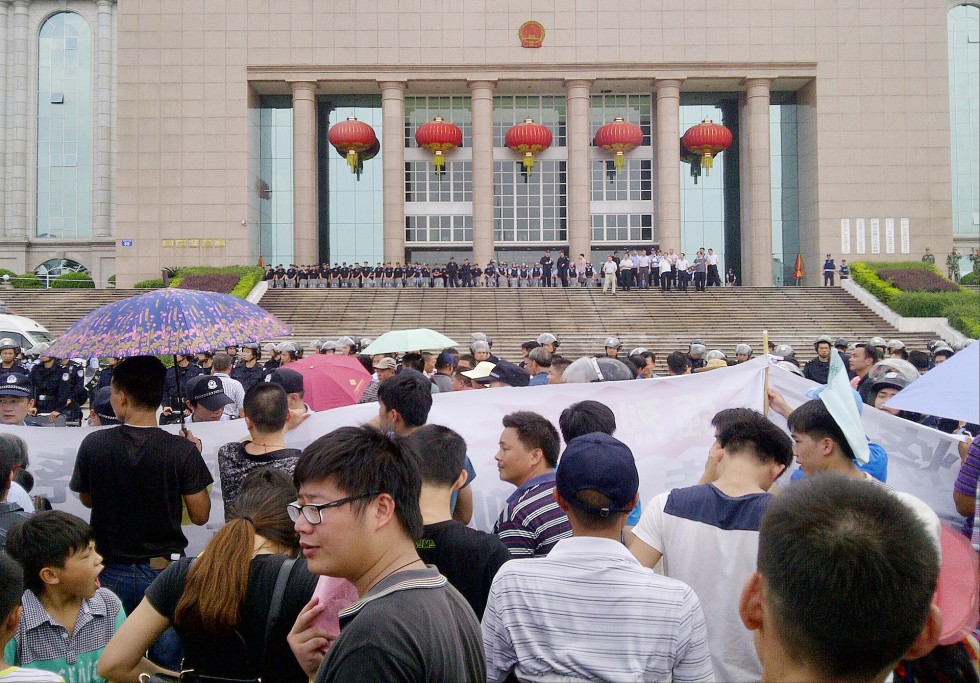
Protesters outside the government headquarters. Photo: Mimi Lau

CIVIL UNREST

Suspected protest leaders rounded up after four injured in running battles with police as thousands take to the streets of Guangzhou

Riot police rounded up about a dozen people late last night in a raid on Qianjin village, Guangzhou, the site of a planned incinerator, after violent clashes earlier in the day.

Officers moved in hours after police used force to disperse thousands of protesters in Huadu district following a series of running battles. At least four protesters were injured during protests involving as many as 10,000 people at times.

It was the third large-scale rally in two weeks to fight the proposed refuse incinerator in Shiling township, a national hub for leather-goods manufacturing.

Villagers said the riot police who took part in last night’s raid were armed with helmets and shields and that they took away suspected leaders of the protest.

Despite a heavy police presence, protesters broke through police barricades at about 11am to enter Huadu Plaza, an open area outside the district government headquarters. They then marched along some of Huadu’s busiest roads, bringing traffic to a halt in many areas.

Chanting slogans and waving banners, demonstrators claimed the incinerator would “damage their health” and turn Shiling into a “death zone”.

Things got violent after the crowd returned to the Huadu district government headquarters at about 2.30pm and called on district officials to respond to their demands. Some protesters pushed on police lines while others threw water bottles and hit police with sticks.

Police injured at least four men with batons and arrested another man. Two of the injured men appeared to be unconscious and required medical attention.

Protesters lowered the national flag to half-staff outside the government headquarters.

At 5.30pm, police began to use force to disperse the some 2,000 protesters left in the plaza, chasing them with batons. It was cleared by 6pm.

Protesters said the city should learn a lesson from Likeng village in the city’s Baiyun district. Residents there complain that the air, ground and water supply have been severely polluted by two incinerators there.

“If we don’t keep on fighting, there will be no home to go back to,” said a 30-year-old Shiling bag maker. “We don’t want to be the next Likeng, move the incinerator elsewhere and work on other ways to reduce garbage.”

Such environmental protests have been on the rise across the mainland. The Huadu clashes come just days after large protests in the Guangdong city of Jiangmen forced local officials to cancel plans for a uranium processing plant.

Some of yesterday’s protesters said they had been warned not to take part.

Huadu officials announced plans to locate the incinerator in Qianjin village earlier this month. The project is expected to be finalised on August 30, with an environmental assessment ready in February, and construction to start in June next year.


Source URL (retrieved on Jul 20th 2013, 6:13am): http://www.scmp.com/news/china/article/1286568/violent-clashes-over-plan-incinerator-guangzhou

http://www.youtube.com/watch?v=fzeeSMRR_9k

Air pollution kills millions each year, says study

http://www.bbc.co.uk/news/science-environment-23315781

15 July 2013 Last updated at 17:35

Air pollution kills millions each year, says study

By Mark Kinver Environment reporter, BBC News

Description: Description: Man walking along a polluted street (Image: AP)Air pollution is considered to be one of the major environmental risks facing the world’s population

Continue reading the main story

Related Stories

Outdoor air pollution is estimated to contribute to more than two-and-a-half million deaths each year, a study has suggested.

It calculated that, each year, 470,000 people died as a result of ozone and 2.1 million deaths were linked to fine particulate matter.

Air pollution increased respiratory and heart disease risks, with the young, elderly and infirm most vulnerable.

The findings appear in the Environmental Research Letters journal.

“Epidemiological studies have shown that ozone and PM2.5 (particulates with a diameter of less than 2.5 microns – about 30 times thinner than the width of a human hair) have significant influences on human health, including premature mortality,” an international team of scientists wrote.

In order to reach their estimate, the researchers compared the results from a range of earlier mathematical models on deaths from air pollution.

They found that their total was lower than previous estimates.

But the team added: “Our methods likely underestimate the true burden of outdoor pollution because we have limited the evaluation to adults aged 30 and older.

“On the other hand, recent studies suggest that the relationship between PM2.5 and mortality may flatten at high concentrations, suggesting that we may overestimate PM2.5 mortality in regions with very high concentrations.”

Global problem

The World Health Organization (WHO) says it is difficult to identify the world’s most polluted areas because many cities with high levels of air pollution do not have monitoring systems in place.

Description: Description: Factory furnace, China (Getty Images)Heavy industry in developing nations is a major source of air pollution

“Nevertheless, the available data indicates that air pollution is very high in a number of Asian cities (Karachi, New Delhi, Kathmandu, Beijing), in Latin American cities (Lima, Arequipa) and in Africa (Cairo),” it observes.

But the WHO adds that although most air pollution hotspots are located in developing nations, it says that developed countries are also at risk and the issue is a major environmental risk globally.

As air quality is largely beyond the control of an individual, the WHO says action needs to be taken by national and international bodies.

In 2005, WHO published its Air Quality Guidelines that recommended limits of air pollutants, including PM2.5 and ozone.

“Continued exposure to particles contributes to the risk of developing cardiovascular and respiratory diseases, as well as lung cancer,” the WHO states.

“The mortality in cities with high levels of pollution exceeds that observed in relatively cleaner cities by 15-20%,” it adds.

“Even in the EU, life expectancy is 8.6 months lower [as a result of] exposure to PM2.5 produced by human activities.”

Ozone pollution is linked to breathing problems, such as asthma, reduced lung function and lung disease.

Feeling the heat

The research, conducted by an international team of scientists, also looked at how changes to the planet’s climate system as a result of human activities could have affected the impact of air pollution, such as changes in temperature and humidity.

While being a contributing factor to climate change, previous studies had considered how the emissions could create conditions that exacerbated poor air quality, such as the way an increased concentration of chemicals interacted with sunlight.

Another change is the way higher temperatures affect plants’ biochemical characteristics.

Trees use chemicals known as volatile organic compounds (VOCs) to attract pollinators as well as deter damaging attacks from insects and larger animals.

However, higher temperatures can cause many tree species to emit more VOCs into the atmosphere, which reacts with sunlight to form ozone or more particulates.

Using a model of ozone and PM2.5 atmospheric concentrations from 1,850 and 2,000, the researchers concluded changes to the climate since pre-industrial times accounted for only a small proportion of the current deaths related to air pollution.

They calculated that about 3,700 deaths each year could be attributed to the effects of past climate change on air quality.

The team observed: “As models continue to develop and comprehensively represent the mechanisms by which climate change might influence air quality, we should expect that large estimates based on different models will likely persist.”

10,000 join protest against Guangzhou refuse incinerator

Tuesday, 16 July, 2013, 12:00am

News›China

· bb7c18f01b0bff80bc3d7c8f8fe9edd2.jpg

Some of the thousands of residents who protested against the plan for a refuse incinerator in Huadu district. Photo: SCMP

Kitt

ENVIRONMENT

Mimi Lau in Guangzhou mimi.lau@scmp.com

Demonstrators march to township government offices to voice concern that plan will worsen pollution in leather-goods manufacturing centre

About 10,000 people gathered yesterday in a township under Huadu district, Guangzhou, to demonstrate against plans to build a refuse incinerator in the national hub for leather-goods manufacturing.

The demonstration, approved by Shiling township officials, began at around 3pm at the Qianjin village committee office, with about 3,000 participants.

More people joined as protesters marched along main roads in Shiling to the local government offices. Some witnesses put the total number of protesters at between 8,000 and 20,000, while the organiser said at least 10,000 people showed up.

Nearly 1,000 armed police officers were seen clearing the way for demonstrators, many of whom carried colourful flags and large banners criticising the incinerator plan. The sea of people appeared to stretch about a kilometre along the roads.

We are all very upset. The incinerator is only 500 metres from my home. I have two children and I don’t want them to develop health problems in a few years

“We are all very upset. The incinerator is only 500 metres from my home. I have two children and I don’t want them to develop health problems in a few years,” said a 33-year-old father of two who grew up in Qianjin, which he said has about 500 residents. “Over half of the world’s handbags are made here – Shiling is polluted enough and can’t handle an incinerator.”

This was the second related protest in Shiling, following one on Saturday that drew only about 100 people. Shiling has about 300,000 residents.

Last week, Huadu officials announced a timetable for the incinerator, after saying late last month that it would be located in Qianjin. The project is expected to be finalised on August 30, with an environmental assessment ready in February, and construction to start in June next year.

“Police didn’t hurt anyone today – they were protecting women and the elderly, and keeping things in order,” said a 26-year-old Shiling resident.

At least 5,000 flags were passed out for the protest, which peacefully dispersed after reaching the township government offices at around 6pm.

The protest organiser, a 45-year-old Qianjin villager who declined to be named, said the demonstration was discussed with Shiling officials last week. “We will give Shiling officials a few days to address our concerns, but if there is no reply, we will head to Huadu district authorities and eventually the Guangzhou city government,” he said.

Last summer, hundreds of residents of Qingyuan and Guangzhou took to the streets to protest against the project even before site details were announced. It was one of the largest protests against government plans to build incinerators in Guangzhou.

By 2015, Guangzhou plans to build five new garbage incinerators, in addition to the existing one in Likeng in Baiyun district.

The Likeng incinerator handles 1,000 tonnes of refuse a day. Most of the rest of the 18,000 tonnes of waste the city produces each day ends up in landfills which, according to the Southern Metropolis Daily, already contained 40 million tonnes last year.


Source URL (retrieved on Jul 16th 2013, 7:32am): http://www.scmp.com/news/china/article/1283465/10000-join-protest-against-incineration-guangzhou

State Council announces 10 new measures to curb air pollution

Published on South China Morning Post (http://www.scmp.com)

Home > State Council announces 10 new measures to curb air pollution


State Council announces 10 new measures to curb air pollution

Saturday, 15 June, 2013, 12:00am

News›China

ENVIRONMENT

· _cb04_33653683.jpg

Green activists hand out masks to pedestrians on The Bund yesterday to raise awareness of air pollution in downtown Shanghai. Photo: Reuters

Cary Huang in Beijing cary.huang@scmp.com

Controls on worst polluters and PM2.5, adjustment to nation’s energy structure among State Council measures to rid cities of choking smog

The central government has taken further steps to curb air pollution, with fresh measures outlined at a cabinet meeting chaired by Premier Li Keqiang yesterday.

https://www.scmp.com/sites/default/files/styles/486w/public/2013/06/15/njksdfhjksdgfdg30.jpg?itok=nJiYU5VLThe State Council announced 10 new measures to fight air pollution in urban areas.

The government had promised to implement stricter curbs on severe air pollution after most of the cities in the north choked on thick smog for most of the winter.

It will strictly control highly energy-intensive and polluting industries, adjust its energy structure and enhance control of PM2.5 – particles less than 2.5 microns in diameter that can damage health – in populated regions and cities, a statement released after the meeting said.

The government said it would eliminate overcapacity in heavily polluting industries, such as iron and steel, cement, aluminium and flat glass, earlier than the target originally set in the latest five-year plan. It also vowed to reduce major emissions by some heavily polluting industries by more than 30 per cent by the end of 2017.

During periods of heavy pollution, local governments should enact emergency management response measures, such as traffic restrictions or emissions limits for polluting industries, the cabinet said.

The government would hold regional officials accountable for achieving targets on curbing pollution set by the government and strengthen oversight by setting up an assessment system, it said.

Regional officials have long pursued rapid economic growth, with mounting costs in terms of environmental destruction and air pollution.

Zhou Rong , a climate and energy campaigner with Greenpeace, said the general strategies adopted in fighting air pollution were “in the right direction”, though how effective they would be would depend on the details of each measure.

“For instance, the top leadership has realised the key solutions to air pollution lie in restructuring energy consumption and eliminating production of highly polluting industries,” she said. “But detailed targets have yet to be announced … to see how ambitious the government really is on cleaning up the sky.”

The State Council also said air quality would be included in appraising the performance of local officials. “This could bring some genuine change if the air quality issue is given a higher priority than gross domestic product growth, but it is still a big if now, given the very brief outlines of these 10 measures,” Zhou said.

Following the announcement of the new measures, the revision of the mainland’s outdated air pollution prevention law could be accelerated, she said.

The State Council meeting also studied the development of the solar power industry, which is suffering from overcapacity and has become a source of friction with Western trading partners.

Topics:

Air Pollution

State Council


Source URL (retrieved on Jun 15th 2013, 12:01pm): http://www.scmp.com/news/china/article/1261166/state-council-announces-10-new-measures-curb-air-pollution

China’s environmental problems are grim, admits ministry report

http://www.guardian.co.uk/environment/chinas-choice/2013/jun/07/chinas-environmental-problems-grim-ministry-report

China's choice by Jennifer Duggan

China’s environmental problems are grim, admits ministry report

Report by China’s Environment Ministry highlights decreasing standards in the country’s water and air quality

China blog on pollution : Farmers dig ditches to lead polluted water into farm fields, Kunming

Farmers dig ditches to lead water from a white polluted stream into farm fields, in Dongchuan district of Kunming, Yunnan province, March 21, 2013. Photograph: Stringer/Reuters

China’s environmental situation has been described as “grim” in an annual update on the country’s environment released this week.

The update by China’s Ministry of Environmental Protection said that overall pollution problems were serious last year and reporting on the update, the state-controlled newspaper China Daily said there has been a “marked deterioration in China’s air, water and land quality”.

The 2012 Environmental Conditions Report addressed water and air pollution, the two types of pollution that have received the most attention over recent months. The report found that 57.3% of the groundwater in 198 cities in 2012 was “bad” or “extremely bad”, while more than 30% of the country’s major rivers were “polluted” or “seriously polluted”.

According to the ministry’s report, the air in only 27 out of 113 key cities reached air quality standards last year. China Daily said that at the beginning on last year, more than 1 million square kilometres were covered in heavy smog, affecting hundreds of millions of people.

The problem went on to get worse earlier this year as air pollution reached what is thought to have been record levels. Zhou Rong, Greenpeace East-Asia Climate and Energy campaigner based in Beijing said that air pollution was particularly bad in January of this year and that it has gotten a lot of attention. “Air quality is seen by everyone so I think it is is the most open topic, everyone can talk about it,” she said.

Ironically, the theme set by the Ministry of Environmental Protection for World Environment Day this week was Breathing and Working Together. But with air pollution in Beijing levels reaching “very unhealthy” levels on the same day, the city’s residents weren’t doing much breathing out of doors.

06-05-2013 19:00; PM2.5; 225.0; 275; Very Unhealthy (at 24-hour exposure at this level)

— BeijingAir (@BeijingAir) June 5, 2013

It wasn’t just China’s cities that suffered from bad pollution last year. Rural areas don’t fare that well either and the report states that rural environmental problems have become increasingly apparent. It states that industrial pollution is putting pressure on the environment in rural areas. It cited industrialisation, urbanisation and agricultural modernisation as key causes of environmental problems.

China’s leaders are very aware of the need to improve the country’s pollution problems. This week Chinese Vice-Minister of Environmental Protection, Li Ganjie said that the government will set higher anti-pollution standards. Li said that these include promoting clean energy and warning systems to monitor smog.

Zhou said there is little doubt the government are trying to take action. “The Ministry of Environmental Protection is aware that air pollution is mainly from coal burning and that coal consumption growth is threatening the air quality, so they are trying to influence the energy policy to get guarantees to improve air quality as soon as possible,” she said.

But she added that coal targets “would have some conflict with economic growth” and that there may have been objections on the targets which is why some of the main industrial regions don’t yet have clear coal targets.

In May, Chinese President Xi Jinping said the country won’t sacrifice the environment to ensure short-term economic growth. However, with concerns about a slow-down in the Chinese economy and the impact that would have globally, this may be difficult to achieve.

“We need further action,” said Zhou. “Now most people are not satisfied with the timeline for air quality improvement.” She said that the authorities initially proposed that after 2030 there would be an improvement. But she added that “now there is a very high political will to talk about air quality. They want a quicker action plan. By the year 2017 they want to see a change in air quality.”

But despite the “grim” state of China’s environment, Zhou is optimistic that the government’s rhetoric is “a sign that they will take action” and that they will put in place an action plan with ambitious coal targets

The houses built on China’s ‘poisoned’ land

http://www.guardian.co.uk/environment/2013/jun/06/houses-chinas-posioned-land

The houses built on China’s ‘poisoned’ land

Homes are being built on contaminated land in Chinese cities – and the residents of these developments have no idea

· http://static.guim.co.uk/static/75497e1d14729b6c288f00be9e7f7a3386c78dec/common/images/icon-email.pngEmail

· Gao Shengke and Wang Kai for ChinaDialogue, part of the Guardian Environment Network

· guardian.co.uk, Thursday 6 June 2013 14.36 BST

2013 China Environment Journalism awardsIndustry experts estimate there are likely to be tens of thousands of plots of polluted land across China. Photograph: Caijing

Gao Shengke and Wang Kai have won the prize for Best Investigation atchinadialogue’s and The Guardian’s China Environmental Press Awards – 2013 for their investigation into contaminated earth in Chinese cities. Here is the first of their three-part series of reports.

The excavators are rumbling and dust swirls all about at the second phase of the Kangquan New City construction project in Guanzhuang village, Chaoyang District, outside Beijing’s east fifth ring road.

A 20-metre deep pit has been dug on the site. A foul stench rises from the pile of earth that has been removed. Until now, few people knew about the secret that was buried here.

This plot of land was previously the site of a factory owned by the Ministry of Railways that made anti-corrosive railway sleepers. The plant was in operation for more than 30 years; many kinds of organic pollutants continuously seeped into the topsoil, deeper soil layers, and into the groundwater. Some seven or eight years ago, the factory was relocated and this plot of ground was left unused. In January 2011, the city administration decided to convert the land into a development for affordable housing and it was taken over by the Residential Construction Service Centre for Civil Servants to build low-cost housing for civil servants from all ministries.

After the Civil Servants Residential Centre took over the plot, a number of specialists carried out an initial land survey. In May 2011, the Chinese Research Academy of Environmental Sciences released a public environmental impact assessment report which made no mention of any soil pollution problem. There was also no mention of the historical use of the site or the original environment.

However, Caijing magazine got hold of another similar survey report by the Chinese Research Academy of Environmental Sciences, which showed that pollutants in the soil seriously exceeded approved levels, especially semi-volatile organic pollutants such as polyaromatic hydrocarbons. There were many kinds of hydrocarbons, most of them relatively strong carcinogens and mutagens.

Furthermore, the groundwater pollution was also relatively serious. The report said the most serious pollution occurred at a depth of between 0 and 7 metres, though at 12 metres pollutants still exceeded limits.

Heavy metals, electronic waste, petrochemical organic pollutants and persistent organic pollutants are the four main types of pollutants in contaminated land. One specialist said that there are countless plots of land larger than Kangquan New City that are even harder to remediate. “Last century, from the 1950s to the 1980s, Beijing’s south third ring road was a chemical factory zone, with a concentration of pesticide plants. How many times has this plot of land been surveyed? How many times has the soil been remediated? This area was converted into a residential and commercial district long ago.”

The problem of polluted land extends far beyond Beijing. After 2001, a large number of polluting enterprises were moved out of the Yangtze River Delta, the Pearl River Delta, and the old industrial bases of China’s northeast. In 2008, the central office of the State Administration of Work Safety insisted that highly-polluting chemical enterprises should be phased out.

Research undertaken by Luo Yongming, a senior soil expert at the Chinese Academy of Sciences, showed that from 2008 countless polluting companies relocated from Jiangsu, Liaoning, Guangzhou, Chongqing, and other areas, displacing over 20,000 hectares of contaminated land.

From 2004 to 2012, Chongqing relocated 137 polluting factories. Furthermore, these factory sites are mostly now prime real estate locations. For three consecutive years, Jiangsu relocated more than 4,000 heavily polluting chemical enterprises, leaving behind a large area of land with unknown levels of pollution.

Exactly how widespread the problem is in China is unclear, but a senior industry specialist pointed out that there must be tens of thousands of plots of polluted land nationwide; of these pesticide plants occupy quite a high proportion but only a miniscule number of these have been treated or are undergoing treatment.

In Beijing, for example, between 2001 and 2005, 142 factories were relocated, displacing 8.78 million square metres of reusable land. According to Li Jingdong, section head of the polluted land management department under the Beijing Bureau of Environmental Protection, from 2004 until now, only a few dozen contaminated sites have been identified, out of which only eight have been remediated.

Because of a lack of both facilities and awareness at old state-owned factories, pollutants were handled in a fairly basic fashion. In those days, pesticide factories usually just buried pesticide residues and harmful chemical residues onsite, just five or six metres below ground. A lot of land that was treated this way still has high concentrations of pollutants, sometimes hundreds or thousands of times above set limits.

These days “the number of plots of land that have been identified as polluted still hasn’t reached 100,” says Jiang Lin, associate director of the Beijing Municipal Research Institute of Environmental Protection. There are about 400,000 to 500,000 polluted sites in the US. Europe also has several tens of thousands of sites.

Cheng Mengfang, a researcher with the Institute of Soil Science at the Chinese Academy of Sciences, pointed out that in China a lot of contaminated ground has not been treated or remediated, it’s just directly exploited for development.

The danger to public health
Polluted soil endangers the human body both directly and indirectly. The indirect channels are through groundwater, surface water and the atmosphere. The direct channel is through dust in the air or when children play and without paying attention absorb some of the contaminated soil.

Since the mid-1990s, polluted sites in China have led to an excessive amount of acute poisoning incidents. As the rate of land development has accelerated, these kinds of accidents are becoming more frequent.

On April 28, 2004, at the construction site for the Songjiazhuang subway station at the south third ring road in Beijing, three workers were poisoned while underground. They were sent to hospital, while the worker with the most serious condition had to be given hyperbaric oxygen therapy. A pesticide factory previously occupied the site.

In July 2006, at the site where a chemical factory was moved from Guoxiang, near the south ring road in Suzhou, Jiangsu, leaving behind 20 mu of contaminated land, six construction workers fell into a coma after diggging up a pile of contaminated earth.

During Spring Festival in 2007, at the Heshan construction site in Wuhan, a pungent stench grew stronger after a deep layer of soil was excavated. One after the other, the workers began to feel dizzy and have difficulties breathing. Because they didn’t know what the problem was, they carried on working. Finally, several of the poisoned workers were sent to hospital for emergency treatment. This was the former site of a pesticide plant.

A professional in pollution remediation who took part in the sampling of the site of Beijing Chemical Factory number 2 described how toxic gas was continuously emitted from a pipe. The gas could be ignited with a lighter, which showed that the concentration of the pollutant was high enough to cause fatal poisoning.

Chen Tongbin, the director of the Environmental Bioremediation Centre at the Chinese Academy of Sciences, said that there could be relatively long incubation periods depending on the kind and concentration of pollutants. “When poisoning becomes acute, it shows that the pollution at the site has reached a grave level. Those people who are long-term residents of this plot of polluted ground may then become chronically contaminated. Symptoms may not appear for five years, 10 years, even dozens of years later.”

A lack of transparency
Even though some plots of contaminated land have come to light, news about them is strictly blocked. It is only for internal discussion by specialists and closed-door decision-making by the government. A specialist who has taken part in many soil remediation projects gave the example of a commercial building site in Guangzhou that was formerly the site of a key fertiliser factory, and where heavy metals and petrochemical pollutants both exceeded safety levels. This site was chosen for Guangzhou’s Asian Games Village. The pollution problem was only discovered after an investigation and so finally the Asian Games Village was moved to Panyu District. However, the residents of the construction site were never told the truth.

A senior industry insider disclosed to Caijing that a particular industrial plot in Shenzhen was the original location of a large number of electronics companies. After these companies were relocated, they left behind a serious amount of solid waste pollution. All the offices on this plot of land currently have no idea. Even the local government doesn’t have a clear idea of the extent of the problem.
Caijing also found out that the polluted ground in the second phase of the Beijing Kangquan New City construction project has already been treated. Someone who identified themselves as the person in charge of onsite earthwork construction with the Beijing Zhonghou Construction Machinery Company said that the contaminated soil was moved to Beijing’s eastern suburbs. It was handled by “digging down several dozen metres, and then covering with good soil. This was done according to requirements and with the Ministry of Environmental Protection making several inspections.”

After bringing the polluted soil to the landfill, anti-seepage work must be carried out on the landfill to prevent polluting the groundwater. Someone with inside knowledge of the second phase of the Kangquan New City construction project claimed that the “contaminated soil that was dug up, after it was moved away was sorted into several different categories according to how it would treated such as pyrolyzed, incinerated, or composted, but during the treatment process there could be some non-standard procedures.”

But the Civil Servants Residential Centre has positively confirmed neither of these claims. Another person familiar with the matter said that at the meeting to evaluate bids for the second construction phase of Kangquan New City, a specialist in the evaluation group claimed bidders were judged solely on the company’s qualifications and estimate; it took no account of any initial plan for remediation. “At the meeting someone even joked, after the project is completed, we can ask the Ministry for Environmental Protection, the Ministry of Land and Resources, and the Ministry of Housing and Urban-Rural Development to move in. If there’s no problem then other ministries can move in too. After all, these ministries have a better level of knowledge than the others.”

Originally published by Caijing magazine

Bei Cough Jing

· masks.jpg

· scmp_09mar13_ch_air_pollution_34521699.jpg

· masks.jpg

· A variety of masks are selling big online in China. Photos: AP, Reuters

· scmp_09mar13_ch_air_pollution_34521699.jpg

·masks.jpg

A policeman wears mask on a windy and dusty day at Tiananmen Square in Beijing. Photo: SCMP/Simon Song

· masks.jpg

This combo photos show tourists wearing different masks at Tiananmen Square in Beijing on January 30, 2013. Photo: SCMP/Simon Song

South China Morning Post

Published on South China Morning Post (http://www.scmp.com)

Home > Fashion-forward face masks a big hit in China amid soaring air pollution


Fashion-forward face masks a big hit in China amid soaring air pollution

Thursday, 06 June, 2013, 11:22am

Lifestyle›Health

Wu Nan in Beijing

China’s worsening air pollution has had a surprising and unexpected consequence – fashionable face masks.

A trend has sprung up among people who want to look good while trying to avoid the smog. Face masks are now an accessory and are matched according to the weather, sport or outdoor activity.

When the air is bad, people who don’t wear masks are like ET

They are so commonplace that it is unusual when someone is outside without the protection. “When the air is bad, people who don’t wear masks are like ET,” Chen Dawei said.

Chen, 35, is a sporty Beijing-based designer and writer who has been cycling intensively since 2008. He regularly wears masks when he trains, picking several brands based on their function.

“My masks have to be professional,” he said.

“Respro is best for cycling, because it can filter both PM2.5 [particles] and vehicle exhaust. Totobobo is breathable and light so it’s good for running; 3M9010 is good for outdoor family activities,” he said.

Like most people in China, Chen used to wear masks only when outdoors, but after learning about the effects of PM2.5 he did research and invested in masks that could offer more protection.

https://www.scmp.com/sites/default/files/styles/486w/public/2013/06/06/scmp_09mar13_ch_air_pollution_34521699_0.jpg?itok=OYZDpiUAA policeman wears mask on a windy and dusty day at Tiananmen Square in Beijing. Photo: SCMP/Simon Song [1]

PM, short for particulate matter, is the term for particles found in the air including dust, dirt, soot, smoke and liquid droplets. According to the US Environmental Protection Agency (EPA), particles smaller than 2.5 micrometres in diameter, PM2.5, can be inhaled and absorbed into the gas exchange regions of the lung, endangering the respiratory system.

According to EPA guidelines, air quality is considered unhealthy if the average concentration of the PM2.5 particles is more than 100 micrograms per cubic metre.

Beijing’s municipal government pledged in February to reach EPA’s National Ambient Air Quality Standards by 2030, aiming to reduce PM2.5 concentrations to 35 micrograms per cubic metre. PM2.5 levels soared higher [2] than 500 micrograms per cubic metre earlier this year.

However, China’s other provincial capitals and municipalities started monitoring PM2.5 concentration only last year. Just this week the Ministry of Environmental Protection said that only one quarter of 113 major cities [3] last year recorded air quality that was deemed safe to breathe.

https://www.scmp.com/sites/default/files/styles/486w/public/2013/06/06/pollution.jpg?itok=P9YvvOjBBeijing is covered in haze in January. Photo: Reuters [4]

The poor air quality has led to huge sales of face masks. Taobao.com, China’s largest online retailer, has sold hundreds of thousands of masks since last year, most of which are designed to protect against PM2.5.

“3M8210 are our best sellers. Around this [year’s] Spring Festival, we had over 10,000 masks sold within weeks,” said Xiao Lu, a saleswoman at Panfeng Househould Products.

Panfeng is a leading online retailer on Tmall.com, a spin-off from Taobao.com. She said she had noticed that fewer masks were sold during the summer months.

“Only a few thousands masks are sold each month,” she said. “Obviously, the air becomes better compared to this winter.”

She has also found that the fashion aspect matters to customers, too.

“Young people tend to like bright colours. Men prefer blue or black masks. Right now, UV proof masks are popular.”

The most important factor for customers, she said, is whether the mask is practical and comfortable. Some invest in masks with the most cutting-edge technology, such as ones with activated carbon.

Young people tend to like bright colours. Men prefer blue or black masks. Right now, UV proof masks are popular

Price matters too, with the majority of customers opting to buy the cheapest masks. For example, on Taobao.com one 3M8210 mask costs on average about 2 yuan (HK$2.50).

“I think in the end, only practical masks will last a long time,” said Wu Wenxi, 28, a private seller of a popular brand of activated carbon masks, which she sells for 0.5 yuan each.

She said her shop had sold N95 masks since 2003, when Sars hit China. “When Sars went away, sales of masks fell,” she said. “Now more types of masks have come out because of PM2.5.”

Every day she checks the PM2.5 report to decide whether she should wear a mask that day. “You’ve got to wear one if the PM2.5 number is above 200,” she said.

Sometimes PM2.5 reports from different sources can be confusing, she said. “Foreign sources tend to report higher PM2.5 numbers compared to domestic sources. I feel safer referring to a higher number and wear a mask.”

https://www.scmp.com/sites/default/files/styles/486w/public/2013/06/06/masks_0.jpg?itok=3J6MLvv4This combo photos show tourists wearing different masks at Tiananmen Square in Beijing on January 30, 2013. Photo: SCMP/Simon Song [5]

Some people refuse to wear cheap masks. Rena, 29, spends 200 yuan on her Totobobo mask, 100 times more than a popular activated carbon mask.

An Uygur girl from Urumqi, Xinjiang province, Rena has enjoyed living and working in Beijing for the last nine years in a white-collar job.

She admitted she was concerned about the air quality. “Going back to Urumqi means less job opportunities and the air is not necessarily better,” she said. “Staying in Beijing means wearing a mask most days. It’s not very comfortable.”

Worse still, many people can be taken aback by the shape of the Totobobo mask.

“It’s like having fish gills on my face. I can see why people give me strange looks,” she said. Her solution is to put a normal medical mask on top of her other mask.

“But I can’t cover my face forever,” she said. “I’d prefer to live in a cleaner environment.”

Like Rena, mask enthusiast Chen is making plans for the future, too. Although he has several professional masks that are appropriate for most types of weather, he dreams of mask-free days, perhaps in another place.

“Europe could be an ideal place to live,” he said.

Topics:

Air pollution in China

Face masks

PM2.5

Air Pollution

More on this:

‘Growth first’ mentality undermines China’s war on pollution [6]

Fewer than one in four main cities in China have safe air [3]


Source URL (retrieved on Jun 6th 2013, 6:47pm): http://www.scmp.com/lifestyle/health/article/1254691/fashion-forward-face-masks-big-hit-china-amid-soaring-air-pollution

Links:
[1] https://www.scmp.com/sites/default/files/2013/06/06/scmp_09mar13_ch_air_pollution_34521699_0.jpg
[2] http://www.scmp.com/news/china/article/1162062/beijing-air-pollution-soars-beyond-index-again
[3] http://www.scmp.com/news/china/article/1253614/fewer-one-four-main-cities-have-safe-air
[4] https://www.scmp.com/sites/default/files/2013/06/06/pollution.jpg
[5] https://www.scmp.com/sites/default/files/2013/06/06/masks_0.jpg
[6] http://www.scmp.com/news/china/article/1253449/china-rural-countryside-pollution-worsened-last-year

https://e02.optimix.asia/trackingdata?imgtag=1&opxUid=0&opxEventID=2022&opxClientID=87&opxcounter=1