Clear The Air News Blog Rotating Header Image

China

China’s pollution will peak when GDP per capita reaches $3,000

People’s Daily Online

9th Feb, 2010

Pollution in China will likely reach its peak when GDP per capita amounts to 3,000 U.S. dollars, said Zhang Lijun, vice minister of the Ministry of Environmental Protection at a press conference on Tuesday.

The report on the first national census on pollution sources was issued by three ministries including the Ministry of Environmental Protection Tuesday morning.

5.93 million Censuses have been counted covering industrial sources, agricultural sources, life sources and centralized pollution control facilities, providing government with 1.1 billion basic facts, according to the report.

According to experiences from the developed countries, pollution will reach peak when a nation’s GDP per capita amounts to 3,000 U.S. dollars and will drop thereafter.

Zhang said China has always implemented a plan controlling the total amount of major pollutants and has expanded the number of major pollutants types counted so as to probably achieve the co-ordination between economic development and environmental protection before the GDP per capital reaches 3,000 U.S. dollars. In other words, pollution in China will reach peak before GDP per capital amounts to 3,000 U.S. dollars and the environment will gradually improve as a result.


China’s bridge of size

The Independant UK

28th January 2010

By Clifford Coonan

It’s 30 miles long, will cost £6.6bn to build, can handle earthquakes of magnitude 8.0, and withstand the impact of a 300,000-tonne vessel

Artist impression of the structure, including bridges, artificial islands and tunnels, that will link Macau, Zhuhai and Hong Kong

HPDI/COWI/Shanghai Tunnel /First Harbour Engineering

Artist impression of the structure, including bridges, artificial islands and tunnels, that will link Macau, Zhuhai and Hong Kong

Couples wander along Lovers’ Promenade in Zhuhai, taking photographs against the backdrop of the gambling enclave of Macau, enjoying the view of the South China Sea. But within sight of the skyscrapers and casinos of Macau, a major transformation is taking place, and in six years’ time when the couples look out, their holiday snaps will have a backdrop of the longest sea bridge in the world.

Building work has just started on the 30-mile Hong Kong-Zhuhai-Macau Bridge, which will link China’s southern economic hub of Guangdong province to Hong Kong and Macau.

The scale is breathtaking. The bridge is one of the most technically complicated landmark projects in China’s, and the world’s, transport history. Not many bridges, for example, include a tunnel section that travels underwater. And it will bring economic ties closer in the region, underlining the Pearl River Delta’s status as one of the world’s great economic powerhouses.

Everyone is talking about it, from chief executives happy that it will boost the area around Zhuhai, which has been slightly neglected in favour of manufacturing zones like Shenzhen or Dongguan, to those living in the region who are keen to be able to see what is going on in the economic hotspots of Macau and Hong Kong.

But not everyone is as enthusiastic. Environmentalists are worried about the local dolphin population, while some Hong Kong residents fear that the bridge could mean travellers head straight past the former Crown colony without stopping.

Whatever the doubts, the size of the undertaking has given the bridge an unstoppable momentum of its own. When it is finished in 2016, the 73 billion yuan (£6.6bn) bridge will be a six-lane expressway that can handle earthquakes up to magnitude 8.0, strong typhoons and the impact of a 300,000-tonne vessel.

Traffic will travel at around 60mph, and it means that travelling between these economic powerhouses will only take half an hour, compared to three or four hours now. The vast manufacturing towns of the Pearl River Delta have been the engine of China’s remarkable economic growth in the past three decades, and the whole region accounts for around 40 per cent of China’s gross domestic product (GDP), so effective transport links are crucial.

The British-based engineering group Arup is doing design work for the project, and according to Naeem Hussain, Arup’s global bridge leader, the difficulties are considerable. “The challenging part in terms of design was to trying to have the minimal environmental impact,” said Mr Hussain, who is based in Hong Kong. “We have the white dolphin here and we wanted to make sure we don’t impact the water flow. And also we wanted to ensure that the form of the construction doesn’t pollute the water.”

Environmentalists were angered when they heard of the decision to build a bridge across the natural habitat of the endangered white dolphin, known as “the panda of the ocean” because of its slim survival chances.

To try to preserve these imperilled creatures, the city of Zhuhai has set aside a preserve of 180 square miles to help the animal. There are about 2,000 white dolphins left in China, and more than half live in the Pearl River estuary. The builders have also tried to stop pollution in the area. “There is a submerged tunnel near Chep Lap Kok airport on Lantau island. You couldn’t put a bridge with tall towers near the airport. The immersed tube is the longest in the world,” said Mr Hussain.

Each of the bridge’s piers will be 557ft high, and the design team has minimised the structure’s impact on estuary flows by limiting the size and number of columns in the water. “Taking off from Hong Kong airport you will get a fantastic view. The bridge curves over 12.5 miles between Hong Kong and Zhuhai and Macau. We wanted each of the bridges to have their own elegant look but with a unifying visual look,” he said.

The first stage of the project is a land reclamation, which will create a large artificial island off Zhuhai, one of two islands being made in the ocean for the project. This island will become the customs point for people crossing to Macau using the bridge.

Currently, most people crossing from Hong Kong to Macau use the ferry services, but they do not carry vehicles and are vulnerable during the typhoon season in the summer months, so the bridge is seen as a major impetus to commercial traffic between the two cities. It will also mean traffic is 24/7, whereas currently the border is closed at night.

The Hong Kong chief executive, Donald Tsang, is an enthusiastic backer of the plan because it will increase throughput there. But local opposition voices fear the effect will be to reduce passing trade. In some ways, the debate is similar to the angry voices when British road builders built bypass roads that meant some cities have lost a lot of relevance.

For the Chinese government, represented at the opening ceremony by a rising star of the Communist Party tipped to be the next premier, Li Keqiang, these fears mean nothing. People will just move, right?

The cost of the project will be shared among the central government in Beijing, Hong Kong and Guangdong provinces. It is a key element in a plan released by China’s top economic planning authority, the National Development and Reform Commission, which aims to integrate Hong Kong and Macau into the Pearl River Delta area by 2020.

That development will be as visible on Hengqin Island as anywhere. Currently farmland and home to about 3,000 people, the development plan will see it transformed into a major business zone, at a cost of billions of yuan. The island’s population is expected to increase to 280,000 by 2020. Still, if Lovers’ Promenade may not be quite so intimate in a few years’ time, it will certainly offer a spectacular view.

China gives history lesson on warming

SCMP, Stephen Chen
8th Dec, 2009

While world weighs how to fight climate change, Chinese recall past glories when mercury rose

As the world begins 12 days of intense discussion in Copenhagen, Denmark, about how to combat climate change, the debate in China is about whether global warming is good or bad for China.

If 3,600 years of history is anything to go by, Chinese civilisation has flourished when temperatures have been at their warmest and declined when the climate cooled.

It is a relationship that could hold lessons for today, says Professor Xie Zhenghui, deputy director of the Chinese Academy of Sciences’ International Centre for Climate and Environmental Sciences.

Ask the scientists and some will warn the growing season for farmers will become shorter, the weather more extreme and sea levels higher. Moreover, they say China, as the biggest emitter of the greenhouse gases that cause warming, risks being blamed by other countries for disasters around the world.

Others see potential benefits. More carbon dioxide in the atmosphere would accelerate the growth of crops, higher temperatures would open up for cultivation land in northern areas such as Inner Mongolia that are too cold to grow crops today, warmer air over the oceans would bring more rain to China’s drought-plagued interior and the frequency of extreme weather would eventually decrease once temperatures stabilised, they say.

“Chinese historical records show that the temperature would stabilise after a sharp climb. Mother Earth has a lot of mechanisms to adjust herself to a new equilibrium,” Xie said. “In my opinion, the sooner the temperature increases the better. The longer it takes, the more extreme weather we will have to face. Extreme weather is the hallmark of transitional periods. Once we enter the warm and stable periods like those in the Han and Tang dynasties, we will be fine.”

History was a word on the lips of many in the Danish capital as the biggest and most important UN climate change conference yet opened, with organisers warning diplomats from 192 nations that this could be the last, best chance for a deal to protect the world from calamitous global warming.

The conference, the climax of two years of contentious negotiations, convened in upbeat mode, but major issues holding up a binding agreement have still to be resolved.

Conference president Connie Hedegaard, a former climate minister of host Denmark, said: “This is our chance. If we miss it, it could take years before we got a new and better one – if we ever do.”

As the division of opinion among Chinese experts suggests, predicting the future may be beyond contemporary climate science. But the past may indeed hold lessons. For thousands of years, Chinese scholars have kept meticulous meteorological records; such information was crucial for the government to plan and guide agricultural production.

Everything was archived, from the date each year that ice began forming at the mouth of the Yellow River to the flowering and seeding patterns of certain plants. The data allows scientists today to chart a reliable pattern of climate change in China over three and a half millennia.

From the prosperity of the Shang dynasty 3,600 years ago to the ruin of the Bronze Age, the cultural peak of the Tang dynasty in the seventh to 10th centuries and the subsequent ravages wrought by horsemen from the north, Chinese civilisation has reached its highest points when temperatures have been warmest and its lowest points when they have cooled.

Wang Zijin, an environmental historian at Beijing Normal University, said the relationship between temperature and success was no coincidence. When the weather cooled, agricultural output fell, wealth contracted, discontent rose and China became more vulnerable to invasion from the north.

“In the long term, warming may not be a curse but a blessing [to China],” he said. “If the temperature continues to rise, we may not see the return of elephants but it will be very possible that rice and bamboo can again grow along the Yellow River. Xinjiang, Gansu and Inner Mongolia will become much more habitable than today.”

This relationship between temperature and dynastic potency was first drawn by meteorologist Zhu Kezhen in a 1972 paper. Zhu plotted on a graph temperatures in the Yellow River region from 1500BC to 1950. Based on archaeological artefacts and historical documents, the graph charted the rises and falls in average temperature.

It showed that there were three extended periods of warm temperatures.

The first coincided with the Shang dynasty (1600BC-1046BC), when the annual average temperature reached as high as 11.3 degrees Celsius. This period saw the emergence of the first comprehensive set of Chinese characters, massive construction of palaces and cities, large-scale farming and the production of systematic astronomical records and sophisticated bronze wares.

The second extended period of warm temperatures lasted more than 700 years, from the Eastern Zhou dynasty (770BC-256BC) to the Western Han dynasty (206BC-9AD), when average temperatures peaked at 10.7 degrees Celsius. In the Eastern Zhou, China’s territory expanded from the Yellow River to Guangdong, Yunnan and Sichuan. There was an enormous bamboo forest along the Yellow River, while the Yangtze River cut through lush rainforest.

At this time slavery was abandoned, iron tools became popular in farming and Confucius and other scholars established the philosophies that still shape Chinese society. By the time temperatures started to dip, China had built the Great Wall and a national road network and conquered Xinjiang, Vietnam, Taiwan and Korea.

A third warm period, when average temperatures peaked at 10.3 degrees, coincided with the Tang dynasty, widely seen as the peak of Chinese civilisation. Some historians estimate China accounted for 60 per cent of global gross domestic product during this era. From textiles, ceramics, mining and shipbuilding to paper making, China led the world. And there were more poets in the Tang than at any time in history.

In between these great dynasties, average temperatures plunged and chaos reigned. The Chinese empire retreated, and was even driven into the sea by the invading Mongols who established the Yuan dynasty (1271-1368). The longest period of relative cold lasted from the end of the Tang to the fall of the Qing dynasty in 1911.

Now temperatures are on the rise again, matched by scorching economic growth. According to the Yellow River Conservancy Commission, the average annual temperature was 10.3 Celsius from 2001 to 2007 – the same as in the Tang dynasty.

Zhu’s research was based on records which make for interesting comparisons with the present day. Rice could be harvested twice a year to the north of the Yellow River in the Eastern Zhou dynasty, whereas the region is generally dry now. Plum trees were common along the Yellow River in the Tang dynasty, but since then have only grown further south.

Xu Ming, chief author of a study by global environmental group WWF on the impact of climate change in the Yangtze River region, said China should focus less on prevention and more on mitigation – water redistribution facilities, tree planting and developing new crops.

“China should do something within its limited capacity to reduce greenhouse gas emissions, but no matter what we do, global warming is inevitable,” said Xu, a professor at the Institute of Geographic Sciences and Natural Resources Research under the Chinese Academy of Sciences.

A rise in sea levels would pose a threat to coastal cities, which could end up below sea level and needing protection by dykes, he said.

“Adaptation requires a tremendous amount of money, resources and advanced technology. China is far from ready.”

Fresh thoughts

SCMP

Any cross-border clean-up of air pollution must require co-operation among regional authorities. Opportunities for strong collaboration can be created and sustained, but Hong Kong must make this happen. A good place to start is our own government’s consultation on reviewing local air quality standards.

I’m often asked whether people across the border are sufficiently aware about environmental problems to want to do something about them. Studies clearly show a high level of public concern in the Pearl River Delta. In 2001-2002, when Civic Exchange worked with a Shenzhen organisation on the first environmental survey of public attitudes in the PRD, air pollution ranked third among people’s environmental concerns, behind food safety and clean drinking water. At the time there had been a spate of illnesses linked to contaminated food and water.

Further studies since then provide a clearer picture of what our neighbours think. In 2007, the mainland-based Horizon Research Consultancy Group surveyed the environmental attitudes of residents in 10 major cities. Among the nation’s many severe environmental problems, the health affects of air pollution was the leading concern. Urban air pollution was ranked the most urgent national environmental problem by 64 per cent of respondents. These results were corroborated by a Pew Global Attitudes Survey last year that found 74 per cent of Chinese respondents said air pollution was a serious problem.

Curiously, when residents in the 10 cities were asked in 2007 to rate their local air quality, many thought it was good or even very good. This may indicate that people have become accustomed to heavy air pollution and did not have sufficient information to know the severity of pollution. For example, half the residents of Beijing thought their city had moderate air quality, even though available data showed it was poor. Only 14 per cent said air quality was bad or very bad. In the case of Hong Kong’s neighbour, Guangzhou, 38 per cent thought air quality was good or very good, 32 per cent thought it was “neutral” – neither good nor bad – and only 30 per cent thought it was bad or very bad. Nevertheless, among the 10 mainland cities, Guangzhou residents were the least happy with the local air quality.

The 2007 survey tested whether residents thought economic growth was more important than environmental protection. A substantial majority, 77 per cent, favoured environmental protection even if it had negative impacts on the economy. The survey also explored people’s choice if the city were to set up a business that could provide more than 1,000 jobs but would cause pollution at the same time. Sixty-six per cent said they would object to it.

Some may argue that the mainland economy in 2007 was in much better shape and that people might respond differently today. This may be true but the point is the survey tells us mainland city dwellers are willing to consider sacrificing a degree of economic growth for a better environment.

In terms of how to improve environmental conditions, the mainland respondents wanted better public policies, higher penalties for offenders, better environmental technology, and improved laws and regulations. They also thought the most effective way to make their voices heard was through the media, local neighbourhood committees and even complaining directly to the authorities.

These findings provide a useful foundation to move ahead. Hong Kong’s moves to clean up its air through cleaner power plants and factories, integrated land use, cleaner fuels and electric vehicles, improved traffic management and other policies will set the pace for the rest of the nation.

By working closely with Shenzhen and Guangzhou to clean up shipping- and port-related emissions, Hong Kong can help the region adopt green port policies that are on par with those in the US and Europe.

Christine Loh Kung-wai is chief executive of the think-tank Civic Exchange. cloh@civic-exchange.org

Chinese to launch first ever green lawsuit against government

www.guardian.co.uk

‘Breakthrough’ hailed as Chinese judge says residents may prosecute government over pollution claims

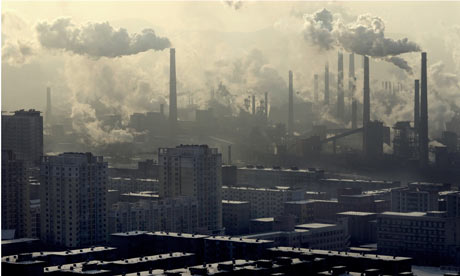
Benxi steel mills blowing smoke over residential buildings.

China should see its first lawsuit by an environmental group against authorities within weeks, state media reported today.

A member of the All-China Environmental Federation – which is backed by the central government – said a judge in Guizhou province had accepted its claim on behalf of residents who complain they have suffered from pollution.

Residents allege that the Qingzhen land resources bureau leased land to a drinks factory in 1994, but construction of the factory has not been completed and they believe the site is damaging two adjacent lakes from which they draw drinking water. They want the government to take back the land and remove construction materials.

Ma Yong, director of the legal service centre at the federation, told the Associated Press the case would open in early September.

“The case will serve as a warning for government departments and companies that damage the environment, as we’re stepping up efforts to play a supervisory role,” Ma Yong said. He added that he hoped it would pave the way for other organisations to file public-interest lawsuits.

Liu Haiying, deputy head of the environmental protection tribunal at Qingzhen municipal people’s court, told China Daily: “We are established to safeguard public interest and hope to encourage other courts to step forward to handle similar cases.”

She added: “No matter what the conclusion is, we hope it will serve as a warning to government departments such as environment, forestry and other agencies, that they should always fulfill their duty to protect the environment.

“They need to gradually realise that they are not only under the supervision of the party and other administrative departments, but also under the watch of all citizens.”

Environmental activists complain that courts usually turn away such cases.

“If this leads to more non-governmental organisations bringing public interest litigation I think this is a very important breakthrough. It means China is going to open the door to more public involvement in environmental enforcement,” said Alex Wang, a senior lawyer with the Natural Resources Defense Council, a US environmental group.

In a separate development, China is to shift a planned £3bn oil refinery and petrochemical plant in the south after years of public outcry.

Wang Yang, the Communist Party chief of Guangdong, said the province would move the plant – a joint venture between China’s Sinopec and the Kuwait Petroleum Corporation – because of opposition from the community and officials.

“We only have one planet to live on, so whatever we do on this end will affect others on the other end,” Wang told reporters at a news conference on Thursday.

“The decision by the government shows that they do consider the opinions from different stakeholders across the region, which is a positive sign,” said Edward Chan, a Greenpeace campaign manager based in Hong Kong.

“Our worries now are that the residents [in the new area] are not as well-educated or informed, or may be more eager to look for economic development.

“The story has not ended. It’s really important for green groups to pay attention to where the project is moving to.”

It is thought the factory will be relocated away from Nansha to Zhanjiang in western Guangdong, a less ecologically sensitive area.

http://www.guardian.co.uk/environment/2009/jul/31/china-residents-prosecute-government-environment

Roadside air pollution up sixfold in 4 years – HK traffic not Guangdong factories to blame: scientists

Cheung Chi-fai – SCMP

image011

Air pollution at street level has soared in the past four years while improving at the city’s rooftops, calling into question assertions that Hong Kong’s chronic air-quality problems have a regional more than local source.

Roadside monitoring stations recorded more than six times as many periods of health-threatening pollution levels in the first half of this year than in the same period in 2005.

The stations, in Central, Causeway Bay and Mong Kok, registered 1,066 hours – the equivalent of more than 44 days – during which the air pollution index rose above the “very high” 100 level. (A 100 level prompts a health warning to those with heart and respiratory conditions.)

But above street level, the number of such hours recorded by general monitoring stations – which track sulphur dioxide, nitrogen dioxide, ozone and respirable suspended particles – fell by more than half, to 56, according to an analysis of Environmental Protection Department data by the South China Morning Post (SEHK: 0583, announcements, news) .

There are 13 general monitoring stations across the city, located on building rooftops 11 to 25 metres above ground.

Scientists consulted by the Post say the improvement in air quality high above ground is due largely to Guangdong’s efforts to install sulphur scrubbers in power plants and the closure of many factories because of the recession.

The worsening street-level air is likely the product of cars and trucks on the city’s congested streets, the experts say.

“It is undeniably a local pollution problem at street level. All we need is a lot more and urgent measures to address vehicular pollution to protect public health,” said Alexis Lau Kai-hon, an atmospheric scientist from the University of Science and Technology.

But the Environmental Protection Department blamed regional air pollution for deteriorating street-level air quality. It said three key pollutants emitted by motor vehicles had in fact fallen, while regionally generated ozone was combining with other pollutants to form nitrogen dioxide by the road, pushing up the figures.

The department said changes in pollutant concentration readings were more reliable than the index in reflecting air quality trends.

It credited emission-control measures introduced in the past decade for bringing down levels of sulphur dioxide, suspended particles and nitrogen oxides by about 20 per cent between 1999 and last year.

But another roadside pollutant, nitrogen dioxide, rose 9 per cent in the first six months of this year and has remained at 1999 levels.

“The increase is mainly due to the rise in ambient background ozone concentration, which has aggravated the conversion of nitrogen oxides from motor vehicles to nitrogen dioxide,” a spokesman said.

Levels of ozone – the major component of smog – have risen 18 per cent in the first six months of the year and in recent years have been at higher levels than in 1999. Ozone can react with nitrogen oxides to form nitrogen dioxide.

But the government’s explanation was not accepted unquestionably by scientists.

“Without a high level of roadside nitrogen oxides from vehicles, the ozone would not have caused more serious secondary pollution of nitrogen dioxide,” Professor Lau said.

Chan Chak-keung, a professor in chemical and biomolecular engineering at HKUST, said controlling ozone-inducing volatile organic compounds coming from a wide spectrum of sources such as vehicles, factories and products like paints was never an easy task. There are nearly 636,000 cars, buses and trucks on the road in Hong Kong, up 5.7 per cent from the end of 2005.

Roadside pollution is also linked to poor dispersion of pollutants, caused by an urban design that favours high-rise towers even in congested streets.

China Coal City’s Tycoons Splurge on Antiques as Dealers Swoop

Le-Min Lim, Bloomberg – June 26

Few people gave Zhao Xin a second look when he strolled into the biggest antique show in China’s coal city of Taiyuan, Shanxi, wearing straw-trimmed canvas shoes, black polyester-mix clothes, and a tobacco-stained grin.

That changed when he went to a booth run by Hong Kong dealer Raymond Chak. Pointing at Chinese gilt-bronze Buddha statues, he said, “Show me this, that, and that.” Ten minutes later, Zhao had bought about eight antiques for nearly 1.5 million yuan ($220,000). In the next hour, he spent at least another 2 million yuan on paintings, ceramics and other artworks at other booths, as bystanders looked on.

Zhao is one of the world’s biggest buyers of Chinese antiques, say art dealers like Shanghai-based Lu Feifei. He also belongs to a group of tycoons in China’s top coal-producing province of Shanxi, many of whom earned their wealth selling the fuel, and in recent years began paying top dollar for Chinese relics at auctions and galleries from Hong Kong to New York.

Reached on his mobile phone, Zhao simply said he was retired and wouldn’t say how he earned his money.

To court buyers in Shanxi — which has a reputation for being a cultural capital of sorts — about 50 of the world’s top names in Chinese antique sale flew from Hong Kong, London and the U.S. into Taiyuan to sell millions of dollars worth of ceramics, jade and snuff bottles. The city has an average per capita income of 15,230 yuan last year, and operates two flights a week to Hong Kong. Taiyuan is an hour by flight from Beijing.

Spotting Money

“In Shanxi, it’s hard to tell who the rich guys are,” said Ronald Chak, a nephew of Raymond who helps run one of Hong Kong antique dealership Chak’s Co. Ltd., which organized the Taiyuan fair. “You’d think some were ordinary folks and then you see them step into their Mercedes 500.”

“According to estimates from Artron, total global auction sales of both fine and decorative Chinese art in 2007 summed to approximately 2.3 billion euros,” said the European Fine Art Foundation (TEFAF) in a report published in March this year. About $500 million of items are auctioned by Christie’s International and Sotheby’s, based on company figures and estimates. The others are sold in galleries or in person.

Like diamonds, the portability of antiques make them more attractive than property or bulkier assets for buyers who have to relocate in a rush and frequently, said Stephen Vickers, chief executive of Hong Kong-based FTI International Risk Ltd. Owners could then convert them back into cash once they have settled in a new location.

Mainland Challenge

While Westerners still dominate the most-expensive segment of this market at auction, they are increasingly being challenged by buyers from mainland China, according to John Berwald, of New York-based dealership Berwald Oriental Art.

Christie’s says Americans are its biggest clients in this category of art, followed by mainland Chinese and Hong Kongers. While Shanxi buyers are new to the international art-trading scene compared with their Beijing and Shanghai peers, they are gaining a name as some of China’s fiercest bidders.

“They are a force to reckon with, no doubt about it,” said Kevin Ching, chief executive of Sotheby’s Asia, who attended the Taiyuan fair. On paper, Shanxi buyers formally accounted for just $4 million of Sotheby’s Chinese antiques at its Hong Kong auctions, though the actual figure is much larger because many bid through agents in the city, he said, declining to give specifics.

There are about 51,000 people in China who have 100 million yuan or more, according to Hurun’s latest China rich list, released in April. Of these, 1,050 are in Shanxi. The actual number of rich individuals in the province is probably more than twice the number on the list, said Rupert Hoogewerf, publisher of Hurun Report, which compiles China’s rich list.

‘Hidden Wealth’

“There’s a lot of hidden wealth in Shanxi,” he said.

Zhao owns the best private collection of ceramics kept by Qing Dynasty Emperor Daoguang (reign: 1820-1850) and dealers consider him a very important antiques buyer, according to Lu.

At the fair, Zhao asked about a red-beaded bracelet Raymond Chak wore; Chak immediately rolled it off his hand and handed it over. Zhao wound the new purchase on his wrist and carried on his shopping spree.

“Come to the antiques fair now,” he said into his mobile phone. “Today is their last day and a perfect opportunity to rip off RaymondChak.”

His posse laughed, Chak wiped his forehead and chuckled dryly.

Investment Choice

“Zhao might not know which piece makes the best investment, but his aesthetics sense in antiques is probably better than even the dealers,” said Chak in an interview as Zhao shopped.

At first glance, there seems little about this northern province of 34 million people that hints at its wealth. Unlike coastal Shanghai or Guangdong, whose trade with the outside world created a class of traders and entrepreneurs, Shanxi is landlocked. In 2006, the per-capita income of its urban residents was 10,794 yuan, below the national average.

Still, Shanxi produces about 80 percent of China’s coal, the nation’s main source of fuel; it accounts for the biggest share of the province’s economy. As prices more than quintupled between 2002 and 2008, a class of new rich, dubbed “Coal Bosses” emerged in Shanxi.

Shanxi’s new rich have a reputation in China for brashness and ostentatious spending. In Taiyuan, taxi drivers recount stories of coal barons buying entire apartment blocks or Louis Vuitton bags by the dozens.

Buying Hummers

A coal baron of Xiaoyi City once bought 15 Hummers in one go, says state-run Jingji Cankao Bao. They also travel in groups to Beijing and Shanghai to buy property, state media say.

Even though coal’s value has nearly halved since its peak in August as growth slowed, many Shanxi tycoons are still putting their money in antiques, where the rarest items are fetching record prices as property prices tanked, said dealer Lu.

In May, property prices in 70 Chinese cities had their sixth straight month of decline, according to the Statistical Bureau.

At Christie’s Hong Kong sale last month, a pair of Qing Dynasty imperial gilt-bronze bells fetched HK$45.5 million, the priciest at auction.

“Antiques make better investments than most,” said Nie Zhihui, a collector who says he made his fortune selling coal to steel companies in the region. Nie, 40, wearing a buzz cut and black T-shirt, declined to say how much he’s worth.

Filmy Air

In Taiyuan, nylon flags advertising the fair flapped in the filmy air, which reduced visibility to about 300 meters. In alleys, vendors touted pyramid stacks of watermelons by the road; street-side stores flashed neon signs advertising noodles and medicine. In some empty lots, the rubble of demolished structures is covered by blue-and-red tarp sheets.

The widest road in Taiyuan, a city of 3.4 million people, is a thoroughfare, six lanes each way, built soon after the 1949 Communist Party came to power in China, called Yingze Jie, which means Road to Welcome Mao Zedong. Mao never came to Taiyuan.

At the antiques fair, some haggled in the open as dozens gathered to watch the commotion, while others negotiated behind partitions; when it came time to pay, one buyer reached into his bowling bag and pulled out bundles of red 100-yuan notes, the biggest denomination of the Chinese currency, another said he would wire-transfer the money. After paying, some just tucked the purchases in their bags and left.

The organizer, Chak’s Co., didn’t answer requests seeking attendance and sales figures.

Buddha Beads

Most of the booths reported strong sales. Hui Zengjiu, a Beijing-based dealer specializing in antique Buddha beads and enamels, said he had recouped the 50,000 yuan he paid for his 3 meter-by-3 meter booth. The booth of Priestley & Ferraro, with a store on London’s King Street, was seen selling some ceramics.

“A lot of China’s finest treasures are in the hands of Shanxi collectors,” said Ching.

None has found its way in the form of loans or donations to the Shanxi Museum, about 3 kilometers southwest of the World Trade Hotel, where the antiques fair is held.

Chen Fenxia, a Shanxi Museum spokeswoman, said she’s heard of art buying by the province’s tycoons.

Asked if Shanxi Museum, which gets its annual funding of 10 million yuan from the government, would accept loans or donations by tycoons, she said, “I imagine they bought the antiques only as investments.”

At the fair, Zhao turned and told an accompanying friend, Feng Buwu, “Find something you like and buy it. Be quick.”

Antiques dealers must be thinking the same.

Study: Beijing’s air worse than at past Olympics

TINI TRAN, AP – Jun 20, 2009

Beijing’s notoriously dirty air was cleaner during last summer’s Olympic games, but pollution levels were still much worse than at recent Olympics, despite a massive Chinese cleanup campaign, a new report said.

Athletes in Beijing faced pollution levels that were up to 3.5 times higher than those in recent Olympic cities like Athens, Atlanta and Sydney, said the study published Friday in the journal Environmental Science and Technology. The pollution often exceeded what the World Health Organization considers safe.

The joint American-Chinese study — the first major one published on air pollution during the Olympics — also found that the weather, and not the Chinese government’s strict controls imposed in the run-up to the games, played the largest role in clearing the air.

The government’s plans to control air pollution for the event gave international researchers a unique opportunity to observe a large-scale experiment. Scientists from Oregon State University and Peking University looked at Beijing’s worst air pollutant — tiny dust particles known as particulate matter — over an eight-week period before, during and after the games.
China poured some $20 billion into “greening” the city after it won the bid in 2001, including doubling the number of subway lines, retrofitting factories with cleaner technology and building urban parks.

Government officials also imposed drastic cleanup measures just before the games in mid-July, including pulling half the city’s 3.3 million vehicles off the roads, halting most construction and shutting down dozens of factories.

The study — funded by the National Science Foundation in the U.S. and the National Science Foundation in China — found that the level of particulate pollution in Beijing was twice as bad as in Athens, Greece; three times as bad as in Atlanta, Georgia; and 3.5 times as bad as in Sydney, Australia.

Researchers found that particulate air pollution did drop by about one-third during the two-week Olympic period. But coarser particulate matter, PM 10, exceeded levels the WHO considers safe about 81 percent of the time, while the smaller particulate pollution PM 2.5, which can cause more serious health consequences, exceeded WHO guidelines 100 percent of the time.

“It was a giant experiment and a noble effort. But in the end, the extra added measures didn’t help reduce PM concentration as much as had been expected,” said Staci Simonich, an associate professor of chemistry and toxicology at Oregon State University who worked on the study.

There has been no evidence so far of any health problems linked to the short-term exposure of athletes or spectators during the Olympics, researchers noted.

Further investigation suggested that weather conditions, such as rainfall and strong winds from the north and northwest, played a much larger factor in clearing the air than the pollution curbs.

Meteorological conditions accounted for 40 percent of the variation in concentrations of coarser particulate matter, while pollution control measures accounted for only 16 percent, the study said.

The findings also showed that the weather ushered some air pollution into Beijing from industrial regions south of the capital that had less severe pollution curbs, including Hebei, Shandong, and Shanxi. Those results indicated the difficulties in trying to control pollution at a local level when air masses tend to move regionally.

The findings don’t invalidate the government’s efforts, said Zhu Tong, professor at Peking University’s College of Environmental Sciences and Engineering, and a co-researcher on the project.

“We learned a lot about how air pollution forms in a mega-city like Beijing, and how much pollution comes from which sources,” Zhu said.

Scientists also noted that their pollution measurements were about 30 percent higher than official figures by the Beijing Environmental Protection Bureau, though they said that reflected a difference in methodology.

Pollution expert Fang Ming, now retired from Hong Kong University of Science and Technology, said the findings don’t break new ground in terms of understanding how air pollution works.

“Having said that, it is useful to know the effectiveness of the huge ‘green Olympic’ effort to clean up the air in Beijing,” he said in an e-mailed response.

Overall, the Olympic pollution control efforts were worthwhile because “it demonstrated to the Chinese government that they need to pay more attention to the environment and it is good for the country. It also says that this is doable and the people have to be a part of the effort,” he said.

Copyright © 2009 The Associated Press. All rights reserved.

Pollution In Chinese Cities ‘Extremely Severe’

1 day ago AFP

BEIJING (AFP) — Air pollution in China’s cities remains very serious, state media on Thursday quoted a minister as saying, amid an ongoing battle to clean up the skies in the world’s largest coal-consuming nation.

“There is the potential for serious air pollution incidents to happen, and the air environment situation is extremely severe,” environmental protection minister Zhou Shengxian told parliament, the official People’s Daily said.

“The difficulties in managing air pollution are intensifying, and environmental regulations as well as protection systems need to be further strengthened,” he said Wednesday.

China is the world’s largest producer and consumer of coal and its appetite for the cheap fuel is growing as its economy expands, according to the Energy Bulletin, a website that monitors global energy supplies.

In 2006, the World Bank said that 16 out of 20 of the world’s worst polluted cities were in China.

A recent report by the state Xinhua news agency, citing a survey conducted in November last year in 320 cities, said the average air quality in two out of five Chinese cities ranged from “polluted” to “hazardous”.

Zhou said car exhaust fumes also played a large role in air pollution in the country’s big and medium-sized cities, the report said.

China’s worst air pollution was concentrated in the Yangtze River delta, which includes Shanghai, and the Pearl River delta — the manufacturing hub in the south of the country that is home to Guangzhou and Hong Kong.

Air pollution in the capital Beijing, nearby Tianjin and surrounding Hebei province is also bad, he said.

But Zhou said there had been improvement in some cities in China, without listing any specific locations.

The China Daily reported at the start of the month that Beijing’s air quality was improving as a result of post-Olympics traffic control measures that had seen about 900,000 cars taken off the roads every weekday.

Copyright © 2009 AFP. All rights reserved.

Environmental Concerns Played Down

Watchdog fast-tracks projects

Environmental concerns played down amid drive to boost economy

Shi Jiangtao in Beijing – SCMP – Updated on Mar 12, 2009

The mainland’s environmental watchdog has accelerated its approval of large infrastructure projects to help government stimulus efforts, despite concerns about environmental degradation.

Since the release of the 4 trillion yuan (HK$4.5 trillion) stimulus package in November, the Ministry of Environmental Protection has approved 970 billion yuan in projects while putting on hold 14 others totalling 104 billion yuan, according to Vice-Minister Wu Xiaoqing.

He said the ministry had sped up mandatory environmental impact assessment for large projects that the State Council considered necessary to boost the economy.

“We have approved some projects as soon as we got their applications and effectively served the purpose of maintaining high growth in gross domestic product.”

But Mr Wu and Zhu Xingxiang, head of environmental assessment, declined to list the 14 suspended projects, covering petrochemical, steel, fire-powered plants and paper sectors, saying many of the projects needed further consideration of their potential environmental hazards.

“We have especially stressed in our meetings that we would rather be seen as the baddies today than as criminals by history, and we will most definitely keep the bar high,” Mr Wu said at a briefing on the sidelines of the National People’s Congress yesterday.

The mainland’s anti-pollution drive has suffered several heavy blows recently, with the much-touted “green GDP” project scrapped and a big cut in funding for pollution control.

While Beijing raised its budget for public housing, education and health care, it quietly cut spending earmarked for cutting pollution and energy waste in the revised stimulus package unveiled last week, from 350 billion yuan to 210 billion yuan.

The move has apparently taken many by surprise, including environment vice-minister Zhang Lijun.

“Is that true? No one has talked about the decrease, right?” he asked.

The country’s top leaders, including President Hu Jintao and Premier Wen Jiabao, have repeatedly promised that the stimulus effort would not further harm the battered environment. Analysts said the spending cut was largely the result of a political game among various party and interest groups, which showed environmentalism has been sidelined again.

While NPC chairman Wu Bangguo warned on Monday that cutting energy consumption by 20 per cent and reducing key water and air pollutants by 10 per cent by next year would be arduous, Mr Zhang said he was confident the job would get done in time.

He noted that last year’s pollution statistics, unveiled recently, were a lot better than expected, mostly because of the financial downturn, which closed many factories nationwide.

Beijing-based analyst Ma Jun said the stimulus package might strengthen local authorities’ obsession with GDP growth, despite the government’s rhetoric about changing the development model of “pollution first, cleanup later”.

“It may be commendable to cut red tape and make the approval process more efficient, but environmental standards must not be compromised,” he said.

“In the light of such risks, the government must increase transparency in the stimulus package and enlist public participation.”