Clear The Air News Blog Rotating Header Image

Roadside

Air pollution soars to dangerous levels

South China Morning Post — 2 Feb. 2011

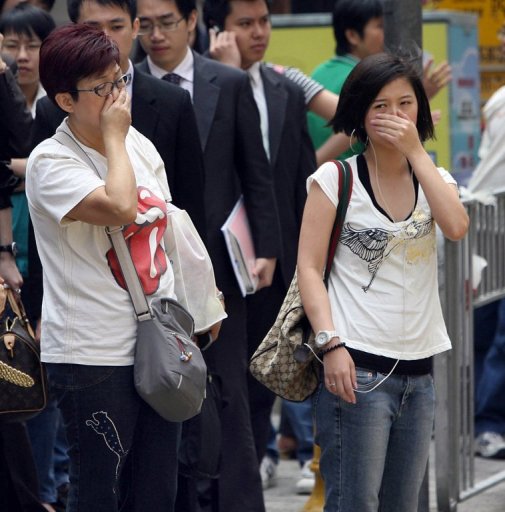
Air pollution in Hong Kong again soared to worrying levels on Wednesday – with roadside pollution index readings in Causeway Bay, Central and Mong Kok recording “very high” levels.

At 1pm, the roadside reading in Causeway was 182, whereas in Central and Mong Kok it was 137 and 107, respectively. The air pollution index in other areas was also high.

Observatory forecaster Steven Ng said the high pollution levels were due to dry weather.

“Hong Kong is now experiencing light-to-moderate northeasterly winds. We expect the situation will continue until Thursday or Friday,” he said.

“Usually, when winds come from the north they bring particulates in the air – visibility is not too good,” Ng told local radio.

The observatory advised people with heart or respiratory illnesses, children and the elderly to be careful

KMB fleet takes cleaner route

February 02, 2011 The Standard

Kowloon Motor Bus is doing its bit to ensure there is less pollution on the roads.

The bus company said it has reduced the average particulate emission levels of its fleet by 90 percent over the past eight years, and the figure will be further reduced this year with the arrival of 300 Euro V buses.

Euro V vehicles emit 43 percent less nitrogen oxide when compared to the Euro IV engines, it said. As of last December, there were 89 Euro V buses in Hong Kong.

KMB principal engineer Kane Shum Yuet-hung said the 300 Euro V buses will be put on the streets as soon as they arrive.

“We are happy to announce that KMB has successfully reduced the average particulate emission levels of our fleet by 90.4 percent last year as compared with emission levels in 1992, when the European Union’s exhaust emission standards had not yet been introduced to Hong Kong,” Shum said.

He also told of a one-year pilot program in which three buses- one Euro II and two Euro III – will be retrofitted with catalytic reduction devices to meet Euro IV nitrogen oxide emission standards.

“The pilot program will be launched in the second half of this year, while pilot low- emission zones will be designated in Causeway Bay, Central and Mong Kok.”

The pilot program was announced by Chief Executive Donald Tsang Yam-kuen in his last policy address.

The government will fully fund the retrofitting of the devices while bus companies will bear the subsequent operating and maintenance costs.

Regarding Tsang’s plan to replace diesel buses with six hybrid buses for use by the franchised bus companies along busy corridors, Shum said KMB will test three of the air-conditioned buses for two years in busy districts starting from the second half of 2012.

The Environment Bureau last week proposed spending HK$33 million on the two-year pilot program.

Looking ahead, a pilot program involving Euro VI buseswill be conducted in 2014 with the target of putting them into service in 2015, Shum said

http://www.thestandard.com.hk/news_detail.asp?we_cat=4&art_id=107707&sid=31137844&con_type=1&d_str=20110202&fc=4

Proposed Application to the Hong Kong SAR Government for a Grant from the Pilot Green Transport Fund for the Purchase of experimental Electric Trolley Buses for use on Discovery Bay Road

Download PDF : TrolleyBus-Proposal-F (2)

High pollution blamed on ageing vehicles

RTHK  31 DEC 2010

The government says Hong Kong’s ageing vehicle fleet is responsible for the very high levels of roadside air pollution. Days with roadside readings above 100 – which are particularly hazardous to the young, elderly and those with heart and respiratory problems – increased by 35% this year over 2009.

Mok Wai-chuen, an Assistant Director of the Environmental Protection Department, said while levels of respirable suspended particulates and sulphur dioxide had fallen since last year, nitrogen dioxide emissions had increased 6%.

Mr Mok said older franchised buses were a major cause of the problem. But he said many older buses are now being retrofitted with emission limiting devices to upgrade them to more modern, or Euro-4 standard. He also said a pilot scheme would designate pollution blackspots – Central, Causeway Bay and Mong Kok – as low emission zones, in which the use of Euro-4 or better buses would be increased as far as possible in 2011, rising to 100% by 2015.

http://rthk.hk/rthk/news/englishnews/news.htm?main&20101231&56&723591

Clear the Air says: Idling vehicle engines

engine-idling2For those who still believe the Government of Hong Kong has done a good job with our environmental problems, this letter from the deputy director of the EPD , published some 11 years ago, demonstrates the apathy of the Hong Kong Government to act. Now, 11 years later the Government wants to allow a 3 minute ‘legal to pollute’ idling engine exemption and to issue a ticket to the driver, not the vehicle owner (as in parking contraventions ) for the offence – only large diesel vehicles need an idling period to fill their airbrake reservoirs to allow the brakes to be released and if two licence holders in the vehicle swap the driver’s seat position every 170 seconds they can run their idling engines all day without getting a ticket. Taking a leaf out of the Government book for the anti smoking legislation (implement  new legislation but deliberately allocate meagre insufficient enforcement manpower resources thus rendering the law ineffective) the Government has decided to add a whopping 18 additional traffic wardens to help enforce the ‘new’ idling engine legislation throughout Hong Kong.

Idling engines not significant air polluters

Updated on Nov 20, 1999

Your correspondent Ted Thomas (South China Morning Post, November 6) retells the tale of the London smog which killed many thousands up until the early 1950s, when legislation was introduced to control it.

The London smog was caused by the burning of fuels that were high in sulphur and a very similar situation existed in Hong Kong throughout the 1970s and 1980s. Our problem was caused by emissions from industrial buildings and power stations, but in some areas was so acute that the steel fittings on residential buildings adjacent to industrial areas were dissolving in the acid rain produced by these emissions.

The Air Pollution Control Ordinance, passed in 1983, was intended to prevent these hazardous emissions, but by the late 1980s many establishments had found loopholes in that legislation. In 1990, the Environmental Protection Department developed the Fuel Restriction Regulations, which when implemented in June of that year transformed many districts of Hong Kong, much as, decades earlier, the Clean Air Act had cleared the air in British cities.

We have photos, taken only a week apart in 1990, which demonstrate the dramatic improvement that was brought about by the introduction of the new controls.

Mr Thomas also referred to the issue of idling vehicle engines. Whilst the emissions from idling engines are not a significant contributor to our overall air pollution problems, in some locations they can be not just a nuisance, but an unacceptable impact on the health of nearby pedestrians.

Typical problematic locations are enclosed public transport terminuses and narrow streets where lines of taxis or buses wait with engines idling, such as Jardine’s Bazaar in Causeway Bay and Beach Road in Repulse Bay. No doubt readers will recall many similar locations.

In many communities, it is socially unacceptable to let your engine idle, just as it is to leave your taps running or your lights on when no one is at home. In some communities, legislation has been introduced to prohibit the idling of engines.

However, in almost all that legislation there is an exemption for hot or cold weather conditions and a threshold time period specified, below which it would not be illegal to let your engine idle.

The combined effect of these two provisions on such similar legislation in Hong Kong might be to allow vehicles to be exempted altogether in the summer months and to allow more unscrupulous drivers to circumvent the legislation by the simple expedient of switching off the engine before the statutory time threshold is reached.

I have raised these difficulties simply to demonstrate that the legislative control of idling engines is rather more complex and contentious than your correspondent seems to appreciate.

Nevertheless, we have developed proposals for legislation to control idling engines and will publish them in the near future for public consultation. We believe that at the very least, such legislation will establish a benchmark for society as to what is the unacceptable use of an engine in a stationary vehicle.

M. J. STOKOE Deputy Director of Environmental Protection

Cap on fuel sulphur lowered to reduce emissions (SCMP 8th May 2010)

An amendment was introduced to the Air Pollution Control (Motor Vehicle Fuel) ordinance yesterday to tighten specifications of motor vehicle diesel and unleaded petrol to Euro V standards from Euro IV. The amendment tightened the cap on sulphur content in fuel to a fifth of previous levels, in a bid to reduce vehicular emission of sulphur dioxide by 80 per cent, other major gaseous emissions by 10 per cent and respirable suspended particulates by 5 per cent. Petrol stations, which have since 2007 offered Euro V diesel and Euro V petrol, sold half the petrol imported into Hong Kong last year.

LCQ2: Offering petrol of lower octane numbers

lcq-2Last updated: May 6, 2010

Source: 7th Space

Following is a question by the Hon Starry Lee Wai-king and a reply by the Secretary for the Environment, Mr Edward Yau, at the Legislative Council meeting today (May 5): Question: It has been reported that a survey conducted by the Consumer Council (“CC”) has found that more than 60% of the car models on sale in Hong Kong may still attain optimal efficiency even if they use 95-octane petrol, which is lower in price. The survey outcome is more or less the same as those of a similar survey conducted by CC 10 years ago. Yet, at present oil companies do not follow the practice in the United States, the United Kingdom, France, Japan and Singapore of offering petrol of different octane numbers for vehicle owners to choose. Instead, they only sell the more costly 98-octane petrol, leaving some 200,000 vehicle owners in Hong Kong with no choice but to use it. It is estimated that the extra expenses on petrol paid by vehicle owners exceeded $2 billion in the past 10 years. There have been comments that the cause for the aforesaid existing situation is oligopoly in the motor vehicle fuel business. In this connection, will the Government inform this Council:

(a) what measures the Government had adopted in the past 10 years to encourage oil companies to introduce petrol of lower octane numbers to Hong Kong; whether it had assessed the impact of oil companies not introducing petrol of lower octane numbers on vehicle owners in Hong Kong; if an assessment had been conducted, of the outcome; (b) whether the authorities had, in the past five years, studied the experience in other places to explore how the technical difficulties in supplying petrol of different octane numbers at the same time could be solved; if they had not, whether such studies will be conducted; whether the authorities will consider setting the supply of petrol of lower octane numbers as one of the lease conditions when inviting tenders for petrol filling station sites; if they will, of the details; if not, the reasons for that; and (c) of the Government’s measures to increase the supply channels of fuel products and enhance competition in the industry, so as to safeguard the rights and interests of consumers? Reply: President, (a) & (b) The Air Pollution Control (Motor Vehicle Fuel) Regulation (Cap. 311L) specifies that the octane level of petrol for motor vehicles should not be lower than 95. According to the survey published by the Consumer Council in April 2010, among 550 models of petrol vehicles available in the Hong Kong market, 337 models (61.3%) could use 95-octane petrol and 213 models (38.7%) could use 98-octane petrol, as recommended by vehicle manufacturers.

Motorists should generally be mindful of the recommended octane level of petrol for their vehicles as advised by the manufacturers. A vehicle using petrol with an octane level lower than that recommended by its manufacturer may consume more fuel, lower engine performance and, as a result of premature ignition of petrol, reduce fuel efficiency, and render engine operation less than optimal. More pollutants, such as hydrocarbons, carbon monoxide and carbon dioxide, may be emitted, affecting air quality. Simply speaking, from the perspective of environmental protection, using petrol with an octane level that fits the engine performance of vehicles can help reduce air pollution.

The unleaded petrol first introduced into Hong Kong in April 1991 was of an octane level of 95.According to the petrol suppliers, some motorists were of the opinion that the power of vehicles run on unleaded petrol was slightly smaller than that run on leaded petrol.In response to consumers’ demand, suppliers introduced 98-octane unleaded petrol in October of the same year. Between October 1991 and March 1992, consumers could choose petrol with octane levels of 95 or 98 available in the market at the same time.Subsequently, 95-octane petrol was not as popular among motorists, and was withdrawn from the market. The consultancy report on the Auto-fuel Retail Market issued in 2006 had explored the suggestion of supplying petrol with different octane levels.Having considered the size of petrol fillings stations (PFS) as well as the scale of the Hong Kong market, the report did not recommend requiring retailers to simultaneously provide petrol of two different octane levels.

(c) Hong Kong currently imports oil products from different countries or regions. In 2009, over 40% of our oil products were imported from Singapore, while those from Mainland China and South Korea accounted for 25% and 16% respectively. Oil companies will consider their sources of import taking into account cost, price and other market factors. In a free market economy, retail price of petrol is determined by the market.Suppliers will take a view on the types of products to be provided having regard to customers’ demand and other market factors.

To enhance competition in the auto-fuel market, the Government has taken a series of measures, including – (i) removing the requirement for bidders of PFS sites to hold import licence and supply contract; (ii) re-tendering all existing PFS sites upon expiry of their leases, instead of renewing the leases to the existing operators; and (iii) since June 2003, the Government has tendered PFS sites in batches consisting of 2 to 5 sites per batch, depending on the land supply situation. The new tendering arrangement facilitates new entrants in acquiring a critical mass of PFS to achieve economy of scale for effective competition in the auto-fuel market. Since introduction of the new tendering arrangements, two new operators have obtained 24 out of the 37 PFS sites put up for tender and successfully entered the market.

The share of the three biggest operators in terms of the number of PFS has dropped from over 93% to 74%. These statistics show that the new tendering arrangements have effectively enhanced competition in the auto-fuel market.

Hong Kong roadside pollution soars to record highs

aleqm5hlh_oukx2sllp9krjz44oxl73ndgLast updated: May 4, 2010

Source: AFP via Google

Hong Kong’s roadside pollution soared to record highs in last two quarters, official data showed Tuesday.

Roadside pollution was “very high” or “severe” for 14 percent of the time between January and March, and 24 percent of the time in the fourth quarter of 2009, according to statistics from the Environmental Protection Department.

The six-month period was the most polluted in the city since the department started releasing quarterly findings in 1999.

A survey of people in more than 150 countries last month found Hong Kong residents were the most dissatisfied with their air quality.

The poll, by the consultancy Gallup, revealed that 70 percent of the financial hub’s inhabitants were unhappy with the city’s air.

In March, Hong Kong recorded its first “severe” roadside pollution warning in a decade, when a toxic soup of particulates fuelled by a massive sandstorm in Beijing shrouded the city’s famed skyline for several days.

“Severe” pollution means the concentration of pollutants exceed 200 micrograms per cubic metre of air. The warning advises the public to stay away from areas with heavy traffic.

Air pollution has become an increasing public health and economic headache for the authorities in the city of seven million, as green groups warned that the problem would force talented professionals to leave.

Last month, Hong Kong’s leading authority on air pollution, Anthony Hedley, announced that he was leaving the city for the Isle of Man in Britain to find clean air to try to keep his respiratory problems under control.

Clean Air Network, an environmental campaign group, said it was “a sad irony that one of those most committed to alleviating Hong Kong’s air pollution now has to leave the city primarily for that reason.”

Emissions from the factory belt in southern China over Hong Kong’s northern border combined with local emissions from power plants and transport have generated a thick blanket of haze over the city in recent years.

The government said it has stepped up efforts to cut vehicle emissions, including tax breaks for users of environmentally-friendly hybrid cars.

Clear the Air Letter to Editor SCMP

angry-letter4-300x292Roadside pollution comes mostly from local vehicles here. The Government has finally proposed a further exemption to the Motor Vehicle Idling (FP) Bill by allowing a 3 minute ‘still legal to pollute’ grace period for stationary drivers to run their engines which issue the most microfine pollutants at idling speed. The only vehicles that need to idle to become operational are large goods vehicles which need to fill their airbrake reservoirs and this requirement should be covered separately.

The Government chooses to cherry pick that several Toronto municipalities (but not elsewhere in Canada) have a three minute vehicle and boat idling period. It conveniently omits that Toronto allows car and boat engines to continue idling when the temperature inside the vehicle is above 27 Deg C or below 5 deg C, that the fixed penalty for the offence is between C$100 – C$ 380 (two to 8 times more than here) and can be up to C$ 5,000 if contested in court. It does not mention that the vehicle emissions’ standards in Canada are far stricter than Hong Kong http://www.dieselnet.com/standards/ca/#hdv

nor that Toronto has an average of 15 cms of snow and at 630 sq kilometers with a 7,200 sq kilometer green belt surrounding it, is far more spread out as a city and does not have the same curtain wall urban canyon effect that traps roadside microfine pollutants here.

Here is yet another example of Hong Kong’s obdurate Government trying to issue a loopholed piece of legislation to pander to big Business  and is worthy of a sketch from ‘Yes Prime Minister’. The law as proposed , is unenforceable – should the enforcers stand next to the vehicles  for an hour and count a total of 3 engine idling minutes to wait to issue a ticket ? In Europe several countries even demand engine switch off at red lights whilst already having a far cleaner and less polluted environment than Hong Kong. The Government should learn from its deliberately flawed anti smoking laws that allowing such exemptions resulted in  legal tobacco sales’ increase in 2008 after the flawed ban with exemptions came into place, so must we expect the same increase in engine idling with this potholed legislation ?  They should re-name the Engine Idling legislation the ‘Amazing Grace’ Ordinance. It seems the Government yet again puts vested interests ahead of the health of the local public to which it has a duty of care.

In addition the Government wishes to inflict the penalty on the driver rather than the vehicle owner. If more than one driver is in the car and if they swap places in the driver’s seat every 2 1/2 minutes the wardens are powerless to issue a ticket and idling can continue.

James Middleton

Chairman Energy Committee

www.cleartheair.org.hk

Air con without running engines

dog-car-justinsullivanLast updated: April 21, 2010

Source: South China Morning Post

I refer to recent articles and a letter from Anders Ejendal (“Idling engines in Repulse Bay“, April 19), regarding idling engines. I wish to point out that all vehicles, including coaches, can enjoy air-conditioning while stationary without their engine running.

As an electric vehicle designer, I can assure everyone that all these petrol/diesel coaches require is an extra supply of battery power and some smart electronics, and this is not expensive. For example, most taxis can have a workable system installed for around HK$10,000.

Replacing old air conditioners with hi-tech ones will enormously reduce electricity needs. Technology is available to convert any coach to fully electric drive, and it is an economically viable proposition.

Nigel Lam, Kowloon Tong

Idling law misses mark

10100570arobin-hood-postersLast updated: April 21, 2010

Source: South China Morning Post

I refer to your recent news stories about the new law which requires drivers to limit the amount of time their vehicle engines are idling.

Such a law appears laudable as the government takes steps to reduce pollution and help prevent climate change.

However, with only a slight amount of critical thought, one wonders whether the government introduced the law merely to lull the public into thinking they are looking out for their best interests.

Considering all the sources of pollution that affect Hong Kong, the idling of engines is surely so far down the list as to be laughable.

The two biggest local pollution contributors are coal emissions from electricity generators, and vehicle exhausts. But the vast majority of pollution from the latter is surely caused by engines burning fuel in order to move rather than to stand still.

In effect, the government has put its time and energy into writing a law whose outcomes will have minimal gains, yet may bring appearances of being green.

In the meantime, it drags its feet on the big issues: reducing the amount of coal burned to generate electricity, installing scrubbers on power plants, getting highly polluting vehicles off the road and getting tougher on marine emissions.

Colin Whittington, Ma On Shan