
 See the graph and real-time camera monitoring from the Hedley Environmental Index Air Pollution Tracker, Hong Kong’s unofficial and real air pollution index.
Local
Air pollution level hits record high in Respirable Suspended Particulates
Old buses to be retired by 2019
 First published: March 17, 2010
Source: Hong Kong Government
Secretary for the Environment Edward Yau anticipated all pre-Euro and Euro I buses will be retired no later than 2012 and 2015, respectively, while Euro II buses will retire by 2019.
Mr Yau told lawmakers today if all pre-Euro, Euro I and Euro II commercial vehicles including franchised buses are retired, the economic benefit will be about $24.3 billion.
(more…)
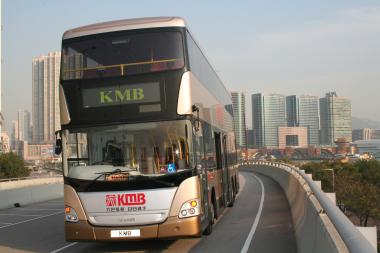
LCQ15:Reduction in the emissions from franchised buses and the resultant pollution problems
 First published: March 17, 2010
Source: Hong Kong Government, via 7th Space
Following is a question by Hon Kam Nai-wai and a written reply by the Secretary for the Environment, Mr Edward Yau, in the Legislative Council today (March 17): Question: Regarding the reduction in the emissions from franchised buses and the resultant pollution problems, will the Government inform this Council: (a) of the current number of buses in each of the bus fleets of franchised bus companies, with a breakdown by the emission standard met by the buses; (b) of the number of old buses replaced by each franchised bus company in the past five years, the replacement cost per bus and the total replacement costs involved; how these figures compare with the corresponding estimated figures in the next five years; whether it knows if such companies have finalised their respective bus replacement timetables for the next five years; if the timetables have been finalised, of the details; if the timetables have not been finalised, the reasons for that; and (c) whether it has studied and estimated the losses suffered and social costs borne by Hong Kong as a result of the pollution problems caused by emissions from franchised buses; if so, of the details; if not, the reasons for that; and what solutions the Government has to reduce the losses and costs in this regard?
Clear The Air views on the replacement of polluting Pre‐Euro and Euro 1 Diesel commercial vehicles.
 Clear The Air presented its views to Legco on March 10, 2010. Below are some figures.
By end of 2009, there were a total of 3,880, 920, 700, 160 and 100 licensed buses for Kowloon Motor Bus Company (1933) Limited(“KMB”), Citybus Limited(“CTB”),, New World First Bus Services Limited(“NWFB”),, Long Win Bus Company Limited(“LW”),and New Lantao Bus Company (1973) Limited(“NLB”),. The relevant breakdown by engine types is as follows :
|
Engine Type |
KMB |
CTB |
NWFB |
LW |
NLB |
|
Pre-Euro |
300 |
40 |
30 |
less than 5 |
0 |
|
Euro I |
940 |
310 |
80 |
0 |
0 |
|
Euro I above |
2640 |
570 |
590 |
160 |
100 |
Higher fees for older vehicles opposed
 The commercial vehicle industry has objected to government plans to increase licence fees for older commercial vehicles to reduce air pollution. The industry was hoping the government would extend or increase the current one-off subsidy to get these vehicles off the road. But the Undersecretary for the Environment, Kitty Poon, said that instead, the administration intended to raise the fee. She said the subsidy scheme had run its course.
Agree or disagree? Sound off your opinion after the jump.
(more…)
New measures to help HK’s environment proposed
POLICY ADDRESS 2009, Staff reporters, SCMP
Chief Executive Donald Tsang Yam-kuen on Wednesday announced some new initiatives aimed at helping to protect Hong Kong’s environment.
Near the end of his 90 minute annual policy address, Tsang told the Legislative Council the government planned to replace incandescent light bulbs with compact fluorescent lamps (CFLs).
“CFLs consume 70 per cent less electricity than incandescent light bulbs of the same light intensity,” he explained.
“To promote the replacement of incandescent light bulbs by CFLs, the two power companies [CLP Power (SEHK: 0002) Hong Kong and Hongkong Electric (SEHK: 0006) Company] will distribute cash coupons to residential electricity account holders for CFLs.”
He said the government would also promote electric vehicles.
“The Environment Bureau [ENB] has been working with a number of electric vehicle manufacturers. We expect a supply of around 200 electric vehicles for the local market in the coming financial year,” he said.
The chief executive said the government would work with the two power companies to launch an electric vehicle leasing scheme by the end of 2010.
“Upon implementation of these two programmes, Hong Kong will rank second in Asia after Japan, where electric vehicles are most widely used,” Tsang said.
He said the government would continue to encourage different sectors to conduct carbon audits in buildings and to reduce carbon emissions.
“Last year, more than 100 organisations joined the initiative. As for the proposed district cooling system at the Kai Tak Development, construction works are expected to commence early next year,” the chief executive said.
Tsang also announced other measures in the policy address. These included:
- Plans to boost innovation and technology by allocating about HK$200 million to launch an “R&D Cash Rebate Scheme”.
“Under this scheme, enterprises conducting applied research and development projects with the support of the Innovation and Technology Fund or in partnership with local designated research institutions will enjoy a cash rebate equivalent to 10 per cent of their investments,” he said.
- Encourage greater co-operation between Hong Kong and Shanghai. Tsang said the two cities should work together, adding: “The competition between Hong Kong and Shanghai is not a zero-sum game.
“I believe that Hong Kong can work in collaboration with Shanghai and leverage our respective strengths to contribute to the development of financial services in the mainland.”
- Further development of Hong Kong’s medical sector. The government would invite expressions of interest from the market to develop private hospitals. These could provide traditional Chinese medicine on four sites at Wong Chuk Hang, Tseung Kwan O, Tai Po and Lantau.
Tsang said the government planned to introduce standards for Chinese herbal medicines in Hong Kong. “We aim to extend our coverage from the current 60 herbal medicines to about 200 by 2012,” he said.
- Developing Hong Kong’s status as a regional education hub. The government would increase the total commitment of its start-up loan scheme by HK$2 billion to help higher institutions meet the costs of purpose-built accommodation and facilities. It has also allocated four greenfield sites to four operators for international school development.
- Opening up the mainland market further for Hong Kong’s creative industries – for example, the film industry under the Closer Economic Partnership Arrangement (Cepa).
Pollution mostly local, study finds
Cheung Chi-fai, SCMP
Sulphur dioxide pollution in Hong Kong is mostly generated in the city, particularly in the container port and by shipping, a leading atmospheric scientist has found.
Dr Alexis Lau Kai-hon, an associate professor at the University of Science and Technology’s Institute for the Environment, said the findings of a study suggested that pollutant criteria proposed in the government’s air quality review had to be tightened further or public health would continue to be at great risk.
Lau recently compared sulphur dioxide concentration data for winters and summers between 2007 and this year. He found that sulphur dioxide concentrations were higher in summer, when southerly winds from the ocean prevailed, than in winter, when northerlies blew from the mainland.
“It suggests the pollution source is local rather than regional,” he said.
Lau found some of the highest sulphur dioxide concentrations in and around the Kwai Chung container port area, indicating that cargo ships and port operations were a big source of pollution. He said they had huge health effects at ground level.
While power generation remained the single largest source of sulphur emissions in Hong Kong, accounting for nearly 90 per cent, Lau said that the shipping sector’s effects on health could be five times greater than that of power plants because of the port’s close proximity to more than three million residents. The medical community has long warned that exposure to high concentrations of sulphur emissions can impair respiratory functions and aggravate existing heart and lung diseases.
Lau said the emissions data studied also showed a remarkable difference in concentrations before and after the global economicdownturn, which began towards the end of last year.
Sulphur dioxide concentrations fell by an average of 25 per cent after the downturn began, when there was an 11 per cent drop in the number of cargo ships, Lau said. The first eight months this year saw 19,790 vessels calling at the port, compared with 22,340 in the same period last year.
Lau said the findings highlighted the urgent need to address air pollution from marine sources, as most ocean-going vessels were still using fuel oil with up to a 2.5 per cent sulphur content. That was 2,500 times higher than the sulphur content in diesel fuel used by road transport.
Lau said pollution by ships was a huge problem, and criteria proposed by the Environment Bureau under the air quality objectives review seemed far too loose to protect people’s health.
The proposed sulphur emissions objective, an average daily concentration of 125 micrograms per cubic metre of air – the lowest interim target allowed by the World Health Organisation – had already been met, Lau said. A more stringent standard of 50 micrograms per cubic metre of air should be used, he said. That would bolster moves to clean up pollution.
“Without a further tightening of the sulphur dioxide standard, there is little basis for further control of the pollutant in the marine sector even though we know the sulphur-laden fumes from marine sources are posing a significant health threat to the population,” Lau said.
Nineteen measures, ranging from using cleaner fuel for power generation to phasing out polluting vehicles, have been proposed by the bureau. None specifically tackle emissions from ocean-going ships.
The only ship-related measure was a proposal, without a clear time frame, to require local vessels, including ferries, to use low-sulphur diesel fuel.
According to a report last year by the Civic Exchange think tank, the pollution related to port activities and ocean-going vessels could also be addressed by designating Hong Kong and its neighbouring regions as sulphur-emission control areas.
A similar zone is in place in the Baltic Sea and North Sea, where ships are only allowed to burn fuel with a sulphur content of 1.5 per cent or less. But any proposal for such a designation for Hong Kong would have to be raised by Beijing at the International Maritime Organisation, which sets global fuel-use standards for ships.
The organisation has also endorsed a plan to limit sulphur content in cargo-ship fuel to just 0.5 per cent sulphur content by 2020, although the port of Los Angeles has already implemented that.
On Wednesday, Secretary for the Environment Edward Yau Tang-wah told lawmakers that the government would raise the low-emission shipping zone issue with the mainland in discussions on post-2010 emission-reduction matters.
An existing agreement on emission-reduction issues will expire by the end of next year.
Arthur Bowring, managing director of the Hong Kong Shipowners’ Association, said ship-fuel issues needed to be tackled from both global and local angles.
He said there should be local laws in Hong Kong and Guangdong to control ship fuel, and both places should endorse such laws simultaneously so that all ships entering the region had to comply.
Bowring said that it would neither be practical nor conducive to fair competition to unilaterally impose fuel restrictions in either Hong Kong or Shenzhen but not both together. But he said he was optimistic that a cross-border agreement would be ready in a few years.
“It will need strong government and political will to put it in place. With the right incentives, right regulations and funding, it can be done.”
HK Earth Champions Knowledge Pond Launched
The launch of the Hong Kong Earth Champions Knowledge Pond will be a celebrated unveiling of a rich and diverse collection of local wisdom and environmental solutions from the community of Hong Kong.
The Knowledge Pond is a resource that will serve to improve Hong Kong’s local environment by offering practical solutions and knowledge tha can help the community alleviate climate change.
To learn more please visit: http://www.earthchampions.com/
__________________________________________________
A Post from Christian Masset, Clear the Air: http://pond.designmaxstudio.com.au/topic/air/christian-masset-clear-the-air/
Natural partnership
SCMP
Reducing highly toxic emissions from ships must be a key part of the government’s clean-air strategy. Right now, shipping emissions are regarded as a problem that can wait. Officials have not given this a higher priority because they take a total-quantity approach rather than a public health one. Total emissions from power plants and road vehicles are many times higher than that from ships. But this approach misses the high toxicity of bunker fuel. Data from the maritime industry shows that the 15 biggest ships in the world today may emit the same amount of pollution as all the cars in the world.
Imagine a large container ship coming into Kwai Chung terminal. It stays there for, say, a day to load and unload cargo. While the ship is docked, it is still burning bunker fuel to generate electricity. Under international agreements, oceangoing vessels can burn bunker fuel with up to 4.5 per cent sulphur content, although the average is about 3 per cent. This is extremely high compared to the 0.005 per cent sulphur content of ultra-low sulphur diesel that road vehicles burn in Hong Kong. Kwai Chung is close to the homes and workplaces of millions of people. Even light breezes can blow the emissions to heavily populated areas.
The issue, then, is straightforward. The government must multitask – while it prepares plans to drive down power and vehicular emissions, it must at the same time deal with ships. So far, officials have only proposed to deal with local vessels. These are the smaller vessels operating in local waters, such as pleasure boats, ferries, hydrofoils and barges. They are already burning much cleaner fuels, with 0.5 per cent sulphur content. The government is proposing that all local vessels should use ultra-low sulphur diesel, which will help. A refinement to this proposal is to set a limit on emissions and allow owners to use other means to achieve the same emission levels as ultra-low sulphur diesel, since other technology may be able to achieve the same results.
The problem remains that oceangoing vessels are not included in this proposal and they are the heavy polluters burning bunker fuel. Let’s face facts. The container ports of Hong Kong, Shenzhen and Guangzhou handle about 12 per cent of the global container traffic. This is an awful lot for a small body of water. Hong Kong and Shenzhen are, in fact, sister ports because of their proximity, and also because they share essentially the same investors and operators. And even if ships are heading for Shenzhen, many pass through Hong Kong waters and their emissions affect our residents.
In fact, all major port cities and cross-jurisdiction regions face the same problems. International maritime agreements on emissions have moved quite slowly. For example, oceangoing ships will only have to meet fuel standards with 3.5 per cent sulphur content by 2012, and perhaps 0.5 per cent by 2020. This is far too slow, so port authorities are taking the initiative to clean up marine emissions and related container-truck pollution.
The US ports of Seattle and Tacoma and their neighbouring Canadian port of Vancouver have formed an extensive partnership to maintain clean waterways and air quality. Its members include port operators, local environmental authorities and public health experts. The ports of Long Beach and Los Angeles are also co-operating to find solutions that include using financial incentives for ships to burn cleaner fuel as they enter Californian waters. European ports are exploring similar initiatives.
Hong Kong and Shenzhen are ideal partners to devise green port policies. The public should insist that it becomes part of the government’s push to work with Guangdong to improve air quality, and also make it an important element of cross-border collaboration. The good news is that many ship owners, liners and terminal operators are ready to act because their ships and overseas operations have already been forced to clean up. They know the global trend. The authorities here need to demand action so there is a level playing field. In other words, discriminate against the laggards, not those who can lead.
Christine Loh Kung-wai is chairperson of the Clean Air Network and chief executive of the think tank Civic Exchange. cloh@civic-exchange.org
A different route
SCMP
Hong Kong needs to clean up its buses and goods vehicles. Our roadside pollution is extremely bad and these fleets are a large part of the problem. There is no disagreement about this; the debate is over how to do it. The environment minister has suggested the government might pay for new buses to expedite the renewal of the fleet. Some political parties are open to the idea while others are uncomfortable with the government taking a more active role.
Hong Kong’s bus companies are allowed to operate services based on franchises. The operators’ primary interest is to have the best return on their investments. Thus, they want to run their buses as long as possible to squeeze the highest use from a capital asset.
The problem for the community is that technology improves all the time and an old bus fleet, even if well maintained, is much more polluting. If the franchise doesn’t give incentives or penalties based on the bus fleet’s level of emissions, it makes sense to keep running buses as long as possible.
The facts are plain to see. Hong Kong has five commercial bus operators running a fleet of about 6,000 buses. Three-quarters of them still have Euro II or older engines. The latest diesel-engine standard is Euro V. While the franchises require the purchase of the latest technology when new buses are acquired, old clunkers can still have a considerable lifespan.
Every few years sees technological improvements in fuels and engine design. For example, Euro VI buses [Roman numeral designations are for diesel engines] are expected by 2014, or diesel-powered technology could be swapped for natural gas. Hybrid, hydrogen or electric-powered trolley buses are also available.
The challenge for governments, including ours, is how to adopt new technologies. Some city authorities run their own buses, while others, including Hong Kong, allow commercial operators to provide services, usually in the form of franchises. If Hong Kong wants a much cleaner bus fleet because we want better public health, the franchises are going to have to be reframed. Indeed, government policy and all relevant legislation will also need to be revised.
Money is one issue. New buses or technology requires an upfront payment that may cut into short-term profits. Bus operators who are used to enjoying a certain level of return may be reluctant to see their profit margins reduced. If they have to invest in new assets or pay higher operating costs, they will want to pass that on to passengers. But the government will also fear a public backlash over higher fares. That is presumably why officials have floated the idea of the government paying to replace buses to expedite fleet renewal. The logic is that, if the operators’ investment costs in new buses are reduced, then fares do not need to rise, or not by much. In return, the community gains by having cleaner air and better health sooner.
It should be possible to estimate what the new fares may be against improved public health benefits once we know the level of subsidy and timeframe, although officials have not presented these figures yet.
The government has probably already begun to explore possibilities with the operators. It is much easier dealing with five bus companies than the thousands of goods vehicle owners.
The government’s target to deal with buses is a short-term measure but a necessary one. It is also not too early to consider how to reframe franchises.
Bus operators make good money in Hong Kong. They know they run a public service under franchise and public policy must keep up with the times.
Indeed, smart politicians should remind them of this and not focus on how much more the public has to pay. There should be no issue with reframing franchises to reflect new policy goals to improve air quality so that it no longer poses a public health threat, and buses must play their part. The public must press hard for this.
Christine Loh Kung-wai is chairperson of the Clean Air Network and CEO of the non-profit think tank Civic Exchange. cloh@civic-exchange.org