
Health
Urban light pollution: why we’re all living with permanent ‘mini jetlag’
http://www.theguardian.com/cities/2014/oct/23/-sp-urban-light-pollution-permanent-mini-jetlag-health-unnatural-bed
Studies show that exposure to light after dusk is quite literally unnatural, and may be detrimental to health. Do we need 24/7 garages, supermarkets and TV – or should the city that never sleeps be put to bed?

Astronomer Dr Jason Pun of the Hong Kong University department of physics has been studying light pollution for nearly a decade. He says people often ask him if he’s crazy. “‘Hong Kong is supposed to be bright,’ they say. ‘Why are you even talking about light being some kind of pollution?’”
This is a city that is famous for its nightscape: neon signs advertising market stalls, pawn shops and steakhouses; illuminated skyscrapers; swanky malls that stay open – and stay lit – well into the night. “When I walk at night around some of these commercial centres, it’s so bright you almost want to wear your sunglasses,” Pun says.
Indeed, in our collective imaginations, cities are meant to be bright. But as studies begin to show that too much light can be detrimental to health, and fewer of us are able to see the stars when we look up, are cities getting too bright for our own good?
Hong Kong isn’t alone in celebrating light. Paris is still known as the City of Light; only slightly less glamorous Blackpool relies for tourism on its annual illuminations, when more than 1 million bulbs light a distance of 10km.
This celebration of artificial lighting is perhaps unsurprising, given how recently electric streetlights became the norm. It’s easy to forget that being bathed in light is a relatively modern phenomenon. Although electric streetlights first began appearing in European capitals in the mid-1800s, widespread street lighting did not become common until well into the 20th century.
It soon became a clear view of the night sky that was uncommon. Hong Kong is now often touted as the most light polluted city in the world – a view supported by a recent study from Pun and his department, Hong Kong Night Sky Brightness Monitoring Network (NSN), which measured so-called “night sky brightness”.
“We set up about 18 stations around the city, in all sorts of living environments – from the commercial urban centre, to more residential neighbourhoods, to relatively rural areas,” he explains. Then they compared the levels of light to the standard provided by the International Astronomical Union, which states how bright the sky would be without artificial light. In the most-lit areas, it was 1,000 times brighter.
“Similar studies in major capitals like Berlin and Vienna,” says Pun, “would find something more of the order of 100 to 200 times brighter.”

Europe at night from Space. Photograph: SPL/Barcroft Media
But with light pollution studies still in their infancy, and without any strict international standards on how to quantify the extent of light pollution, it’s hard to say for sure whether Hong Kong is the most light-polluted city. Other candidates that are often cited by those with the best view – astronauts – include Las Vegas, Tokyo, Seoul and New York.
And Hong Kong, like in many cities around the world, is proud of its illuminated city. “The brighter the better,” Pun explains, mimicking a chirpy toothpaste ad. “Brighter means more prosperous. We have a nickname for Hong Kong: the Pearl of the Orient. So I suppose a lot of people take this actually as a badge of pride without rethinking what all this brightness means.”
That can include health problems. “There’s a cascade of changes to our physiology that are associated with light exposure at night,” says Steven Lockley, a neuroscientist and an associate professor of medicine at Harvard Medical School. He has looked at the impact of light on human physiology, including on alertness, sleep, and melatonin levels.
Because humans evolved in a 24-hour light/dark cycle known as the circadian clock, any light after dusk is “unnatural”, Lockley says. When we are exposed to light after dusk, “our daytime physiology is triggered and our brains become more alert, our heart rates go up, as does our temperature, and production of the hormone melatonin is suppressed”.
Has the way city dwellers live, removed from natural light patterns, confused our bodies? “Not so much confused as shifted: we’ve been shifted later,” Lockley says. “What happens when people go camping? If you don’t have sources of electric light, then you go to bed earlier, shortly after the sun’s gone down, and you sleep for longer.” Every day we don’t go to bed at dusk, we experience what Lockley calls “mini jetlag”.
His colleague, Ken Wright at the University of Colorado in Boulder, conducted an experiment on camping. Wright found that for campers, midnight was the middle of the night: living in brightly lit cities has artificially lengthened our days. “We go to bed later, we don’t sleep as long, and we don’t know of the long-term health impact of changing,” he says.

Las Vegas at night. Photograph: Corbis
There have been studies about how changes in circadian rhythms – which may be explained by exposure to light at night – can have an impact on humans. Studies of shiftworkers found that circadian disruption is “probably carcinogenic to humans”; female nightworkers, for instance, were found to have a higher risk of breast cancer than women who do not work at night.
“As a society we need to think, do we really need some of these amenities that are putting light pollution into the environment?” Lockley says. “Do we need 24/7 garages, do we need 24/7 supermarkets, do we need 24/7 TV? It was only in 1997 that the BBC turned off and there was the national anthem and we all went to bed.”
The International Dark Sky Association is an organisation of astronomers that aims to teach how to preserve the night sky. Member Scott Kardel says he believes in balance: “While we need certain amounts of light at night for safety, commerce and more, we also need to be more careful about how much light we use, where we use it and for how long.”
But at a more abstract level, Kardel also believes that “having bright skies takes something away from us. All of our ancestors had star-filled skies that inspired countless people in art, literature, religion, science and philosophy.”
It might not be plausible to put the metropolis to bed at dusk, but cities can mitigate some of the worst light pollution. “Proper outdoor lighting,” says Kardel, “conserves energy, reduces glare” and cuts back on so-called light trespass, for example when your neighbour’s bedroom light bleeds into your sitting room.
Pun also suggests limiting the number of light installations and their hours of operation, and controlling the distance between lights and living environments. “It’s a particularly big problem in Hong Kong because it’s a very densely populated city,” he says. Any change, he also points out, would have to be a community effort that involves not just business but government.
“While a great many cities do have laws about light pollution or light trespass, they are still in the minority,” Kardel says. “The number of cities adopting light pollution regulations is growing, but they mostly seem to be appearing in smaller towns where the problem isn’t as great as it is in the larger cities.”

The Empire State Building is seen lit up before Earth Hour in New York, during which lights were turned off for one hour to show support for renewable energy. Photograph: Eric Thayer/Reuters
Los Angeles, however, is one megacity that has been trying to scrape back some of its nighttime darkness. Not long ago a sprawl of apricot-coloured street lights, LA has since undergone one of the largest LED streetlight replacement projects in the world. LEDs are proving a popular choice for cities wanting to save on lighting costs: they are being rolled out in New York, Copenhagen and Shanghai.
They’re not a panacea. “LEDs offer promise and peril,” Kardel says. “They tend to be very directional in nature, which makes it easier to direct light where it is needed. And they are much better suited than older lighting technologies for integrating with dimming or motion-sensing technologies.” But most energy-efficient LEDs contain a significant amount of blue in their spectrum. “And blue disproportionately brightens the night sky.”
Lockley thinks LEDS are the “problem, but also the solution: they allow much more sophisticated lighting systems.” The blueness can be fixed, he says. “It is possible to create LED light with multiple colours – you can alter the colours for the right time of day and the right application.”
“We might not quite be at the point where cities are putting in those types of tuneable street lamps,” he adds. But many communities in the UK have either adopted or trialled “part night lighting”, switching off the lights where they’re not needed or lowering illumination levels for part of the night. Motion-sensing technologies are being tested in the Netherlands and Ireland.
At the centre of this shift is a change in the attitudes of city residents and their governments. In Hong Kong, until only a few years ago the government avoided even using the term “light pollution”, says Pun. “They wouldn’t even admit such a thing exists. If you call it something else, like ‘light nuisance’, then I guess it will make life a little easier. Even though it seems like a gloomy situation, no pun intended, I do see a change of mindset.”
So what about Hong Kong’s brand – built at least in part on its reputation as a metropolis literally buzzing with electricity? “About 100 years ago in London, we’d be talking about all this soot from the factories nearby, and the poor air quality of the city,” Pun says. “And we move on.”
Tips for reducing your light pollution
• It’s an obvious one, but switch off any lights you are not using.
• Ensure indoor and outdoor lighting is directed at what you’re trying to light and that it’s shaded. Table and floor lamps are better for this than overhead lights.
• Use low-watt lightbulbs – you’ll save on bills and reduce glare.
• Install dimmer switches so you can alter brightness to suit ambient light.
• Use motion sensors or timers so outdoor lights are only on when they need to be.
• Install thick curtains or blinds to minimise light escaping your home at night.
• Ask your local councillor to get street lamps fitted with directional, low energy lights – after all, residential areas don’t need to be lit up like football pitches 24 hours a day.
Port Hope council denies garbage incinerator applications
Todd McEwen
PORT HOPE — Well, bring on the Ontario Municipal Board.
In a unanimous vote Tuesday night, council denied the applications for a proposed Wesleyville garbage incinerator.
Entech-REM previously applied to change the zoning bylaw and municipality’s official plan in order to build an energy-from-waste facility on a 23-acre site in Wesleyville.
Now, the ball is in Entech-REM’s court.
Council has predicted the company will file an appeal on the decision with the Ontario Municipal Board (OMB), considering the municipality’s director of planning recommended council approved the applications.
The OMB examines individual cases from a planning perspective, considering whether an application meets provincial land policies and the principles of good planning.
Northumberland News’s calls to Entech-REM for comment were not returned by press deadline.
“I feel very hopeful that REM will not pursue the OMB,” said Councillor Mary Lou Ellis, chairman of the planning committee. “I would hope they know this will not be a good fit for our community and they will try and find a more suitable location.”
“I like to remain hopeful on that,” she said, referring to them not appealing the OMB. “I’m hoping when the (health) studies that the Ministry of Environment are working on come forward, we’ll have a more complete picture and I’m sure (Entech-REM) will too.”
“I’m just happy this part’s done,” she said. “They now clearly know how this municipality and this council stand on that issue.”
“I just want to thank all of you for making this decision tonight,” resident Sarah Sculthorpe told council. “As an individual, as a mother, as a grandmother, as a farmer, as a business owner and as a resident of this amazing municipality, I thank you all from the bottom of my heart.”
Many residents were singing a different tune at a public meeting the previous Thursday.
The meeting attracted about 300 people, about 40 of whom blasted not only the four representatives of Entech-REM who attended, but the municipality’s council and staff, accused of not having the best interest of the residents in mind.
“We’re now in the middle of a billion-dollar (radioactive waste) cleanup, when the leaders of Port Hope simply were not aware of the dangers,” resident Terry Hickey said, referring to the historic low-level radioactive waste left behind by Eldorado Nuclear Ltd. “This council, our current leadership, cannot be unaware of the multiple dangers this project brings to Port Hope. To allow REM to proceed, flies in the face of the phrase once bitten, twice shy, or in this case, stunned.”
Throughout the night, many residents challenged the director of planning’s latest report on the matter, which supported the applications.
Ron Warne and the planning staff’s first recommendation was to defer the applications until the provincial environment screening review has been completed, with the second advising council to approve the applications and place a holding provision on the lands, which suspends any development until the health reports and Ministry of Environment studies are completed.
“Staff are of the opinion that the proposed development represents an appropriate use of the subject lands,” Mr. Warne wrote in the report.
At this point, the future of Wesleyville is still up in the air.
“Go to the OMB, I’m not afraid,” resident Siobahn Kenny said at the public meeting. “The only people who should be afraid of the OMB are the four men (of Entech-REM) sitting at that table.”
http://www.northumberlandnews.com/news-story/4727142-port-hope-council-denies-garbage-incinerator-applications/
Residence Near a Municipal Solid Waste Incinerator and Cancer Risk: an Analysis Using a Geographic Information System (GIS)
Marcilio, I; Lopes, M; Prado, R; Souza, M; Gouveia, N
Introduction:
Recent studies have evaluated possible health effects of emissions from solid waste incinerators (SWI). Most of these studies have used the spatial distribution of incinerators and health endpoints to analyse exposure and risk. Lung and liver cancers has shown as the ones with the strongest associations with proximity to SWI. The emissions of the incinerator under investigation included lead, arsenic, dioxin and cadmium. The latter two are considered carcinogenic to humans (Group 1) by the International Agency for Research on Cancer. Although this incinerator is located in a densely populated area, there has been no study evaluating the impact of its emission on environmental quality and on health of the population living in its vicinity. This study intends to examine health effects possibly associated with emissions from this SWI among the local population through an epidemiologic investigation using spatial analysis.
Methods:
All liver and lung cancer deaths (ICD-10 C22.0; C22.7; C22.9 and ICD-10 C34.0 – C34.9) from 1998 to 2002 among people aged 40 years and older in an area around the SWI were included. All deaths were geocoded using MapInfo 7.8 ®. Deahts were separated in 3 groups, according to their spacial distribution: the reference group comprised those located within a radius of 2km around the incinerator, while comparison groups were within 5 and 7km around it. Age-adjusted mortality rates in each area were calculated, taking into account the respective area population. The Stone test was used to check if differences among rates were statistically significant.
Results:
The area studied included 543.054 people aged 40 years and older. Data about population distribution and number of cancer deaths are presented in Table 01. People living closer to the SWI had a higher risk of dying from lung cancer, and the observed difference was statistically significant, with a Stone test of 1,14 (p=0,04). A gradient was also noted for liver cancer deaths, but the difference was not statistically significant (p=0,07). (Table 02)

Discussion:
These findings suggests a higher risk of death from lung and liver cancer in the proximity of a municipal solid waste incinerator, with a statistically significant association with lung cancer.
http://journals.lww.com/epidem/Fulltext/2006/11001/Residence_Near_a_Municipal_Solid_Waste_Incinerator.1287.aspx#
Waste Incinerator in Atsugi, Japan (US Naval Base/Japanese Company)
Waste Incinerator in Atsugi, Japan
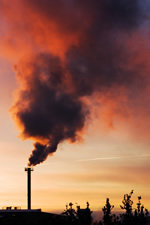
From 1985 to 2001, personnel at Naval Air Facility (NAF) Atsugi in Atsugi, Japan may have been exposed to environmental contaminants from off-base waste incinerators. The Shinkampo Incinerator Complex (SIC) was a combustion waste disposal equipped with incinerators that burned up to 90 tons of industrial and medical waste daily. Emissions included chemicals and other particulate matter.
A private Japanese company owned and operated the business. The U.S. Navy found a potential for increased health risks and worked with the Japanese government to close the SIC. The incinerator was shut down in May 2001.
If you are concerned about exposures at Atsugi, talk to your health care provider or local VA Environmental Health Coordinator.
Health effects from pollution at Atsugi
Short-term health effects could include irritation to the eyes, nose and throat, skin rashes, and sinus problems. These conditions usually went away after the exposure ended. Long-term health effects could include a possible increase in the lifetime risk for cancer.
Since the 1990s, the Navy has informed sailors and their families about the possible long-term health effects of living at Atsugi. Visit the Navy and Marine Corps Public Health Center website for health information about air quality monitoring and soil testing at Atsugi.
Currently there is no definitive scientific evidence to show that living at NAF Atsugi while the incinerator operated caused additional risk for disease.
Health concerns?
If you are concerned about exposure to environmental contaminants during service at NAF Atsugi, talk to your health care provider or local VA Environmental Health Coordinator.
VA offers a variety of health care benefits to eligible Veterans. Not enrolled in the VA health care system? Find out if you qualify for VA health care.
Compensation benefits for health problems
Veterans may file a claim for disability compensation for health problems they believe are related to exposure to environmental contaminants during service at NAF Atsugi. VA decides these claims on a case-by-case basis.
http://www.publichealth.va.gov/exposures/sand-dust-particulates/atsugi.asp
SCMP: Incinerator will create toxic ash with poisonous emissions
Tuesday, 12 August, 2014, 5:16am
Comment› Letters
In his letter to supposedly correct “misunderstandings” by opponents of the planned Shek Kwu Chau incinerator (“Incinerator will adopt proven, cost-effective technology on island [1]”, August 5), Elvis W. K, Au, assistant director of environmental protection, added yet more disinformation on the project.
Au boasted that the facility will adopt proven technology, yet omitted to mention that this technology creates toxic ash along with poisonous emissions, with adverse health impacts described in peer-reviewed research.
Were the incinerator emissions clean, it could be sited beside the government’s Tamar offices, so officials like Au could admire it each day. Yet instead, it is to be beside a relatively remote island.
It seems laughable to claim this choice of location arises through trying to “achieve a more balanced distribution of waste facilities”. But then, Au and colleagues have made a host of absurd claims regarding the project.
For instance, the incinerator with its 150-metre chimney can somehow blend with the surroundings – in an area of outstanding natural beauty; the reclamation and operations will not adversely affect the globally endangered finless porpoise; and, the incinerator will even benefit local tourism.
To those of us living on Cheung Chau, this last claim is a joke. More serious is Au’s previous habit of wrongly claiming the incinerator can completely destroy organic pollutants, which reflects an inadequate understanding of the basic chemistry and health risks, and is disturbing coming from an official supposedly helping safeguard our environment.
Au even played fast and loose with financial information in striving to show the incinerator will be “cost effective”. In his letter, he cited a capital cost of about HK$12.7 billion, which may be the first time this figure has been published, as in March 2012 the anticipated cost was HK$14.96 billion.
Conveniently, too, Au omitted to mention that because the incinerator and its island will take perhaps eight years or more to build, landfills must be extended, at an additional cost of HK$12 billion – making the real incinerator project bill nearer to a hefty HK$27 billion, which will rise when costs soar, as they are wont to do for infrastructure schemes.
In rejecting plasma arc facilities as being small scale with limited performance tracks, Au further demonstrated his blinkered approach, ignoring the large-scale facilities being commissioned and built in the UK, and planned for several countries including China.
Dr Martin Williams, director, Hong Kong Outdoors
SCMP: Pollution kills 7 million people every year, says WHO report
from Lo Wei of the SCMP:
Around seven million people died in 2012 as a result of exposure to air pollution, accounting for one in eight deaths around the globe, the World Health Organisation said yesterday.
The figure has doubled over eight years. WHO officials explained that the latest estimate was more comprehensive than those in the past.
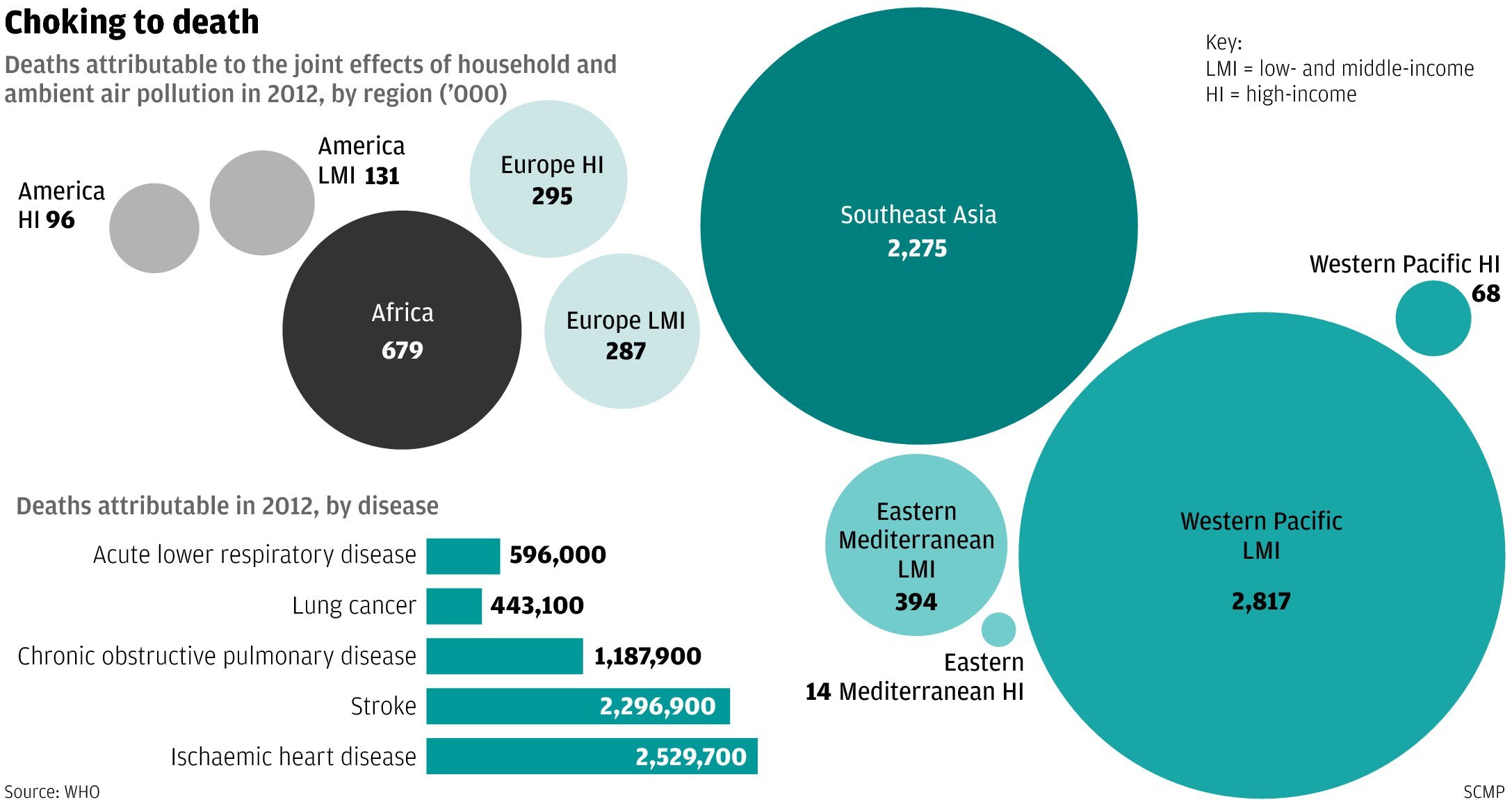
New methods were developed to measure outdoor air pollution in rural areas and more diseases like stroke and heart disease were found to be caused by air pollution, said Dr Carlos Dora, co-ordinator for interventions for healthy environments with the WHO’s Department of Public Health and Environment.
He said the figures might not show whether the problem had worsened, but he added: “The problem is at large and should be a priority.”
‘Cover up’ claim as incinerator study postponed
http://www.airqualitynews.com/2014/02/03/cover-up-claim-as-incinerator-study-postponed/
Research into effects of waste incineration on human health will be postponed after data had to be ‘manually’ entered
A study aiming to establish whether there is a link between modern municipal waste incinerator emissions and health defects has been postponed until 2015, in what the Breathe Clean Air Group has labelled a government ‘cover-up’.
The research, which was due to be published in March 2014, was approved by the Health Protection Agency in January last year to extend the evidence base and provide further information to the public.
The study involves examining areas of up to 15km around 22 incinerators across England, including Grundon’s Lakeside energy-from-waste facility, the SELCHP plant in Lewisham, the London Waste Edmonton incinerator and SITA UK’s Tees Valley plant in Billingham.
Scientists hope to determine if there is a potential link between incinerator emissions and health outcomes, such as low birth weight, still births and infant deaths.
In addition, a Dundee-based incinerator has also been included in the study, with working relating to the plant funded by a grant from the Scottish Government.
But Public Health England, which is funding King’s College London and Imperial College London to carry out the study, today revealed the preliminary results would not be available until 2015 due to the ‘unanticipated complexity in gathering data’ – caused by having to enter emissions data into an electronic format manually before statistical analysis could begin.
Consequences
Commenting on the postponement, Pete Kilvert, chairman of the anti-incinerator Breathe Clean Air Group – said he feared the government would instruct the research teams to take ‘an average’ sample around each incinerator rather than look at the consequences on people living ‘downwind’ of each facility.
He said: “The Government is hell bent on burning the country’s waste and telling us that it won’t do us any harm. When waste such as plastics, metals and organic material are burnt at low temperatures, then new chemicals such as dioxins and heavy metals will settle out into our community.”
Public Health England today said it continues to stand by its position that well run and regulated municipal waste incinerators are not a significant risk to public health.
Commenting on the delay, Dr Simon Bouffler, deputy director of Public Health England’s Centre for Radiation, Chemical and Environmental Hazards, said: “It was originally envisaged that preliminary results for this study would be available by March 2014 but because of the unanticipated complexity in gathering data this has been delayed.
“A paper with preliminary results is now expected to be prepared for submission to a peer-reviewed journal around the end of 2014, with publication in 2015.”
He added: “Some of the data on emissions from MWIs were unexpectedly held in paper format rather than in electronic files, and had to be entered manually onto computer before the statistical analysis could begin. There was a delay while this process took place.”
resource: Incinerator correspondence to be made public
Environment Agency (EA) concerns over the Moorwell incinerator on the Isles of Scilly will become available to the public thanks to a Freedom of Information request.
The request, submitted by Radio Scilly, will see around 400 pages of emails and letters being released. The material details correspondence between the EA and the Chief Technical Officer of the Council of the Isles of Scilly between June 2010 and earlier this year.
Councillor Steve Sims, Chairman of the General Purpose Committee on the isles, stated that the documents would be available to view in the Council’s One-Stop Shop, but that making copies would not be permitted.
It has since been reported that during the sampling periods, levels of dioxins (which the World Health Organization describes as ‘highly toxic’) at the site reached 65 times the permitted levels.
However, the Council took steps to reassure the public that there was ‘no clear risk to human health’ posed by the dioxins.
Andy Street from consultants SLR also commented: “Regarding public health, it is true that the emissions were high on occasion from this incinerator, which was first commissioned in the 1970’s. Initial assessment of the impact of emissions to air was undertaken in 2009 under the instruction of the Environment Agency, which in turn consulted with the Food Standards Agency.
“These investigations indicated that, even with monitored emissions at their highest, there was no clear risk to human health, because of the small scale of the plant and low volume of waste incinerated.”
EA officials brought in consultants SLR to consult with the council and the agency on the site, and according to the group, found that the incinerator was being overloaded and was burning too much unsorted, off-island plastic waste. However, dioxin levels have now reportedly returned to within ‘safe’ limits.
Incineration problems not the first
This is not the first time incineration plants have been in the news over environmental and health concerns. Less than one month ago, Scotgen (Dumfries) Ltd saw its permit revoked for its Dargavel incinerator after the Scottish Environmental Protection Agency (SEPA) declared it had failed ‘to comply with the requirements of [its] permit’.
The revocation notice, served on 23 August, cited the following permit breaches:
- persistent non-compliance with the requirements of the permit;
- failure to comply with an enforcement notice;
- failure to maintain financial provision and resources to comply with the requirements of the permit;
- failure to recover energy with a high level of efficiency.
According to Ian Conroy, Technical Support Manager in the South West for SEPA: “Since the plant come [sic] into operation we have provided support and assistance to Scotgen (Dumfries) Limited including affording them considerable time and opportunity to demonstrate that this facility can meet the Best Available Techniques, and the specific requirements of European Directives designed to protect the environment. Unfortunately despite this, they have not done so.”
The Dargavel site has suffered a litany of problems. In 18 July 2013 a fire broke out at the site, requiring 30 firefighters to bring it under control. Scotgen is also under investigation by the Health and Safety Executive following a “pipe burst” in August, which damaged nearby pipework and a roof.
Incineration could become ‘obsolete’
In relation to these latest incidents, Shlomo Dowen, National Coordinator of United Kingdom Without Incineration (UKWIN), stated his belief that incinerators would become ‘obsolete’: “I understand that many of the problems at the facility arose from changes in feedstock composition and difficulties in obtaining combustible material.
“These are issues that I expect will become more prevalent across the UK in the coming years as increases in recycling, waste minimisation, and separate collection of food waste render residual waste treatment unnecessary and show incineration to be obsolete.”
Read more about incineration and the full statement regarding the Moorwell site from the Council of the Isles of Scilly.
11 Sep 2013
SCMP: Hong Kong’s professions must not be protectors of their own privilege
by Philip Bowring, published in the SCMP:
Hong Kong people are familiar enough with the power as well as wealth of the city’s landed aristocracy. Less obvious is the privileged position of leaders of some of the so-called “learned professions” – lawyers, accountants, doctors and the like.
Like guilds in medieval Europe that were created to enforce standards of workmanship and training on craftsmen such as weavers and goldsmiths, they have become over time as interested in protecting themselves from competition and keeping out new ideas as in looking after their clients. The Hong Kong Institute of Certified Public Accountants cannot be accused of overly restricting membership or imposing unreasonable entry requirements. But, not for the first time, its willingness to take prompt action in cases involving prominent members accused of misconduct is in question.
On December 24, it finally announced a decision in the case of Anthony Wu Ting-yuk, until recently chairman of the Hospital Authority and previously chairman of auditing giant Ernst & Young, the Hong Kong General Chamber of Commerce and the government-allied think-tank the Bauhinia Foundation – among a myriad other posts.
Wu was found guilty of professional misconduct relating to his involvement in New China Hong Kong Group, which collapsed in 1999. It then took 14 years for the institute to investigate and finally come to a decision on what, on the face of things, was not a very complicated case. It did so only after Wu had stepped down in November from the Hospital Authority and announced it on a day which ensured minimal media coverage. Wu received his top appointments despite the cloud hanging over his professional integrity.
It is better in principle that professional bodies police themselves rather than having governments impose themselves. But the Wu case leaves one asking whether anything has improved since the then Society of Accountants failed to act against Price Waterhouse in the case of the Carrian Group collapse. Price Waterhouse was Carrian’s auditor and its senior partner became managing director of Carrian.
Another accountant long showered with official appointments has also recently been in the news – Marvin Cheung Kin-tung. A former chairman of auditors KPMG and of the Society of Accountants (the previous name of the Institute of Certified Public Accountants), he is currently chairman of the Airport Authority, a member of several boards including HSBC and Hong Kong Exchanges & Clearing, and a former Executive Council member.
Cheung is rightly engaged in the debate over the third runway – though one might feel that coming from the private sector he would expect it to be funded commercially rather than from the public trough. But it was surprising to see someone in such a position with a public body make a big media splash defending the inordinate land lease privileges of the Hong Kong Golf Club.
For sure, as president of that club, he wants those privileges maintained. But his dual roles are another classic example of how some private-sector leaders have become installed deep inside government and can influence public affairs for private advantage. His comments on golf have also drawn attention to the existence of a private course on Airport Authority land, the little-known nine-hole course close to Terminal 2.
The elite golfers who cling to the claim that Hong Kong needs three courses at Fanling and spurn alternatives such as on Kau Sai Chau might get some sympathy if they ever used their position in or near government to spend real money on public sporting facilities, particularly for schools. The abysmal standards of fitness of young people, as revealed by recent surveys, is as much due to the lack of facilities as parental obsession with book learning and fears that sport leads to injuries. Public needs are not met by building a showpiece stadium.
Now we are told not to exercise as the air is too foul. Endless government expressions of worry about the costs of health care are nothing but hypocrisy until it invests in the prevention of disease – starting with clean air and opportunities for physical activity.
Another contribution to public health – and one with no cost at all – would be to take on the doctors’ lobby and allow foreign-trained doctors (and nurses) to practise here.
As revealed this past week, mortality rates in several public hospitals are far higher than they should be in a city with Hong Kong’s wealth and technical abilities. Shortages of beds, particularly in intensive care units, is one reason but staff shortages are even more to blame. Yet Hong Kong’s political system, which enshrines every principle of vested interest, ensures that it cannot easily benefit from foreign-trained doctors.
High-quality professional service is a major part of Hong Kong’s appeal. But it will not be sustained in the longer run if the professions are protectors of privilege rather than standards, and their prominent members are seen as part of the small group of mutual back-scratchers who turn up on every major private-sector board and government statutory and advisory body. The corporate state is the antithesis of Hong Kong’s spirit of entrepreneurship and social mobility – and of independent professions.
12 Jan 2014