Clear The Air News Blog Rotating Header Image

Papers

Still looking at artificial islands plan

I refer to the article by Dr Martin Williams (“Extreme folly of reclamation amid rising sea levels”, February 4). I would like to provide relevant information for reference to your readers.

Hong Kong is committed to working together with the international community to combat the challenge of climate change. Among the measures, the Civil Engineering and Development Department is updating the existing design guidelines for coastal structures including reclamation works, making reference to the latest assessment -reports published by the Intergovernmental Panel on Climate Change to take into account the predicted sea level rise.

Reclamation is a recognised major source of land formation for coastal cities worldwide. In 2013, the government conducted a public engagement exercise on the enhanced land supply strategy and identified the central waters between Lantau and Hong Kong Island as having good potential for development of artificial islands for accommodating populations and as a new core business district.

Against this background, the government has proposed to carry out technical studies to determine the feasibility and suitability of the reclamation.

While no position has been taken on the proposal at this stage, the works departments reckon that purely on the technical ground of coastal defence against severe weather conditions, there is no reason to regard the construction of artificial islands as “folly”.

The design standards and technology for reclamation works and coastal defence structures will take into consideration the probable severe weather conditions, including storm surges.

Paul C. K. Chu, senior engineer/public relations, Civil Engineering and Development Department
________________________________________
Source URL: http://www.scmp.com/comment/letters/article/1918586/letters-editor-february-29-2016

Meet the Scientist Connecting the Dots Between Air Pollution and Dementia

http://readersupportednews.org/news-section2/318-66/35356-meet-the-scientist-connecting-the-dots-between-air-pollution-and-dementia

At first blush, you might not think air quality is related to brain health. But what if the two are connected? Air pollution continues to worsen in the developing world, especially in rapidly developing countries like China and India; at the same time, our global population is aging, and dementia rates are expected to rise accordingly. Increasingly, research suggests a link between air pollution exposure and the risk of diseases like Alzheimer’s and Parkinson’s. How might this relationship be possible, and what might it mean for what the world is — or isn’t — prepared to handle in the coming decades?

Aaron Reuben is a science writer, recovering policy wonk, and neuropsychologist-in-training who’s exploring just these questions. A PhD student at Duke, Reuben’s journalistic endeavors include an eye-opening feature for Mother Jones (cross-posted at Grist) that draws attention to the connection between dementia and dirty air.

Driving Reuben’s work is the notion that the countries that will see the most aging in the coming years are the same countries that are going to have the most polluted air — and the same places that have some of the least developed infrastructure for diagnosing and treating brain disease. I caught up with Reuben to chat about the state of the science, the justice issues at stake, and the difficulties of communicating the invisible.

Q: What do we know about the links between air pollution and dementia?

A. There are two branches of relevant science here. The first body of research studies people in older age brackets and maps their health outcomes onto possible air pollution exposures generated from regional pollution monitoring data. When you do that, you find that people who are exposed to more air pollution, particularly fine particles, show an increased risk for dementia and pre-dementia, called mild cognitive impairment. A study that came out of Taiwan, for example, drew on a cohort of nearly 100,000 people and showed that for every unit increase in exposure to particle pollution, the risk of developing Alzheimer’s went up by more than 100 percent.

Of course, before we can say that one causes the other, one of the things that needs to happen is data to arrive from longitudinal studies in which you follow people from day one, categorize their exposures, follow their outcomes, and control for things you’d like to control for, like exposures to other toxins like lead. But every month and every year, more and more studies are coming out, and the fact that they’re all finding the same thing is very compelling.

The other kinds of studies that are contributing to the evidence base are animal studies. You can’t sit someone down and expose them to air pollution and watch their brains degenerate in real time. But you can do that in mice. There are a lot of studies coming out now on changes in cell dynamics and epigenetics in mice exposed to air pollution, and you see that many of the changes are in the direction of Alzheimer’s disease and heavily related to dementia outcomes. Something that’s really sexy that hasn’t been published yet are studies using transgenic mice that have been engineered to develop Alzheimer’s-type pathology. If you expose generations of these mice to air pollution and that changes the development of pathology, then you can make a call that in this particular animal, the exposure to fine particles fostered the disease. So far the mouse studies are pointing in the same direction as the cohort studies.

Q: So are we at smoking-causes-lung-cancer levels of evidence?

A. No, we’re not there yet. But when people ask me this, I also ask them how long it took to get there for lung cancer. How long did we think cigarettes caused cancer before we were finally willing to say ‘we know’? It took decades. I don’t think anyone thinks the evidence is going to start weighing against this trend. It’s a matter of how long new research needs to pile up before people are willing to make a bold statement.

Q: And what do we know about how pollution might contribute to dementia?

A. There are a couple ways we think it works. One is by nature of the fact that some of the particles are very small. Your sense of smell is a very potent sense, and there is a direct connection from the nose to the brain via the nasal nerve. That means that once you get something in your nose, if it’s small enough, it can pass into the nerve and make its way all the way to the brain.

Keep in mind that pollution particles typically bring in a host of other nasty things with them, including heavy metals: things that can directly kill neurons. The end result is a disruption of the brain’s homegrown immune system. Microglia cells — which clear waste, trim away dead neurons, improve synaptic connections, and clear pathogens — end up performing an unsuccessful process. They continue to release oxidative chemicals that are designed to kill pathogens, but instead of killing anything, the chemicals just accumulate and disrupt neural activity. The damage this causes looks a lot like what you see in Alzheimer’s and Parkinson’s patients.

Another mechanism comes via the lungs. When pollution particles are inhaled into the lungs, they tend to be small enough to make it past the body’s defenses and end up in the deepest tissue, where they then pass into the bloodstream. When they do that, they trigger an immune reaction that circulates molecules related to inflammation, cytokines, in the bloodstream — the kind of thing that seems to cause chronic low-level inflammation wherever the particles go. We’re not sure if the particles can enter the brain through the blood directly or if the chemicals they trigger actually reach the brain, but there’s evidence that they interact with the blood-brain barrier and damage it somehow. It’s all about low-level inflammation that turns into long-term damage. Particles that enter through the nose will cause neuroinflammation directly, and particles that enter through the lungs will also cause neuroinflammation indirectly.

Q: You’ve suggested we’re past the tipping point at which this theory is going to be wholly refuted, but you’ve also cited overly cautious scientists who are wary of overstating the evidence. Why do you think this hesitance exists?

A. I think in all of science there’s a tendency to be as precise as possible. It’s never unusual for scientists to hedge their bets. But the other thing I think is going on here is that there’s been a sort of history of jumping the gun on Alzheimer’s. We’ve been talking about one cause, but there are many ways to brain disease. The brain is uniquely susceptible to damage. Air pollution isn’t causing all the dementia we see around us. There’s pesticide exposure, there are concussions — there’s not just one way to get this disease. And it’s also a function of your cumulative exposures and your genetic predisposition.

There’s a lot to fear when it comes to dementia. It comes out of nowhere, there’s no cure, it erases everything about you. If you can point to something that’s causing it, people are going to take you seriously. That’s what happened with the aluminum scare in the 1980s, which led to sensationalist headlines and people worrying about their pans and the things they were drinking. The studies that found unusually large aluminum deposits in the brains of Alzheimer’s patients were real, but that didn’t mean that your personal exposure to aluminum actually influenced your dementia risk. The field of gerontology remembers this and is going to be slow to embrace air pollution. Especially because it’s something that everyone is exposed to, unlike, say, a concussion.

Q: I’m interested in what you just said about air pollution being something that everyone is exposed to. There are obviously inherent justice questions at stake here given the inequities of air pollution exposure. How does environmental justice enter the conversation for you?

A. I think there are two things going on, and neither of them are good. The same communities that are reliably exposed to the most air pollution are the same communities that have the fewest resources to defend themselves or compensate for the effects.

Something you see time and again is that high-income, high-resourced individuals not only can buffer themselves against exposure to air pollution — they live in the nice parts of town, they don’t live by busy roads, they live by a lot of greenery, which we know can reduce pollution levels — but they also have the resources to respond to the kinds of cognitive impairments that we’re predicting. Researchers at the University of Southern California have found that air pollution levels are linked to developmental disorders. We know that if your child has a developmental disorder, there are plenty of services and activities you can do to improve their cognitive abilities. These are the kinds of things that aren’t always available to low-income communities, who are also at greater risk.

Another thing that people are talking about are the synergistic stressors at play. It’s not just that you’re living in a neighborhood that has higher levels of air pollution, it’s that there might also be more violence in your social environment. You might have an incarcerated family member. These are many forms of adversity that, on their own, modify the way the brain develops and modify a slew of risk factors. When you put them all together, these effects may be magnified.

Q: What if I buy your story about air pollution and dementia but can’t move out of my heavily polluted neighborhood? What are my options?

A. Something we used to study in my old lab was called cognitive reserve. The basic idea is that there are some things you can do that appear to make you more resilient against showing symptoms of disease or brain injury. It’s based on old evidence of people who had died and, once an autopsy of their brain was done, appeared to have had Alzheimer’s-like pathology — but there was no evidence they had Alzheimer’s when they were alive. And it seems to be the case that they were compensating somehow to the brain damage.

There are certain things we know lead to good cognitive reserve. Yes, a lot of them are associated with your socioeconomic status, but some of them aren’t. If you have a higher IQ, it seems you’re buffered a bit against insults to your brain. For every year of education you get, your risk of presenting Alzheimer’s goes down — not because you’re immune to the disease, but because if you start to get early damage, you’re more able to deal with the damage in a way that maintains your cognitive function. More physical activity is another one.

With respect to age, young people and old people are the most vulnerable. Young people’s brains are still developing; old people have brains that are less likely to bounce back and repair themselves after injury. As a society, we can choose to design better communities around some of this knowledge. In California, there’s a law that says you can’t put an elementary school on a busy road.

But no, we can’t all move. In Beijing, if you wanted to move, you’d have to change your whole life. You can’t escape the pollution.

Q: I feel like there’s a certain paradox here when you mention a place like Beijing. We’re building these factories in the name of progress, but for whom? If people’s brains are atrophying because of exposure to air pollution, there’s a pretty abysmal vicious circle going on.

A. It’s not just that we’re going to die younger or age more poorly. There’s lots of evidence that you’re stopping people at the start of their lives. Studies have found that kids drop IQ points for every unit of air pollution exposure. Or look at what’s happening in Flint. There’s a whole generation of kids getting set at a disadvantage from day one. We’re doing the damage to ourselves.

Q: Something like climate change is already so slow and abstract. Something like air quality isn’t always something you can see. When you combine these kinds of things with mental health or brain health — which are already siloed off from the rest of the health spectrum — there’s a lot of abstraction going on in one place. That must make these effects particularly difficult to communicate. Does this ever leave you frustrated?

A. This actually reminds me of something I’m working on now, which is trying to look at the long-term effects of exposure to positive things like parks and green spaces — improved environments. I think of it as the flipside of these stressors. Almost everyone you talk to can speak at a personal level to the benefit of green spaces. Trying to find that effect in data and trying to make that data compelling is hard. There are a lot of things that are going to contribute to how well or how poorly you live. Something like your environment is just one of them. Trying to pull out the influence of that one factor is really hard, both scientifically and with respect to communication.

But we do know the places where people are getting older. In a lot of those places, we can reliably say there are going to be greater rates of dementia than there should be. A lot of those places don’t have infrastructure yet for diagnosing or treating these things, and I think it’s time we started thinking about the resources that need to be put into place in the areas where the air is bad. At some point we’re going to have to start paving the way to dealing with the brain health crisis that’s coming. Of course, it’d be great to clean up the air in these places, and we know how to clean up the air, but we’re not going to be able to do it right away. In the meantime, we know who the people are at risk, and we know pretty well what’s going to happen. Can we start getting ready for that in a real way?

Cancer Mortality Risks from Long-term Exposure to Ambient Fine Particle


Abstract

Background:

Few studies have assessed long-term effects of particulate matter (PM) with aerodynamic diameter < 2.5 μm (PM2.5) on mortality for causes of cancer other than the lung; we assessed the effects on multiple causes. In Hong Kong, most people live and work in urban or suburban areas with high-rise buildings. This facilitates the estimation of PM2.5 exposure of individuals, taking into account the height of residence above ground level for assessment of the long-term health effects with sufficient statistical power.

Methods:

We recruited 66,820 persons who were ≥65 in 1998 to 2001 and followed up for mortality outcomes until 2011. Annual concentrations of PM at their residential addresses were estimated using PM2.5 concentrations measured at fixed-site monitors, horizontal–vertical locations, and satellite data. We used Cox regression model to assess the HR of mortality for cancer per 10 μg/m3 increase of PM2.5.

Results:

PM2.5 was associated with increased risk of mortality for all causes of cancer [HR, 1.22 (95% CI, 1.11–1.34)] and for specific cause of cancer in upper digestive tract [1.42 (1.06–1.89)], digestive accessory organs [1.35 (1.06–1.71)] in all subjects; breast [1.80 (1.26–2.55)] in females; and lung [1.36 (1.05–1.77)] in males.

Conclusions:

Long-term exposures to PM2.5 are associated with elevated risks of cancer in various organs.

Impact:

This study is particularly timely in China, where compelling evidence is needed to support the pollution control policy to ameliorate the health damages associated with economic growth. Cancer Epidemiol Biomarkers Prev; 25(5); 839–45. ©2016 AACR.


Current exposure to pollution has greater health impact than former exposure, study shows

http://www.bmj.com/content/352/bmj.i807?etoc=&sso=

The health risks of exposure to pollution follow a similar pattern to those from exposure to tobacco smoke, a study has found. It also noted a marked acute rise in risk from living in a polluted area, which then tails off if someone moves to a place with cleaner air.1

The study, published in Thorax, also said that, while overall pollution levels seemed to be dropping in the United Kingdom, the pollution itself seemed to be more toxic now.

Researchers from Imperial College London used historical pollution monitoring data on black smoke and sulphur dioxide taken in 1971, 1981, and 1991, as well as PM10 levels (fine particulates of ≤10 micrometers in diameter) taken in 2001, to estimate the level of exposure of 367 658 people at those four specific times, according to where they were living at the time. The participants were members of the Longitudinal Study, a 1% sample of the England census, which enabled the researchers to track the participants’ health outcomes over time.

Pollution that people were exposed to in 1971 still affected their health 38 years later, the results showed. Every additional unit of 10 µg/m3 pollution that someone was exposed to in 1971 increased their mortality risk by 2% between 2002 and 2009.

However, more recent exposure had a far more marked impact on health: for every additional unit of 10 µg/m3 pollution that someone was exposed to in 2001, it increased their risk of mortality by 24% between 2002 and 2009.

Anna Hansell, lead author and assistant director of the Small Area Health Statistics Unit of the MRC-PHE Centre for Environment and Health at Imperial College London, said that the link between pollution and health followed a similar pattern to the effect of smoking.

“What we think is happening is that there is some waning over time with the effect size,” she said. “You can make some analogy with smoking. Smoking has an acute effect and it has a long term effect.

“We know if you smoke it increases your risk long term, but if you give up smoking there’s a benefit, which for heart disease is probably strongest over a couple of years, and then you have the longer term effects which appear over time.”

Hansell speculated that some tailing off of the effect might also be due to some people, who were more susceptible to the health effects of pollution, having died. Furthermore, the particulates in pollution had changed over the course of the study, she said, and it was likely that each unit of 10 µg/m3 pollution today is more deadly than in 1971.

“We can’t time travel back to the 1970s and look at the particles then, in the same way as the particles now, but we know we have a very complicated mix now,” said Hansell.

John Gulliver, senior lecturer at the MRC-PHE Centre for Environment and Health, said, “Levels of types of air pollution in the UK have reduced dramatically since the start of our study period, with levels of black smoke currently estimated to be around 20% of what they were in the 1970s.” As a result, in 1971 a 52 µg/m3 difference in black smoke levels was recorded between the most and least polluted areas, whereas in 2001 the difference in PM10 was just 6 µg/m3.

The source of pollution has also changed, Gulliver added. In 1971 it came predominantly from coal burning in homes and by industry and so was greatest in industrial areas, whereas transport is now the main source of pollution. And, surprisingly, only about half of this is from exhaust emissions.

“Brake and tyre wear and road abrasion increasingly make up a larger and larger proportion of particles from road transport—it is almost 50% now,” he said. “And it is set to increase because the focus is on exhaust emissions, not on tyres, brakes, and road abrasion.”

Levels of this type of pollutant are influenced by road surface, speed, and the weight of the vehicle, Gulliver said, such that heavier vehicles such as sport utility vehicles have the greatest impact.

Researchers find shared molecular response to tobacco smoke and indoor air pollution

http://medicalxpress.com/news/2016-01-molecular-response-tobacco-indoor-air.html

Exposure to certain household air pollutants may cause some of the same molecular changes as smoking cigarettes.

A study in the journal Carcinogenesis reports non-smoking women living in rural China who burn smoky (bituminous) coal for heating and cooking had gene expression patterns in buccal (cheek) epithelial cells similar to those present in the cheek cells of active cigarette smokers. The study, conducted by investigators at Boston University School of Medicine (BUSM), the U.S. National Cancer Institute (NCI), and others, is the first to identify genomic alterations that result from exposure to smoky coal.

Approximately three billion people in the world use coal and biomass (charcoal, wood, animal dung and crop waste) for cooking and heating. “Lung cancer rates among non-smoking women in China’s rural counties, where smoky coal is used extensively, are among the highest in the world,” noted Qing Lan, MD, PhD, MPH, senior investigator at the NCI, and co-senior author of the study.

Avrum Spira, MD, MS, professor of medicine, pathology and laboratory medicine at BUSM and co-senior and co-corresponding author of the study, has previously shown that tobacco smoke induces gene expression changes throughout the epithelium of the respiratory tract. Since smoky coal is also an established risk factor for lung cancer and other non-malignant respiratory diseases, the researchers were interested to examine whether smoky coal had a similar effect on the respiratory tract.

“While lung cancer in this population has been linked to the usage of smoky coal, as compared to smokeless (anthracite) coal, the molecular changes experienced by those exposed to these indoor air pollutants remained unclear,” said Nathaniel Rothman, MD, MPH, MHS, senior investigator at the NCI, and a co-author of the study.

To understand the physiologic effects of this exposure Spira and his collaborators at NCI analyzed buccal epithelial cells collected from healthy, non-smoking female residents of Xuanwei and Fuyuan county who burned smoky and smokeless coal. Genome-wide gene-expression profiles were examined and changes associated with coal type were compared. The researchers identified 282 genes as differentially expressed in the buccal epithelium of women exposed to smoky versus smokeless coal.

“We then compared our smoky coal gene-expression signature to gene-expression changes observed in tobacco users and found that smoky coal emissions elicited similar physiologic effects. These results shed new light on the molecular mechanisms associated with smoky coal exposure and may provide a biological basis for the increased risk of lung cancer,” explained Spira, who is also director of the Boston University Cancer Center and a pulmonologist at Boston Medical Center. “We hope genomic profiling of the biologic response to solid fuel emissions will ultimately lead to the development of clinically relevant biomarkers,” he added.

“Ultimately, this and other studies of the health effects from indoor air pollution due to smoky combustion highlight the importance of switching to cleaner fuels,” concluded Lan.

Reclaimed seabed, man-made islands and miles of road and railways for Lantau in development plans released quietly online

Report released with minimum fanfare draws ire of environmentalist who said island should be kept largely intact to protect ecology

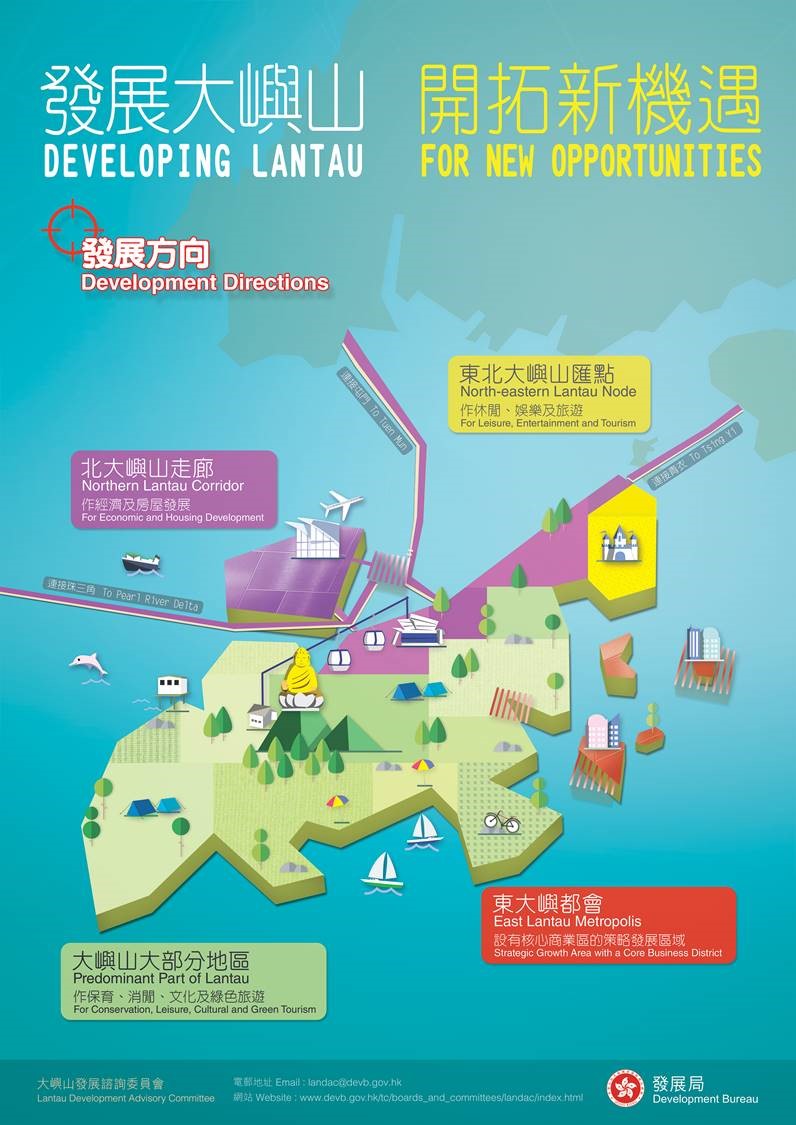
Dozens of hectares of reclaimed seabed, man-made islands and more highways and railroads to link with the urban areas are all part of a package of ambitious proposals seeking to turn the tranquil island of Lantau into Hong Kong’s new commercial hub, as well as a tourist haven.

The ideas were contained in the first-term report of the government-appointed Lantau Development Advisory Committee, which was discreetly released online yesterday, following about two years of study.

The 33-page report, entitled “Space for All”, was available in Chinese, with only an English summary for now and a full version “to be provided” later.

The plans split the island into four major development areas: a northern Lantau corridor, near Tung Chung and the airport for economic and housing developments; an area for leisure and tourism on between 60 and 100 hectares of reclaimed seabed off Sunny Bay and an expansion of Hong Kong Disneyland; a new core business district in the east, to be created by the reclamation of one or more artificial islands; and the development of 14 recreation and tourism areas, mostly to the south, including Sunny Bay, Mui Wo, Tai O and various Buddhist monasteries, and the Tung Chung valley.

An adventure park was to be built in Sunny Bay, with facilities such as indoor surfing and indoor skydiving. Campsites and observation decks will be provided at Sunset Peak for stargazing.

The waters off eastern Lantau will see massive reclamation to develop Hong Kong’s newest core business district and a new town housing up to 700,000 people. It will also become a major source of land supply for Hong Kong’s development beyond 2030.

Environmentalist and Green Sense chief executive Roy Tam Hoi-pong criticised the idea of developing Lantau and said the island should be kept largely intact to protect the ecology there.

“Like Sai Kung, Lantau is a garden in Hong Kong’s backyard. The last thing you want is to bulldoze it down to build high-rises,” said Tam.

Chief Executive Leung Chun-ying yesterday said he had received the report and hailed the committee’s proposals as having “fully considered the current situations of various districts in Lantau, including the conservation needs and the development potential.”

He added: “Large-scale infrastructure, including a Tuen Mun-Chek Lap Kok link, Hong Kong-Zhuhai-Macau bridge and the third runway of the airport will turn the geographical condition of Lantau from an outlying island to a significant region of Hong Kong.”

There was no official announcement of the release of the report. Its publication was mentioned in an article posted to the official blog of Secretary for Development Paul Chan Mo-po.

In his article, Chan said the committee appreciated that Lantau is rich in ecological habitats and these should be preserved.

“The committee is of the view that conservation and development should not be considered mutually exclusive. Simply leaving things intact does not necessarily mean effective conservation… we should improve and make better use of the natural environment in a responsible manner, so as to allow the public to appreciate, understand and enjoy the environment.”

In his 2014 policy address, Leung raised the idea of making Lantau a converging point of traffic from Guangdong, Hong Kong and Macau. He announced the setting up of the advisory committee to explore strategies for the economic and social development for Lantau.
________________________________________
LANTAU PLANS

Proposals for development under various themes

Excitement

Sunny Bay:
Indoor adventure park, indoor surfing, indoor skydiving

Mui Wo:
Outdoor adventure park, hillside slides, war game, aqua park, mountain bike
Lantau history museum

Splurge and indulge

Aerotropolis:
Shopping, MICE tourism, international ice rink

Ecology

Siu Ho Wan:
Eco-tourism

Sunset Peak:
Stargazing facilities, campsite

Yi O:
Revitalisation of abandoned land, farm stay

Culture and heritage

Tai O:
Wushu retreat, Tai Chi centre, culinary heritage centre

Relaxation and wellness

Cheung Sha:
Development of spa and resorts, water sports centre, wedding centre, cycle track

Soko Islands:
Facilities for extreme sports, rock climbing.

Source URL: http://www.scmp.com/news/hong-kong/health-environment/article/1899809/reclaimed-seabed-man-made-islands-and-miles-road

Lack of accountability stinks

Letters to the editor, January 11, 2016

As if the report by the [1] Audit Commission [2] on the Environmental Protection Department is not embarrassing enough (“Hong Kong’s waste problem: a stinking trail of missed targets, data errors and misdirected efforts [3]”, December 1), the Legislative Council’s Public Accounts Committee’s two hearings last month on food waste reduction and recycling will enshrine the department in perpetuity in the Hall of Shame in Mismanagement.

We learned that the department handled the growing problem of food waste, which accounts for 38 per cent of municipal solid waste in Hong Kong, in a piecemeal, disjointed manner. We learned that the department has no idea on how each programme quantitatively contributes to the reduction of food waste, which has increased by 13 per cent from 3,227 tonnes per day in 2004 to 3,648 tonnes in 2013. We learned that targets are either non-existent or not met if they’d been posted. We learned that officials are not accountable for their mistake, and the same consultant who partnered with the department in the mistake continues to advise the department on a bigger project.

After spending HK$150 million and HK$50 million to reduce food waste in schools and private housing estates respectively, the department cannot explain how much food waste was reduced as a result of those programmes. The same goes for the HK$18.7 million spent during 2013 and 2015 in advertising, marketing, and education programmes to promote the department’s signature Food Wise campaign.

Only 26 out of 1,027 business entities provided data on their efforts to reduce food waste on a voluntary basis. No data was provided by the 294 schools who signed onto the Green Lunch Charter on the result of their effort.

Phase one of the Organic Waste Treatment Facilities that was priced at HK$489 million in 2010, with the help of a consultant company which earned HK$8.8 million for its advice, turned out to cost HK$1.53 billion. The Audit Commission pointed out that essential components were underestimated in the initial estimate.

Despite clear evidence in the commission’s report showing mistake in professional judgment, Mr Elvis Au, assistant director of the department, insisted that rising cost and lack of reference price of the facilities were the causes of the cost overrun. Mr Au and the same consulting company have since moved on to manage one of the most expensive project in the department’s history – building an incinerator at Shek Kwu Chau.

Is there accountability in Hong Kong?

Tom Yam, Lantau

Source URL: http://www.scmp.com/comment/letters/article/1899934/letters-editor-january-11-2016

CE receives Lantau report

Chief Executive CY Leung today received the first-term work report submitted by the Lantau Development Advisory Committee.

Mr Leung said the committee has fully considered the current situations of various districts on Lantau Island, including conservation needs and development potential, and put forward its vision and its recommendation on short-term work.

Large-scale infrastructure including the Tuen Mun-Chep Lap Kok Link, Hong Kong-Zhuhai-Macau Bridge and the third airport runway will turn Lantau from an outlying island to a significant region of Hong Kong, he said.

Noting the report has been uploaded to the Government website, he called on people to continue to provide comments to develop Lantau.

Mr Leung thanked the committee and the Development Bureau for their efforts.

lantau

Attribution of Extreme Weather Events in the Context of Climate Change

Download (PDF, 8.48MB)

ERP submission by Clear the Air

Download (PDF, 780KB)

Download (PDF, 151KB)

Download (PDF, 8.54MB)

Download (PDF, 431KB)